News Reporter |
News Editor | Wen Shuqi
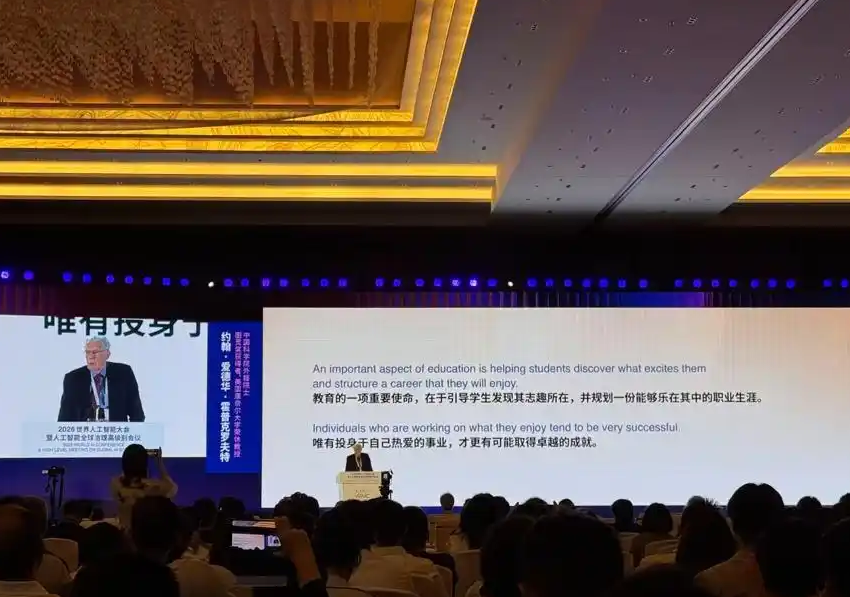
From July 17 to 20, the 2026 World Artificial Intelligence Conference and High-Level Meeting on Global AI Governance was held in Shanghai. This year’s theme is “Intelligent Partners, Creating the Future.” The exhibition area exceeded 100,000 square meters for the first time, with over 1,100 companies showcasing more than 3,000 achievements. Among them, over 300 AI products made their global debut.
This year’s World Artificial Intelligence Conference was extremely popular, with tickets in high demand. After the surge in large language models, the annual WAIC has become a key industry event reflecting AI trends.
On the opening day, NUPIAO walked through the exhibition hall, exploring the core highlights and best routes of this year’s event. Displays from various companies across the AI supply chain sent a clear signal: AI is moving from code on screens to factories, pharmacies, and office desks. Robots and large models are not just concepts anymore; they have real applications and are entering a phase of practical implementation. Additionally, the computing power exhibition area, which forms the foundation for AI, had many highlights, with several domestic computing power products making a collective debut.
Robots Are No Longer Just “Dancing”
At the Expo Exhibition Hall, robots were everywhere, providing the first visual impact.
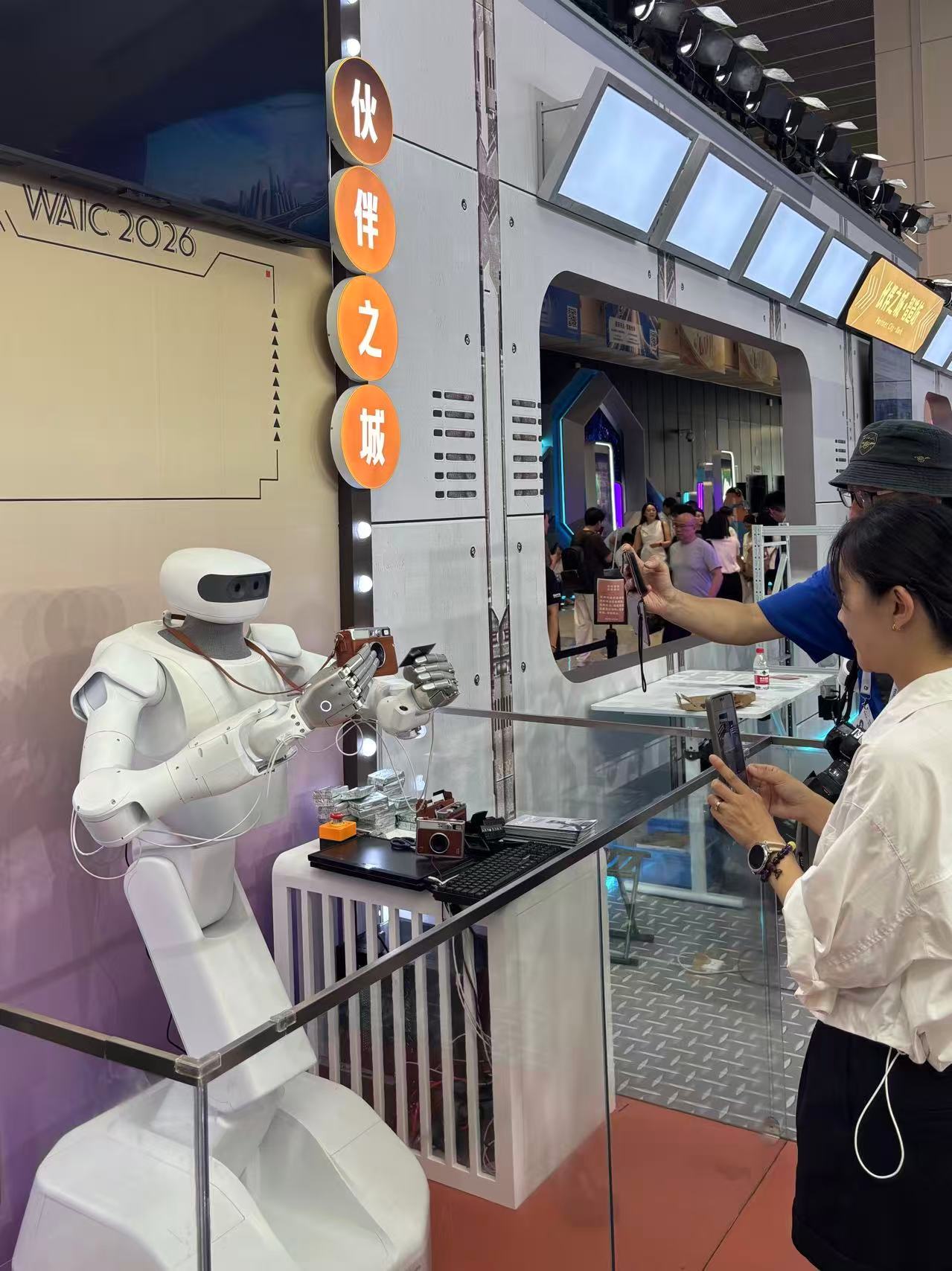
In the 1st floor lobby of the Expo Exhibition Hall, the immersive exhibition area “Model Era · Partner City” was fully prepared. This area created three scenarios: Smart Workshop, Living Lane, and Fun Plaza, built in the style of Shanghai’s Shikumen architecture. Multiple robots were performing various tasks here, covering production, logistics sorting, dining services, and more, showcasing the practical applications of machines in everyday life for the visitors.
Robot company Sharpa, participating for the first time this year, demonstrated autonomous photo-taking operations in the “Partner City.” A booth staff member told NUPIAO that this tests the robot’s manipulation skills, and the value lies in enabling precise, flexible tasks, adapting to various handheld tools.
Several star robot companies also came to the AI conference this year, showcasing an increasing variety of scenarios and products.
Unitree Robotics brought the world’s first manned deformable mecha GD01, which can switch between humanoid and quadruped forms. Zhiyuan Robotics showcased the Expedition A3 Ultra, which was selected as one of the conference’s “Treasures of the Hall.” The company said it is the world’s first mass-producible, commercially deployable full-size humanoid robot, equipped with a self-developed embodied intelligence brain, and has already achieved a commercial closed loop in factory inspection, material handling, and other scenarios.
Fourier exhibited its “Embodied Home” technology solution, including the wheeled dual-arm robot GRW, the small bipedal humanoid robot GR Mini, and the desktop robot GR Nano. The desktop robot, in particular, attracted many visitors due to its interesting form and interactions.
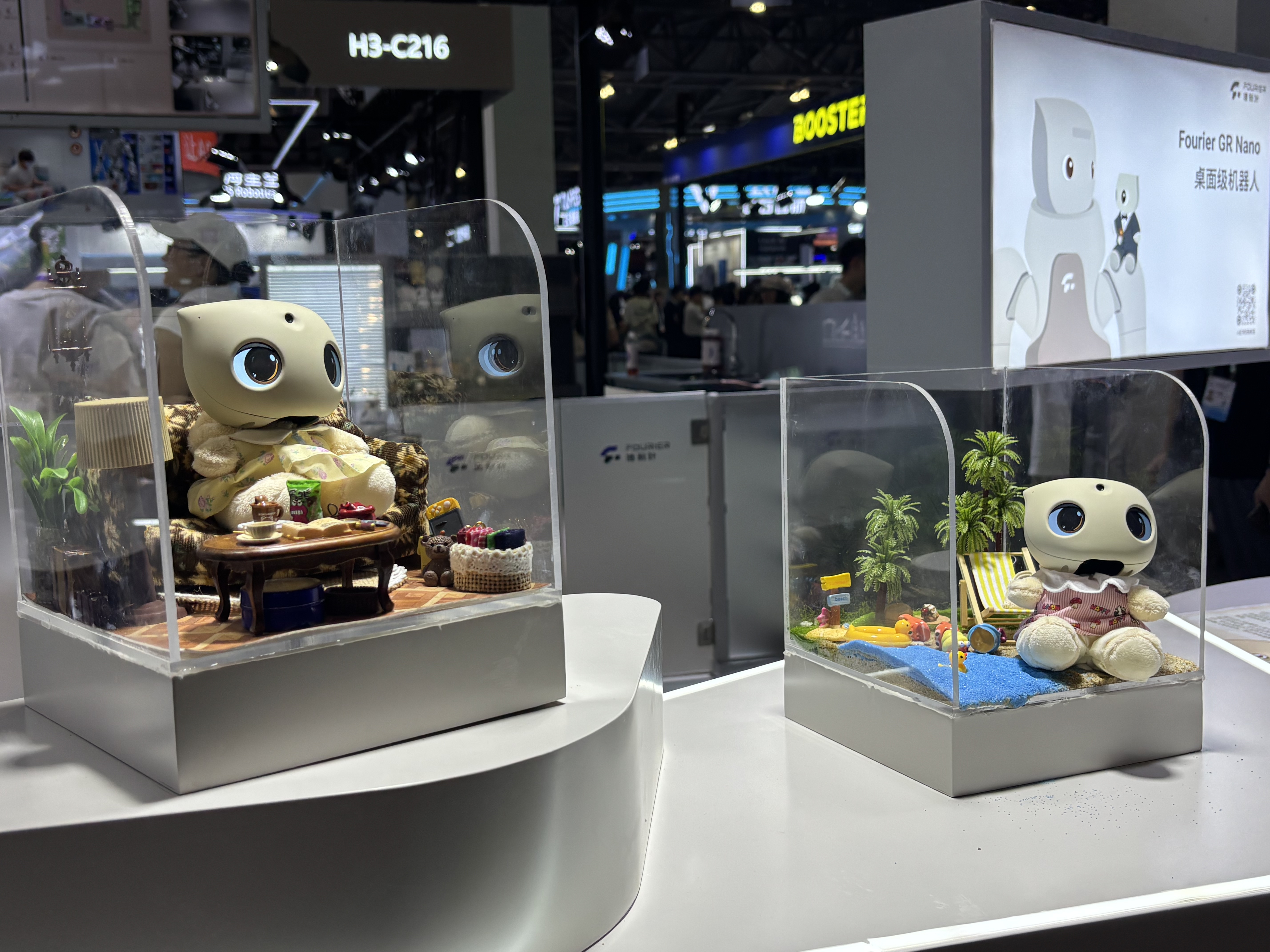
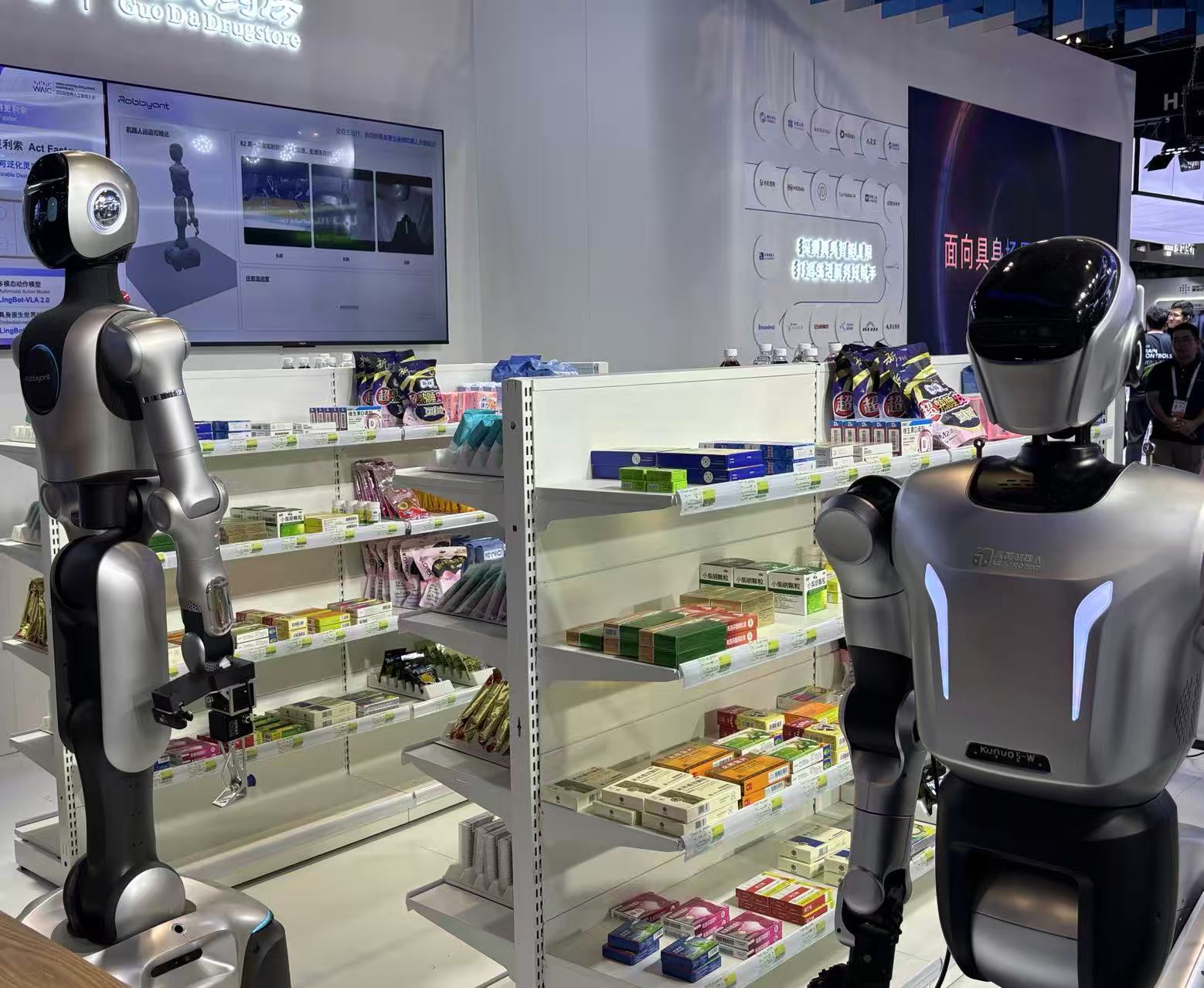
The real-world implementation scenarios for robots were a key focus for each company. Compared to the more familiar scenarios like logistics sorting and entertainment performances from before, a clear change this year is the increase in real-life scenarios. For example, “pharmacy” scenes appeared at booths of Ant Lingbo, Qiongche Intelligence, Kepler, and others.
At the Ant Lingbo booth, a realistic China National Pharmacy scene caught the eye. Ant Lingbo, in collaboration with China National Pharmacy, recreated a real pharmacy scene at WAIC: three robots of different configurations shared one “universal brain,” demonstrating the entire process of receiving orders, picking up medicine, and handing them over. On-site staff told NUPIAO that this solution has been implemented in a real China National Pharmacy store. Compared to last year’s focus on capability demos, Qiongche Intelligence this year highlighted a complete technology closed loop for embodied intelligence, including pharmacy and hotel laundry scenarios.
Besides some returning exhibitors, NUPIAO also noticed many new faces. Apart from some startup robot companies, upstream and downstream companies in the embodied intelligence supply chain also came to the AI conference, seeking more cooperation. For example, a Shanghai startup founded in 2022, “Future is Near,” participated for the first time, showcasing its home-use robot.
Large Models are Accelerating Real-World Implementation
At Hall H1 of this year’s conference, the latest achievements in large models and agent ecosystems were concentrated. Beyond model parameters and benchmark rankings, the industry is shifting to a more comprehensive competition. The capabilities of large models have moved from conversation to doing actual work, and agents have progressed from concept demos to productivity tools.
Booths of two Shanghai-based large model companies, MiniMax and Stepfun, were crowded with people.
Stepfun’s booth showcased a complete layout of foundational large models, an agent operating system, and AI + terminal applications. NUPIAO learned from booth staff that on the model side, Stepfun displayed its latest Step series model matrix; on the system side, it showcased the world’s first agent-native operating system, Step Agentic-native OS (Step AOS).
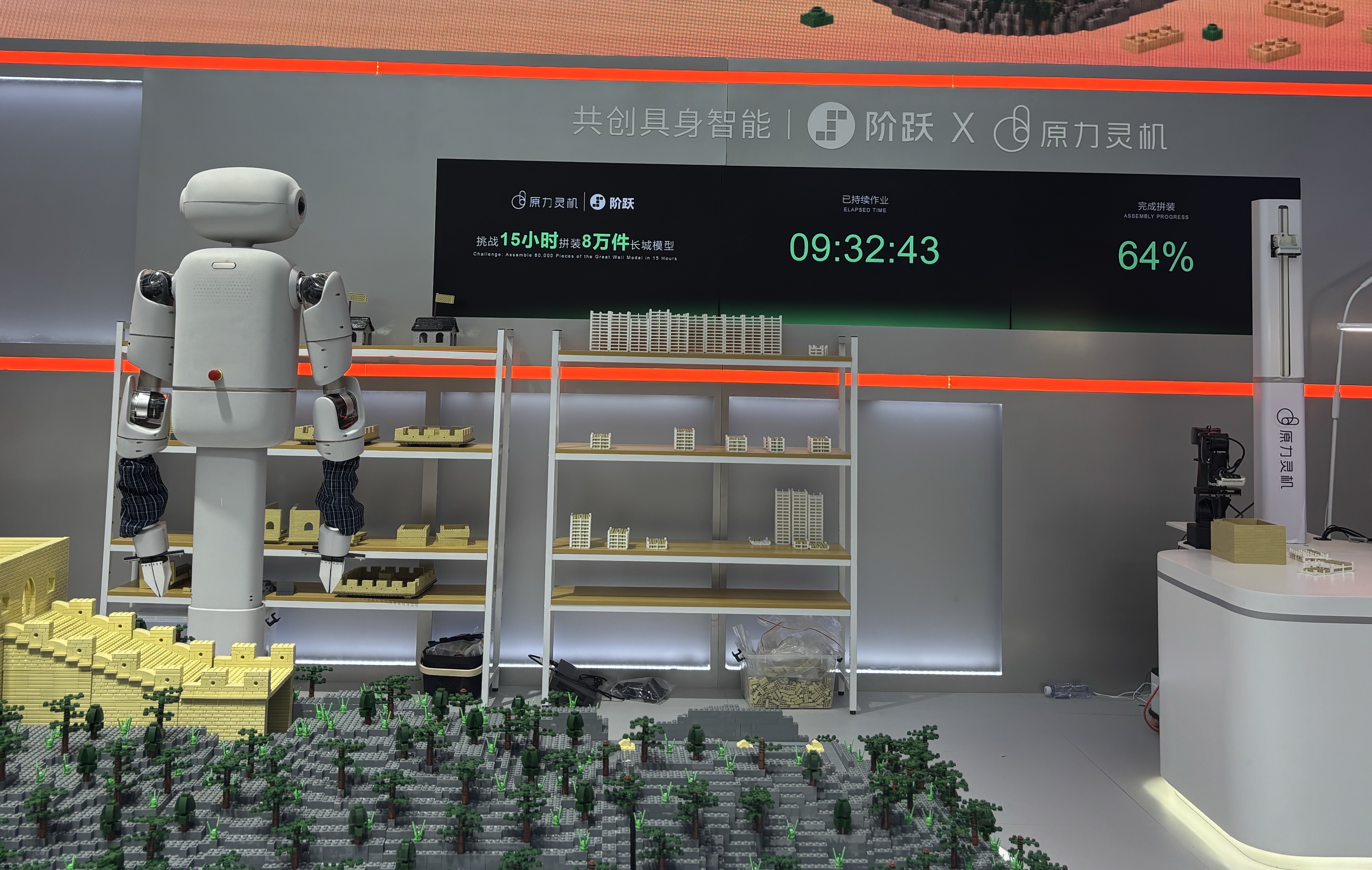
Terminal-side displays were a bigger highlight this year. NUPIAO saw the first offline appearance of the agent phone STEPX Neo, which won the WAIC 2026 “Treasure of the Hall” award. Additionally, Stepfun and Yuanli Lingji jointly initiated a challenge: “6 robots collaboratively assemble over 80,000 LEGO bricks into a Great Wall model for 15 consecutive hours.” Visitors could watch this ongoing demonstration on-site.
MiniMax focused its booth on its flagship model MiniMax M3, along with multimodal models and AI-native products. Among them, the new generation multimodal generation model H3 was pre-heated during WAIC. Through ecosystem cooperation cases like robot dogs, AI glasses, smart earphones, NAS, financial services, and film content, visitors could understand M3’s capabilities in long contexts, coding, and agentic tasks. They could also experience the specific applications of multimodal models in creative workflows, smart hardware, and industry services.
Every year at WAIC, the displays from major tech companies are a key focus for the industry. Baidu, Tencent, Ant Group, and Alibaba all attended as expected this year. Each company has its own focus, but the common point is that they all want to showcase their full-stack AI capabilities.
Baidu’s highlight this year was Baidu DuMate, the only general-purpose agent product among the WAIC top ten “Treasures of the Hall.” According to an on-site demonstration by staff, users only need to describe their needs in natural language, and DuMate can autonomously complete complex tasks like file processing, data analysis, report writing, and PPT creation.
Ant Group systematically showcased its three-layer AI layout at its booth: AI applications represented by “A-Fu” and “A-Bao”; an agent business ecosystem built with AI payment, the Alipay AI open platform, and the “Tap” merchant agent;Alibaba’s display included chips, servers, MaaS platform, agent products, AI applications, and smart hardware. The Qianwen AI glasses were still the most crowded area.
Domestic Computing Power Makes Its Debut
AI computing power was also a core highlight of this year’s conference, making Hall H2 particularly bustling. From the exhibition floor, major players like Huawei Ascend, Enflame Technology, Tianshu Zhixin, Biren Technology, Moxin (Shanghai) Integrated Circuit, Sugon, and Moore Threads were all present. The competition among these companies has shifted from the parameters and peak performance of individual chips to supernodes, cluster system engineering capabilities, and comprehensive implementation prowess.
Before the conference opened, news about the debut of domestic computing power products had already generated significant attention.
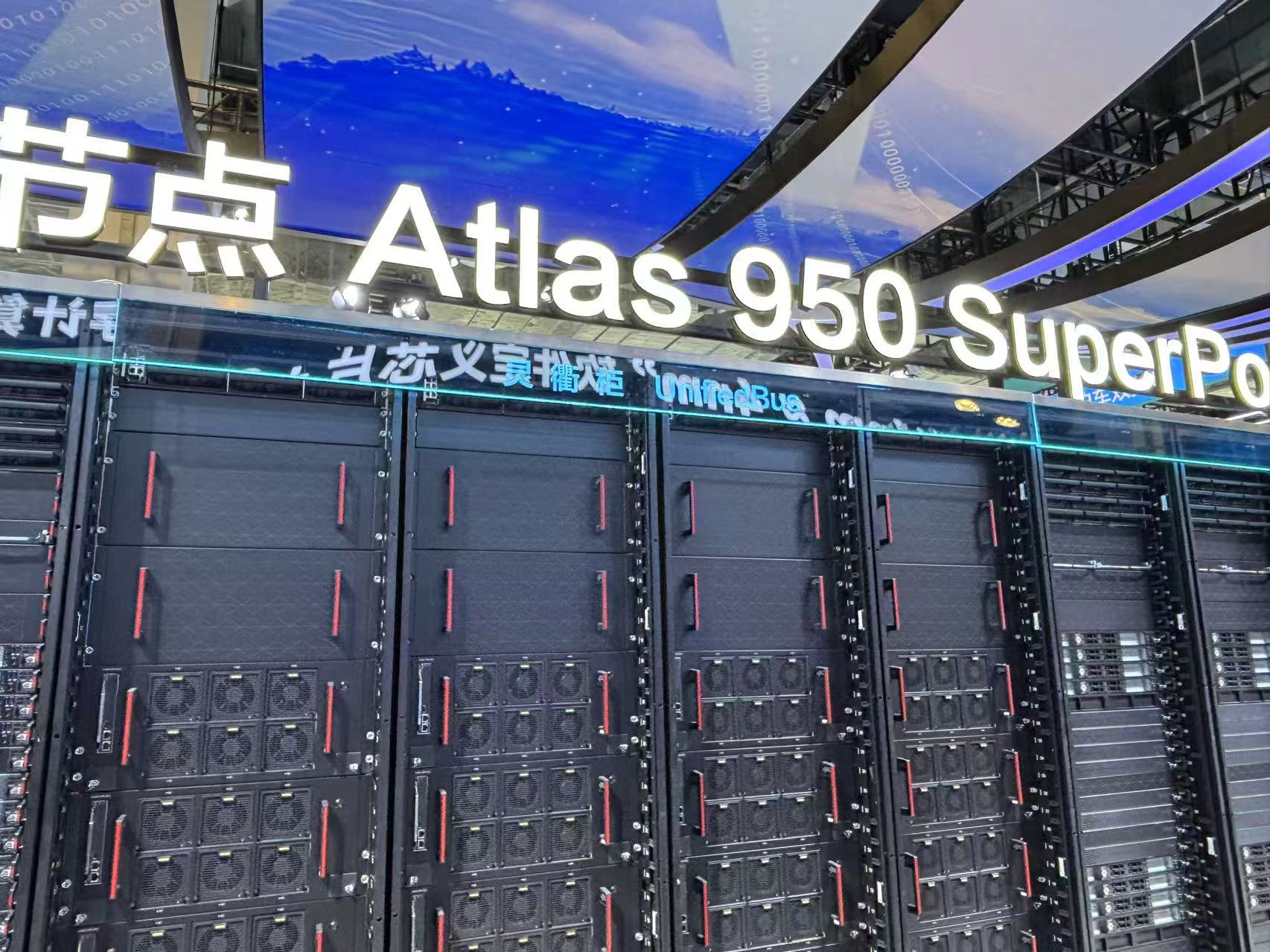
At this WAIC, Huawei publicly displayed the real machine of its Ascend 950 SuperPoD (Atlas 950 SuperPoD) for the first time. This is Huawei’s latest generation supernode product for large-scale AI training and inference, designed to meet the massive computing power demands of the large model era. It is currently the industry’s largest-scale supernode product.According to NUPIAO, the Ascend 384 SuperPoD, released in 2025, has been commercially deployed in over 750 sets, covering industries such as internet, telecommunications, finance, education, healthcare, transportation, and manufacturing. It is also the only supernode in China to have trained SOTA models.
The booth of Dongfang Suanxin was also eye-catching. Just before the conference opened, Dongfang Suanxin released its first high-performance computing chip, the DF1000. It is claimed to be the world’s first software-defined near-memory computing 3D chip, with BF16 precision computing power reaching 520 TFLOPS, a memory bandwidth of 6.4 TB/s, and a Scale-up interconnect bandwidth of 900 GB/s.
Sugon brought its ScaleX 10,000-GPU cluster to the exhibition. According to the company, the ScaleX 100,000-GPU supercomputing-AI cluster system is the largest-scale and most technologically advanced AI4S computing cluster in China, deployed at the core node of the Zhengzhou National Supercomputing Internet. As a new computing power infrastructure that deeply integrates supercomputing and AI, it can handle both high-precision scientific computing and AI operations, solving complex scientific research problems.
Looking at this year’s WAIC overall, more trends are becoming clear:The domestic AI industry is shifting from competing on parameters and flashy demos to competing on real-world implementation and business value.