Reported by |
Edited by | Liu Fangyuan
After two years of hype, AI phones are finally becoming a reality.
On July 15, China’s Cyberspace Administration published the filings for seven mobile-side generative AI services, covering Apple, Huawei, OPPO, vivo, Xiaomi, Samsung, and Nubia. This marks the first time regulators have collectively approved on-device AI models for smartphones.
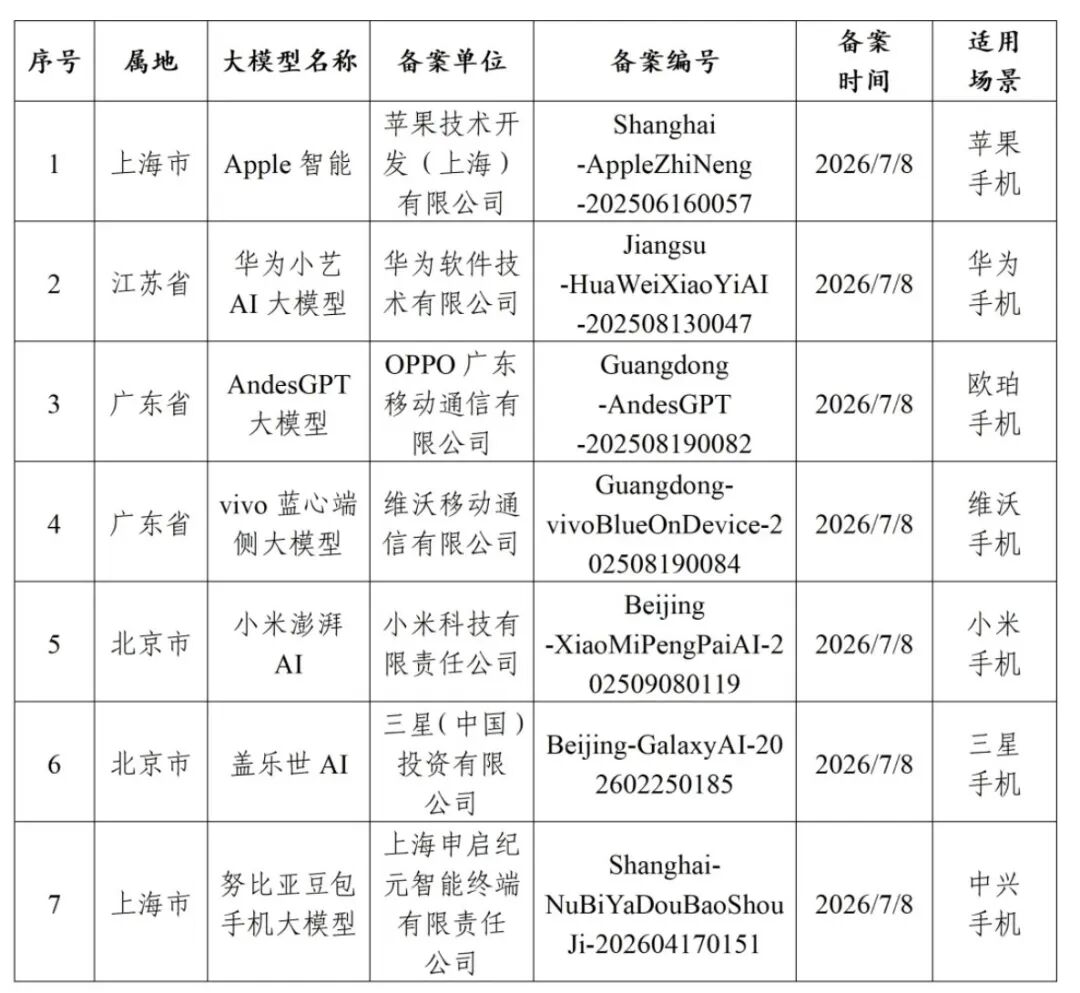
According to a mobile industry insider, earlier AI approvals focused on standalone apps and cloud services. Now that they’re targeting phone operating systems, these models can access personal data like photos, calendars, and device status—and even perform cross-app actions. That means regulators are diving deeper into the system layer.
“Phone makers will roll out system updates in the second half of this year. Only after their on-device models are registered can those AI features go live and reach consumers,” the source added.
At the 2026 World AI Conference (WAIC), which kicked off two days later, AI phones stole the spotlight. Nubia teamed up with ByteDance for the second-gen ‘Doubao Phone’ NaviX Ultra, while Stepfun debuted its agent phone STEPX Neo, and Honor showed off its ROBOT Phone.
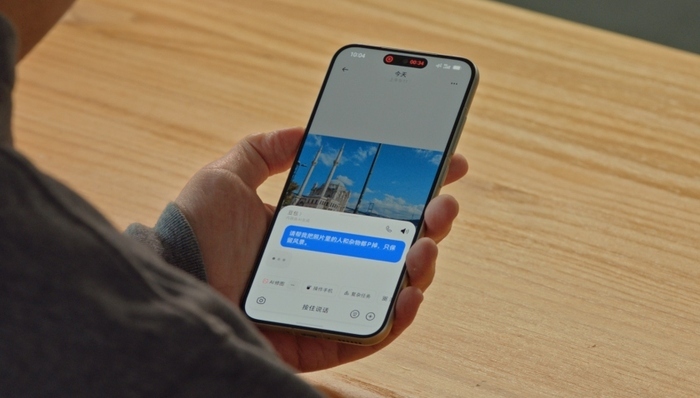
Phone companies have been plastering ‘AI’ on their flagship slides for a while. But for the past two years, most AI phones were stuck doing basic stuff—photo editing, summaries, translation, Q&A. That barely nudged people to upgrade.
In fact, with memory chip prices still sky-high, global smartphone shipments hit a 13-year low last quarter.
When hardware innovation can’t move the needle, AI becomes the one battle phone makers can’t afford to lose. Whoever wins this race will likely own the traffic gateway for the next decade.
Doubao Pushes Open the First Door
The first-gen Doubao phone, the Nubia M153, was a real turning point in the AI phone race.
That engineering prototype—a joint effort between ByteDance and ZTE—hit the market late last year with a preview version of the Doubao Phone Assistant, priced at 3,499 yuan. The partnership started three years ago: ZTE handled the hardware and system permissions, while Doubao brought the model and agent smarts.
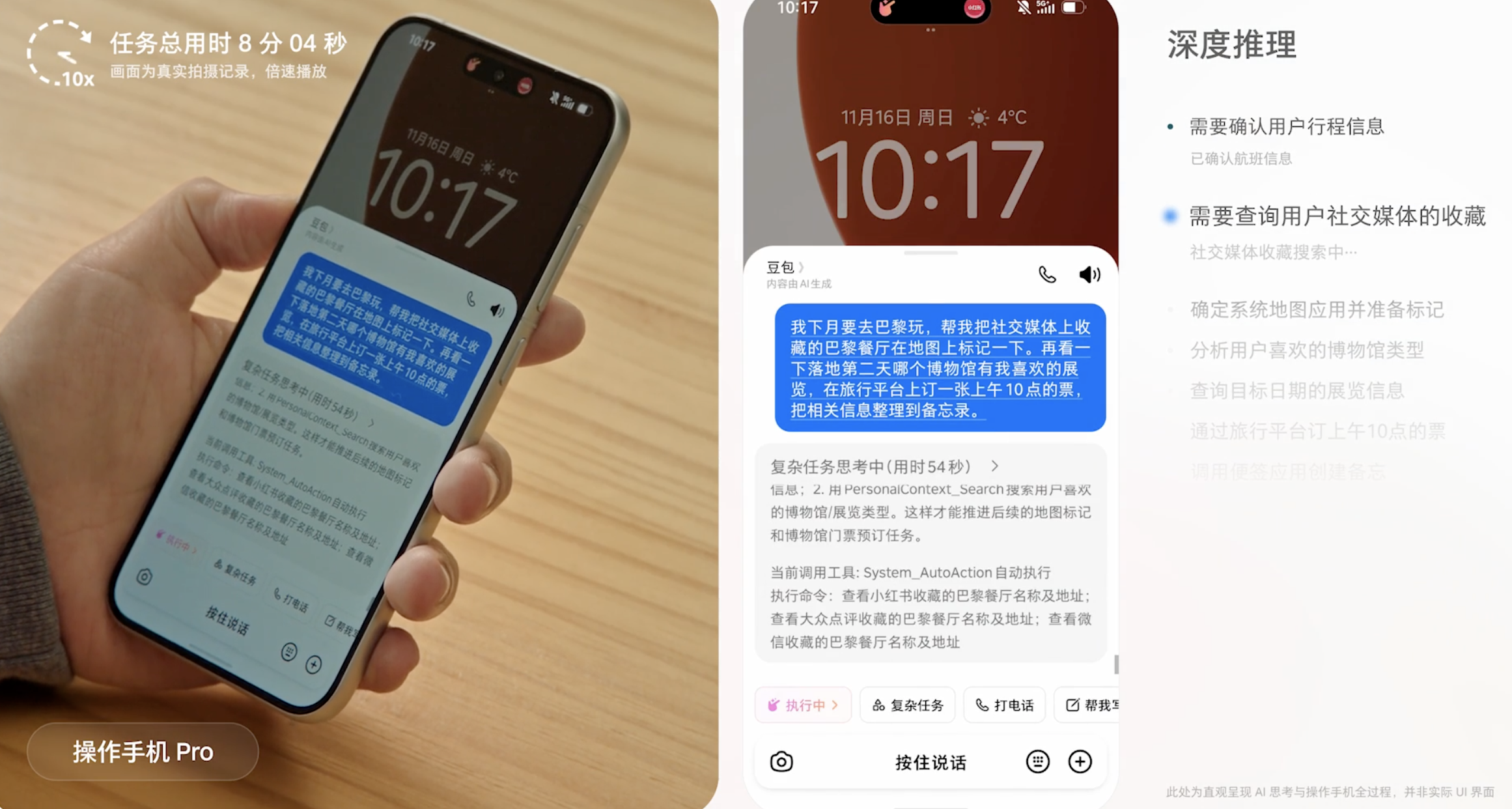
Early users still remember the thrill. You’d say what you wanted, and Doubao would read the screen, open apps, and do the work. In public demos, it could compare prices while shopping, order takeout, book flights, and reply to WeChat messages—a huge leap from the old AI phone that just edited photos or translated text.
That engineering unit sold out fast, and on the secondhand market, prices went crazy—up to 7,999 yuan. More importantly, it kicked the whole industry into high gear. Multiple phone makers told NUPIAO that after the Doubao phone dropped, everyone sped up their agent feature plans.
But the experiment wasn’t all smooth sailing. A few days after launch, apps like WeChat, Taobao, Alipay, and some banking apps started throwing up risk warnings or access blocks. Doubao had to pause its ability to operate WeChat and restrict high-risk scenarios like points farming, rewards, finance, and gaming.
That was the first real clash between phone agents and internet platform risk controls. Since the M153 mainly uses visual models to read the screen and then simulates human taps—basically the classic GUI agent route—it doesn’t need every app to open standard interfaces. That makes it the quickest path to an AI phone, but when it touches finance, the risks get fuzzy.
A source close to ByteDance shared that the Doubao team saw these risks coming but still pushed out the engineering prototype anyway. Their goal? Get the product into the market and force phone makers and app platforms to start talking about what’s allowed and what’s not. “Once someone actually does it, the industry has to take a stand,” the source said.
So all eyes are now on the second-gen product.
At WAIC, NUPIAO got hands-on with the upcoming Nubia NaviX Ultra, the second Doubao Phone Assistant device. Compared to the M153, it’s way faster at recognizing and responding, and it handles complex tasks more reliably.
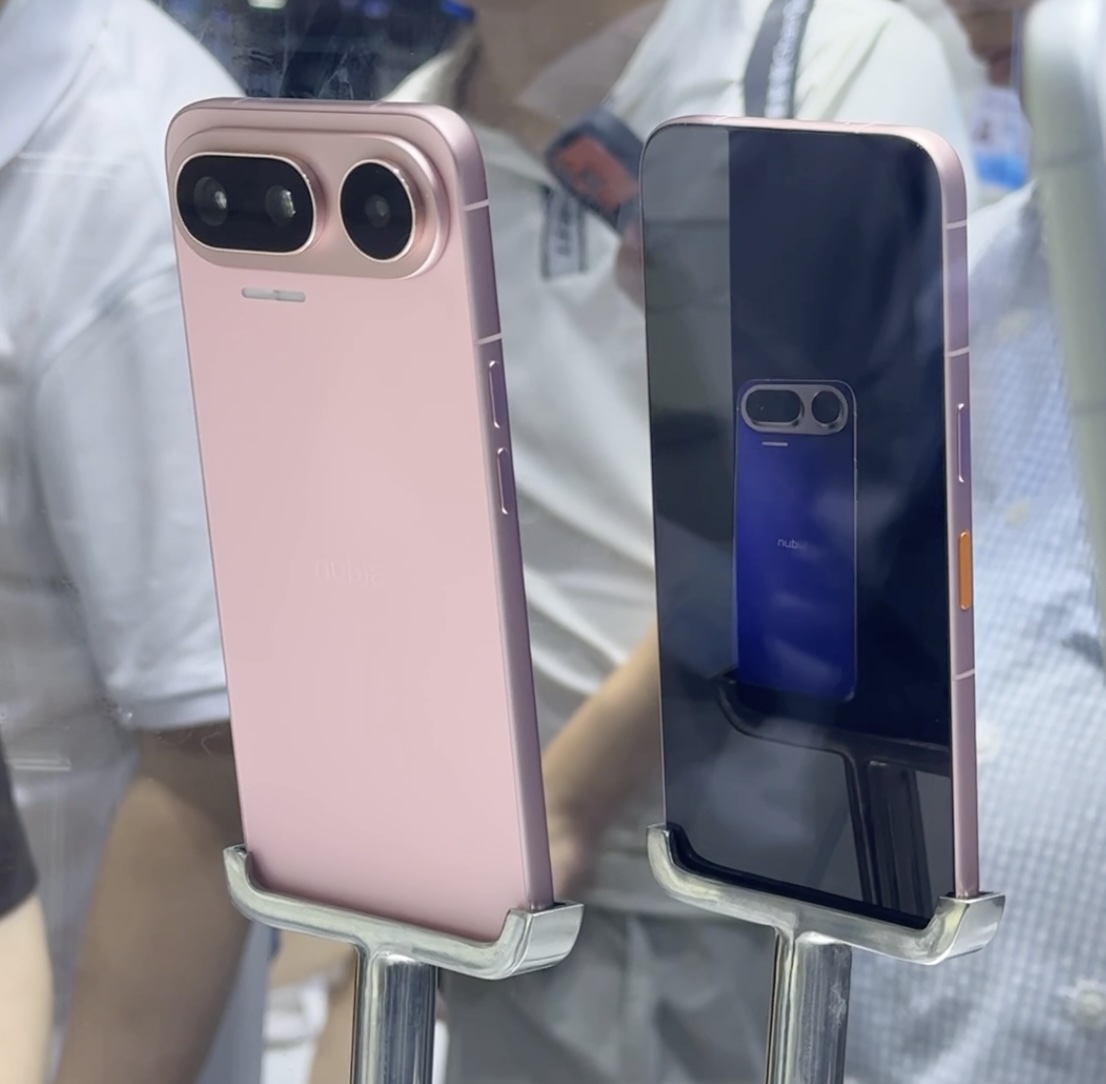
On the privacy front—the biggest question mark—Zhang Lei, VP of ZTE and GM of Nubia’s flagship products, told NUPIAO that every AI action is based on user permission, and users are always in the loop and in control. Data collection and processing follow the principles of necessity and user autonomy, with a strict AI agent protection system in place.
Now, the Nubia NaviX Ultra is just waiting for final approval to hit the market. NUPIAO learned that total inventory is about 200,000 units, with the first batch under 100,000.
For ByteDance, teaming up with Nubia isn’t just about selling phones. A source close to ByteDance told NUPIAO that the real play is to flip Doubao’s passive execution position. By partnering with hardware makers, Doubao can get embedded as a system plugin or pre-installed assistant, securing a stable entry point and building new traffic and subscription channels.
In this deal, ByteDance pays the phone maker for the entry point and covers model and customization costs. The phone maker, in turn, gets a cut of future traffic distribution and subscription revenue. In some arrangements, ByteDance doesn’t charge for customization and isn’t taking a cut from the phone maker’s token sales—for now.
“Looking at results so far, ByteDance has partly achieved its goal, but it’s also facing tougher scrutiny,” one mobile industry insider observed.
Over the past year, ByteDance has been in talks with Xiaomi, OV, Honor, Lenovo, Transsion, and others, discussing everything from model interfaces to app pre-installs and white-label phones. Most domestic makers are open to integrating Doubao’s model abilities and are evaluating pre-installing the Doubao app. But they’re more cautious about white-label solutions and system-level entry points, preferring to keep on-device models and core scheduling power in-house.
And ByteDance isn’t the only ambitious internet player. A Tencent employee told NUPIAO that after the first-gen Doubao phone launched, Tencent was closely tracking ByteDance’s progress with various manufacturers. The employee said if any phone maker opened its interfaces, Tencent would follow suit.
What’s a Real AI Phone?
Beyond ByteDance, more players are flooding into the AI phone arena.
OpenAI is a big one. In 2025, it acquired io, a hardware company co-founded by former Apple design chief Jony Ive, and the team joined OpenAI. Word from analyst Ming-Chi Kuo is that OpenAI is also working with MediaTek and Qualcomm on smartphone processors, targeting mass production by 2028.
All signs point to model makers not wanting to live inside the walled gardens of Apple and Android.
China’s large-model makers are jumping in too. Just before WAIC, Stepfun launched its terminal brand STEPX, the agent operating system Step AOS, the personal agent Amoo, and the STEPX Neo phone.
Before this, the Stepfun team had already recruited several former Honor employees to bolster its hardware expertise. For instance, Stepfun’s terminal president, Ni Jiayue, previously served as the president of Honor’s China region.
In the view of Stepfun chairman Yin Qi, the phone is just the first carrier for agents entering the physical world. It’s the model’s ability that determines the agent’s ceiling—and that’s where Stepfun shines. Right now, the STEPX Neo has passed the first round of “AI Terminal Intelligence Grading” tests, earning the highest L3 certification. But it’s still a prototype, with no official specs, price, or launch date yet.
Model makers getting into phones aren’t after hardware sales. Yu Lei, head of MOVA’s phone and AI hardware business, told NUPIAO that OpenAI’s logic is simple: personal devices help models build long-term memory, gradually learning user preferences and habits. Down the line, the model decides which platform to call for a task, effectively gaining a new distribution power.
A vivo insider agreed, saying personal memory will become the new lock-in mechanism of the AI era. In the past, switching phones wasn’t a big deal. But in the future, after long-term use of a specific agent, all your memories are stored in the cloud. If you switch to a different model, all that understanding is gone. So the hardware’s role is more about locking in the user—and its form might not even be a phone. Yin Qi also mentioned that the phone is just Stepfun’s first hardware device.
In the AI phone battlefield, players like Yin Qi face off against traditional phone makers. These incumbents have hardware, operating systems, ready-made user bases, and tons of data. But they lack model capabilities and can’t stomach the crazy costs of foundation model training.
One industry insider estimated that a top phone maker might spend up to 200 million yuan on a single training phase, with about 1,000 AI engineers on staff. Total investment could hit tens of billions, but current output is far below expectations. According to the source, there’s growing dissatisfaction inside that company with the AI department’s ROI, leading to organizational changes and a likely pullback on general foundation model investment.
Yu Lei believes a more practical path for phone makers is to distill and fine-tune open-source models for terminal-specific tasks. Theoretically, on-device models don’t need to lead in every area. They just need to be fast enough and efficient enough in specific scenarios to meet product requirements.
The most likely future route: phone makers’ on-device models handle system control and sensitive data, while external models take on high-cost tasks like generation and reasoning. Model capability gaps can be filled via APIs, but system permissions stay with the phone maker.
Different phone makers have different AI focuses. Huawei is leaning into its Ascend chips to boost domestic computing power. Xiaomi’s strength lies in its IoT ecosystem, sticking to its long-standing follower strategy and using mature external solutions to keep R&D costs down. OPPO and vivo are putting more R&D into on-device small models and specific apps, but that also means their efforts are more spread out.
Honor chose a lighter path. A big-tech insider who has worked with multiple phone makers said Honor focuses on platform AI: the system identifies user needs and then distributes tasks to various internet companies and vertical models. Whichever service the user has purchased, the system calls that capability, adjusting partners based on price, experience, and subsidies.
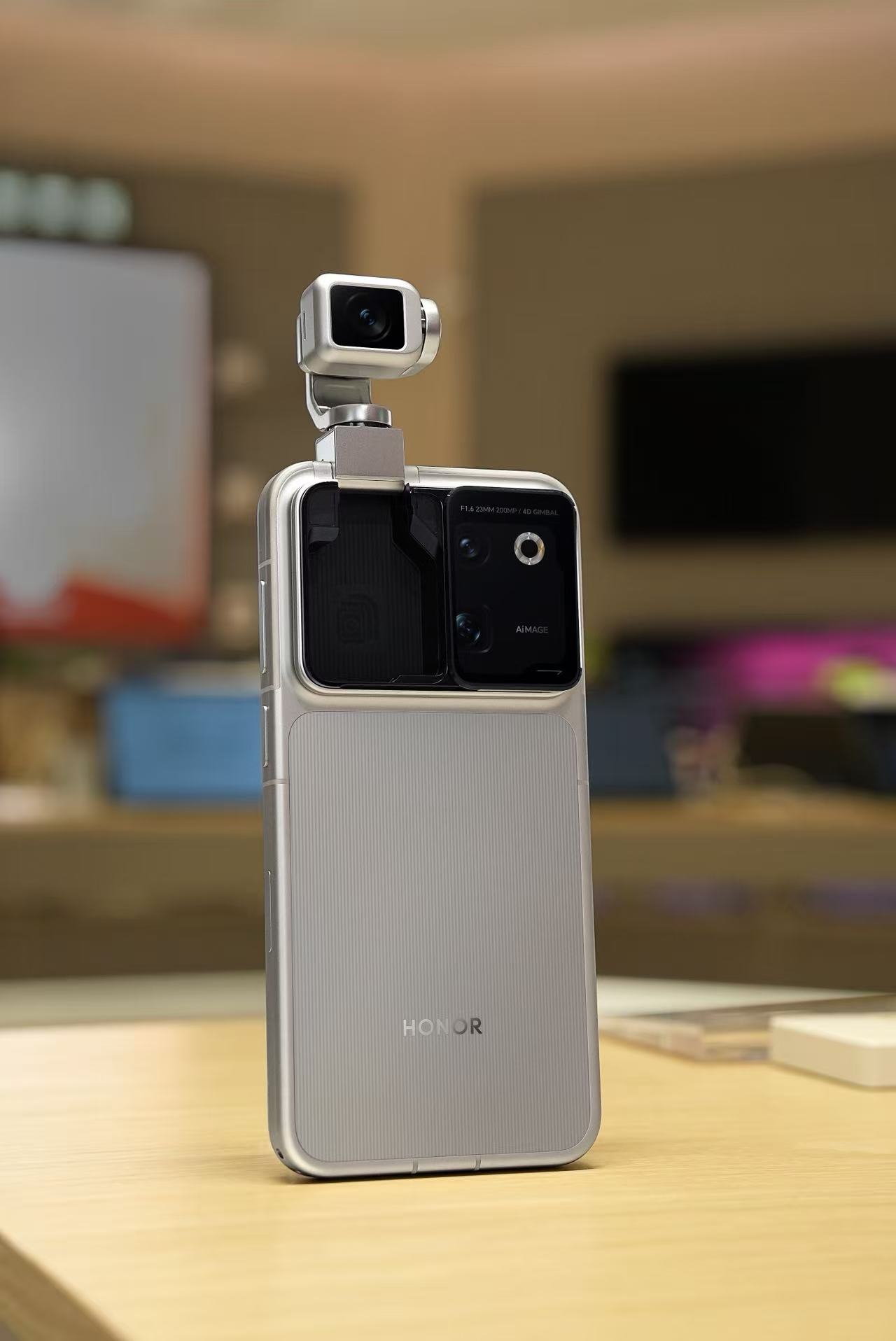
The source argued this approach reduces R&D and operational pressure for phone makers. Self-developed models mean bearing training costs and responsibility for generated content and model behavior. By calling on already-registered external models, phone makers can focus on user experience. In their view, this might be the higher-success-rate model for phone companies at this stage.
Business Model Shakeup
The biggest impact of AI phones is changing how services are distributed, which inevitably redraws the business landscape.
Right now, phone operations are straightforward: you open Taobao to shop, Meituan to order food. But once agents take over, you just say, “Help me buy a robot vacuum under 3,000 yuan that can be delivered by tomorrow.” The agent then decides which platforms to search, how to compare prices, and where to place the order.
This new interaction logic is already creating friction between phone makers and internet platforms.
Since the dawn of mobile internet, the value of internet companies has been built on user dwell time and clicks. If an agent completes a task directly, platforms lose the chance to show ads or recommend other products. When you order food on a delivery app, you might also buy a membership or use financial services. But if the phone assistant just returns a single order, all that commercial space shrinks.
A person close to vivo told NUPIAO that during vivo’s negotiations with ByteDance, vivo wanted to bring in Doubao only at the execution layer, but ByteDance wanted broader system-level control. The two sides are still at odds over permission boundaries. Earlier, in talks between Alibaba and vivo, Alibaba wanted Alipay to get higher system-level permissions, but that also fell through.
The same big-tech insider also told NUPIAO that one top phone maker previously used an interface that WeChat opens for accessibility services to show off capabilities like reading WeChat content and auto-posting to Moments. That drew a backlash from Tencent, and the two sides paused multiple collaborations.
But over the past year, phone makers have noticed a shift: internet platforms are becoming more flexible.
The dilemma for internet companies is this: if they stick to a closed ecosystem in the agent era and refuse to support the system’s Agent protocol, they risk losing their entry point on smartphones. For instance, if users place orders directly through Siri or a system assistant, the app becomes just a backend service provider.
“Whether it’s Alipay or WeChat, everyone is much more open compared to last year. Last year, readiness was maybe 0%, this year it’s 10% to 20%. But vertically aggregated platforms like Meituan are still more conservative, because if AI directly connects to merchants like Luckin Coffee or McDonald’s, it undermines their traffic aggregation power,” one phone maker insider observed.
Whether internet platforms are willing to open up—and to what extent—will largely determine which technical route AI phones ultimately take.
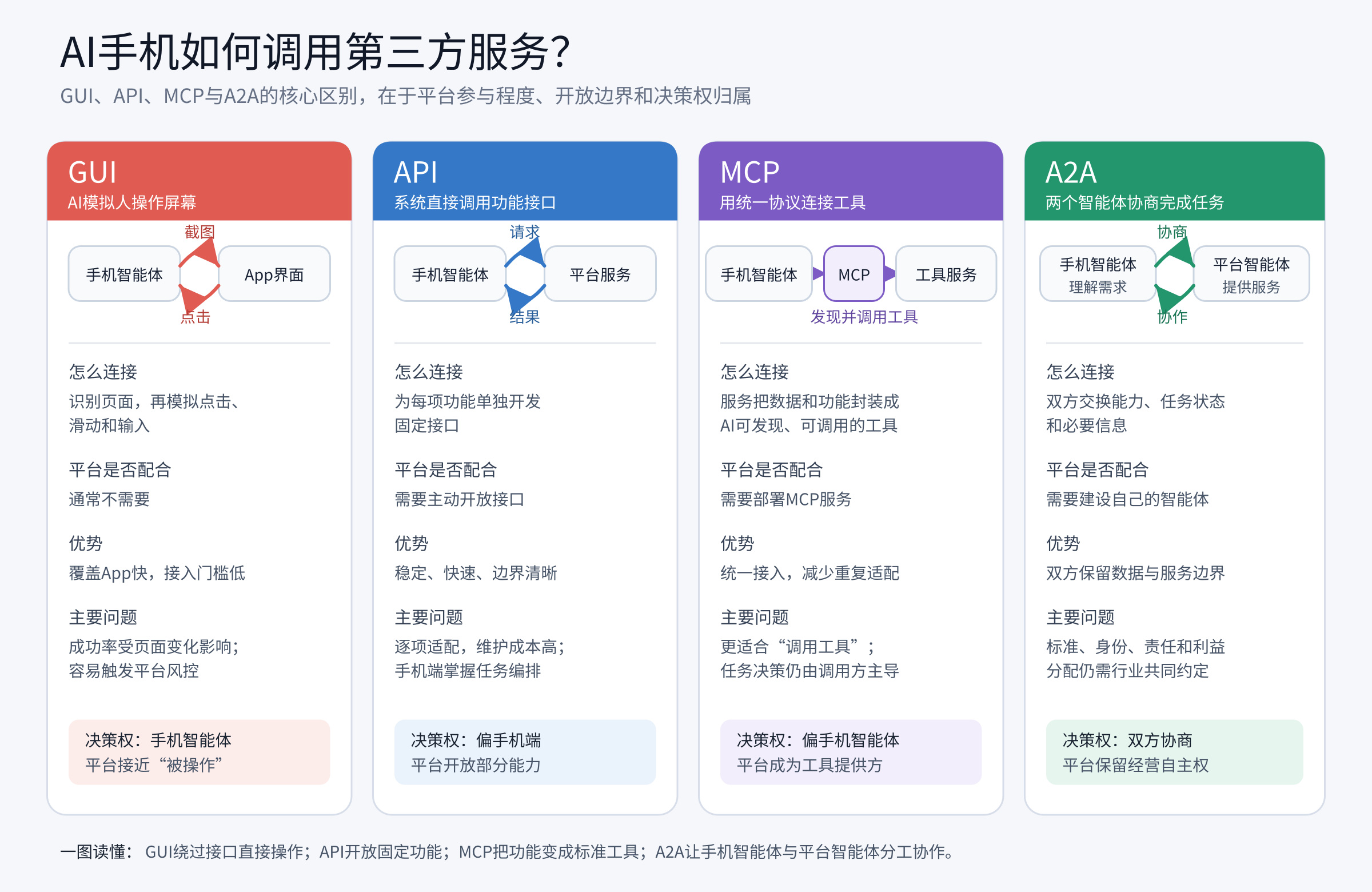
The industry is currently exploring GUI, API, MCP, and A2A approaches. Jiang Yuchen, Director of Smart Product R&D for OPPO’s ColorOS, told NUPIAO that A2A (Agent to Agent) is the only route that can work long-term. In their view, GUI bypasses platform interests, deep APIs require one-sided openness, MCP leans more toward tool invocation, while A2A allows each party to keep its own agent and data boundaries. Both sides only exchange the information necessary to complete a task, without fully opening up underlying permissions.
As for whether agent phones will truly kill the phone makers’ traditional distribution business, the makers themselves are surprisingly optimistic. One top phone maker insider believes that in the agent era, the more the system knows about the user’s schedule, location, and preferences, the more accurately it can identify needs and the more efficient distribution becomes. They revealed that internal data already shows AI-driven app recommendations outperforming traditional ads, suggesting commercial value is actually increasing.
This insider predicts that phone makers may soon charge both B2B and B2C: hotels, airlines, and internet platforms pay commissions for precise orders, while users buy subscriptions for better models and services.
As agents take on more complex tasks, cloud inference costs become unavoidable, and phone makers can’t subsidize forever. One guess is that users, who used to pay for phone bills and data plans, will increasingly buy tokens from carriers. China’s three major telecoms have already launched token packages for individuals and families. But if AI phones only deliver successful orders and time savings, user willingness to pay might still be limited.
The final shape of AI phones is still a question mark, but the path is getting clearer. One interviewee put it this way: “If the iPhone was like the first time an ape stood upright, freeing its vision and hands, then the AI agent phone is like that first ape looking up at the stars—beginning to have awareness and thought.”
Once the ape looked up, the long journey of human evolution had just begun. And AI phones are standing right at that node.