Reporter |
Editor | NUPIAO
Why on earth do people still need a tablet these days?
The entertainment duties tablets used to handle are being quietly taken over by phones with ever-bigger screens, and foldables are blurring the line between phone and tablet even further. In September, Apple rolled out its first foldable, the iPhone Duo, with a 7.6-inch inner display when unfolded. Samsung’s Galaxy Z Fold8, which went on sale in August, also packs a 7.6-inch inner screen. Phones are absorbing the big-screen experience that used to belong to tablets.
On the productivity side, meanwhile, tablets struggle to compete with laptops that keep getting lighter and more powerful. The new generation of thin-and-light laptops is widely adding dedicated NPUs. Capabilities that used to depend on high-performance PCs—on-device AI, image processing, content creation—are trickling down to slim devices.
Yet IDC data shows China’s tablet market kept growing from 2023 through 2025. Even with short-term shipment swings, users’ genuine appetite for AI tablets is hard to miss. For the tablet industry, the real question isn’t whether there’s still room in the market—it’s what new value AI can create for tablets. One of Lenovo’s answers: AI lets tablets strike a better balance among thinness, battery life, natural interaction and compute coordination, solving long-standing user needs that have never been fully met.
“Personally, I’d describe the AI tablet as a natural-born container for AI.” That’s how Zhang Hua, Senior Vice President of Lenovo Group and General Manager of its China Consumer Business Group, put it at a media briefing. Tablets combine a big screen, long battery life and portability—and especially natural voice interaction, which he sees as their innate edge over PCs and phones in the AI era.
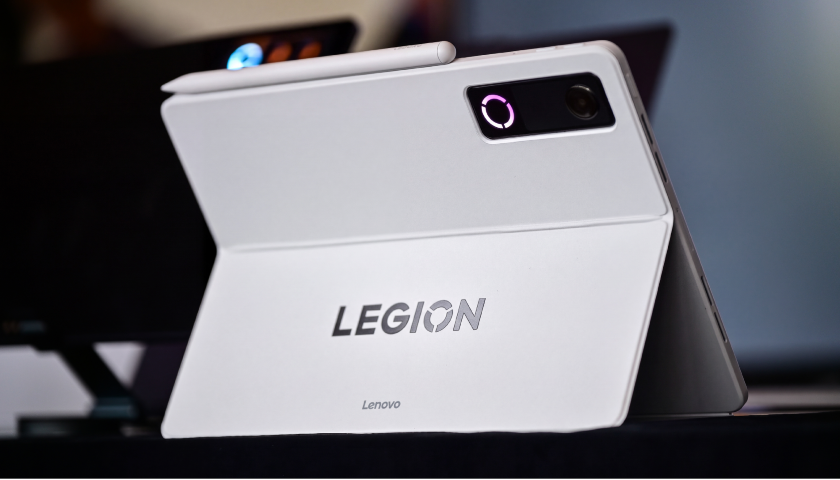
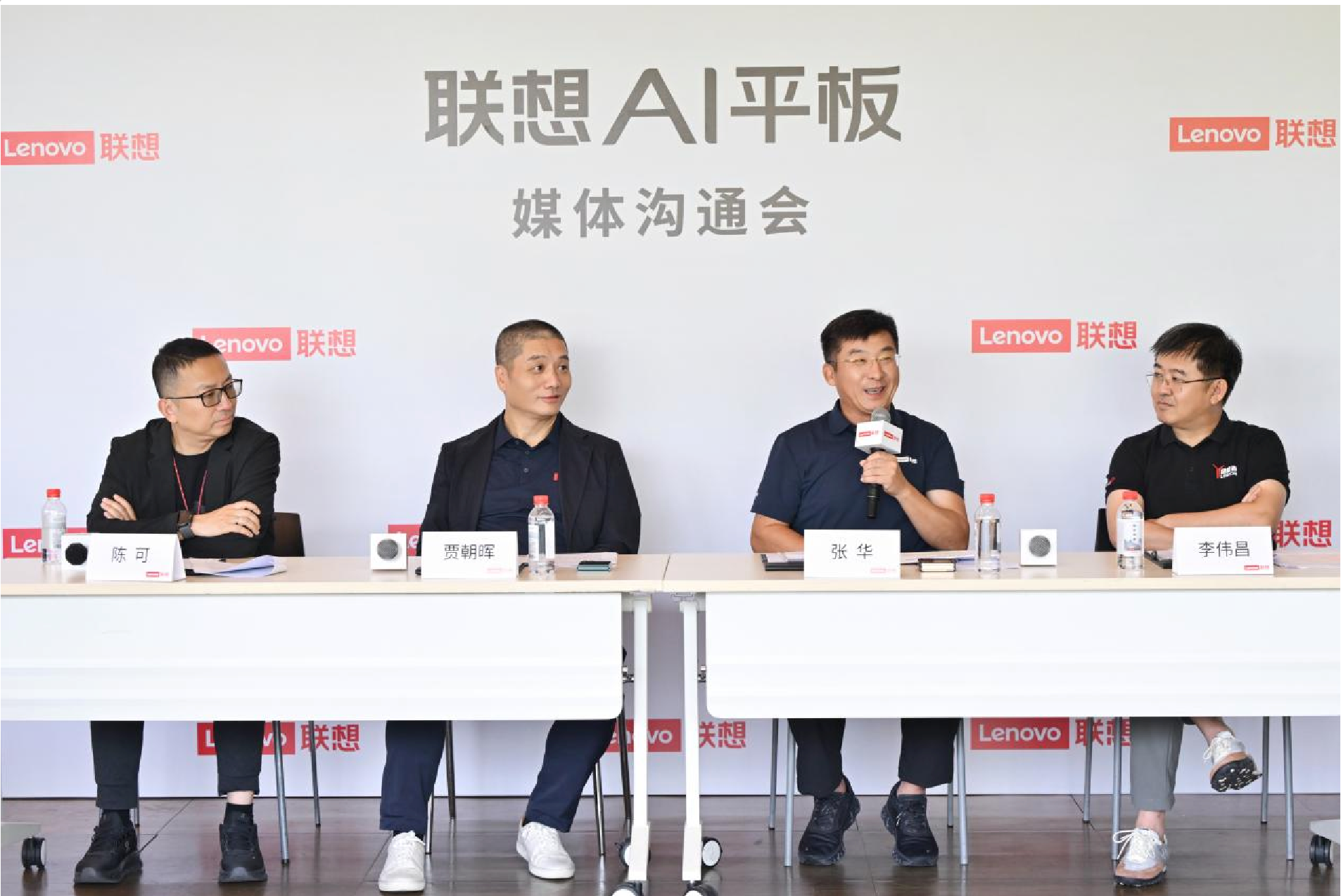
In Lenovo’s view, building tablet competitiveness always comes back to user-driven innovation: first find a group of people with the most frequent, hardest-to-solve tasks, then decide how AI, stylus, screen and cross-device capabilities should be combined. To keep products aligned with real user needs, Lenovo also launched a “monthly refresh” mechanism, iterating every month based on user feedback. Chen Ke, Vice President of Lenovo Group and General Manager of its Tablet Business Unit, says, “We’re the only tablet maker that has stuck with this.”
The college campus is one scenario Lenovo is currently digging into.
“Our product managers go onto college campuses, sit in classrooms, and attend lectures as a student would—observing exactly what scenarios and pain points college students hit when using tablets,” says Li Weichang, Vice President of Lenovo Group and General Manager of its China Consumer Personal Computing and Smart Devices Business Unit.
Chen Ke mentions that one piece of feedback the team kept hearing from students was “my flow gets interrupted.” Students already use tablets heavily, but constantly switching between apps and devices during class adds operational burden.
Based on that, Lenovo has envisioned a future AI-in-the-classroom workflow for tablets. When a student walks into a classroom, the tablet can identify the course from their schedule. During class, they can handwrite and record audio; whiteboard shots and courseware captured on their phone sync over to the tablet; after class, the large model organizes recordings, courseware, photos and circled content into notes.
“Say you’re heading off to play soccer. The tablet’s large model and AI automatically sort out the recordings, courseware, screenshots, photos and circled questions. By the time you’re back from soccer, your notes are already done,” Chen Ke says.
Maybe none of those individual actions are tablet-exclusive—taking photos, recording audio, processing documents, phones and PCs can all handle them. But what makes the classroom special is that users need a screen big enough to view courseware, want to scribble with a pen at a moment’s notice, and still need the device to be light enough to carry around.
So the tablet’s uniqueness doesn’t necessarily come from a feature nobody else has—it comes from the combination of a big screen, touch, handwriting, voice and portability all living in one device. Lenovo wants AI to be the connective layer between all these capabilities.
Of course, college isn’t the only scenario Lenovo is hunting for.
Before AI became the core narrative, Lenovo had already proven out a niche-market playbook with gaming tablets. Take the Y700: its 5G support and compact design both came straight from concrete mobile-gaming and commute needs. Now Lenovo wants to replicate that approach across more user groups.
Jia Zhaohui, Senior Vice President of Lenovo Group and head of its Global Innovation Center, says that after becoming the top pick in the gaming tablet segment, the company will focus next on the college student segment, then on young professionals. “We want to become the top choice across the entire tablet market.”
Content creation is another key scenario. Zhang Hua notes that text creation is already fairly mature, while image and audio-video creation are still developing. Li Weichang reveals that in October Lenovo plans to launch a hardware-software integrated content creation solution, hoping some short-video production can be done entirely on-device to reduce reliance on cloud tokens.
For the K12-focused Xiaoxin series, Lenovo will keep upgrading AI learning services. Next quarter it plans to launch a product that can switch among a regular screen, a monochrome e-ink screen and a color e-ink screen, covering needs ranging from online classes to reading.
From gaming and classrooms to creation and office work, Lenovo is trying to give tablets more clear-cut reasons to exist and more scenarios to live in.
On top of that, Lenovo’s assessment of tablet value is shifting from pure “product value” to “strategic value.”
The tablet business’s own growth gives Lenovo a real basis for elevating the category’s strategic position.
IDC data shows global tablet shipments reached 151.9 million units in 2025, up 5% year over year. Entering 2026, shipments saw a temporary decline due to factors like memory costs. In Q2 this year, global tablet shipments came in at 33.6 million units, down 12.3% year over year. But the long-term growth fundamentals of the tablet market haven’t changed, and global AI tablet penetration is expected to keep climbing to 74.3%.
Meanwhile, Lenovo’s tablet business has maintained fast growth. In Q2 this year, Lenovo’s global tablet shipments grew 26.2% year over year. Lenovo Group’s fiscal first-quarter report for the period ended June 30, 2026 shows tablet revenue up more than 80% year over year. In this interview, Li Weichang also said Lenovo’s tablet sales in China grew 70% year over year last quarter, with revenue up 165%, and Legion tablets now account for over 50% of its overall tablet portfolio.
As for its personal AI strategy specifically, Jia Zhaohui says Lenovo is building “one body, multiple devices” around personal intelligence—meaning PCs, phones, tablets and other devices connected by Tianxi AI.
Tianxi AI 4.3 has already begun letting different devices share databases, context and tasks. For example, a task can start on a tablet, call on a PC’s compute power and knowledge base, then return the result to the tablet.
That also means Lenovo isn’t trying to have tablets replace PCs or phones. It wants tablets to become the big-screen interaction entry point in between: PCs deliver stronger compute and traditional productivity, phones handle on-the-go use, and tablets take on more handwriting, touch and mobile big-screen scenarios.
This is also why Lenovo keeps stressing the shift from “+AI” to “AI+.”
Jia Zhaohui argues that simply bolting an AI app onto a device is just “+AI.” If AI is still nothing more than a chat box, it makes little difference whether it’s installed on a PC, phone or tablet. “AI+” meansredesigning the system around AI’s own strengths, tackling fragmented device and app capabilities, disjointed user experiences and high barriers to use.
For tablets, that may be the real variable AI can bring. And for now, AI tablets still need more real, hard-to-replace use cases to prove their worth.