So here’s some sad news for all the frog parents out there — the popular mobile game “Travel Frog: China Journey” just announced it’s shutting down on December 8, and plenty of players are definitely not taking it well.
According to a September 9 report from NUPIAO, a source close to Lingxi Games — the operator behind “Travel Frog: China Journey” — said the shutdown announcement comes down to the IP license expiring. During renewal talks, the IP holder reportedly proposed much harsher terms than the previous deal, while also stripping Lingxi Games of its rights to run normal operations like crossover events and merchandise services. The source added that as of now, Lingxi Games hasn’t thrown in the towel and is still in final negotiations with the IP holder, while exploring every possible solution on the side.
On the afternoon of September 8, the official Weibo account of “Travel Frog: China Journey” dropped a statement, announcing that the mainland China version would stop operating because the IP licensing deal had run out.The detailed timeline: at 2 PM on September 8, the game closed downloads across all platforms — no more new downloads, no in-game purchases, and no new user registrations. Then at 6 PM on December 8, the game officially shuts down: servers go offline, the official website gets taken down. At that point, players won’t be able to log in through the game servers anymore. Once the servers close, all account data and character info across every server will be completely wiped.
The “Travel Frog: China Journey” operations team is reminding players that once the servers are down, frog parents won’t be able to log in again — so they suggest saving any character info you want to keep in advance, just in case you need it for other matters later.
This shutdown is just an operational adjustment for the licensed mainland China version — the original Japanese game is still running as usual.The original “Travel Frog” was developed by Japanese game company Hit-Point, with the Android version launching in Japan on November 24, 2017, and the iOS version dropping on December 6 that same year.The game is dead simple: players just pack a bento, an amulet, and some items for the frog, and it’ll head out on its own adventures, randomly sending back postcards and souvenirs from all over. It might also stay home eating, reading, or whittling wood. No complicated controls, no competitive or social pressure whatsoever.
Back in early 2018, the game unexpectedly blew up in China — without any official localization or marketing. It sparked a full-on “frog-raising craze,” with tons of players calling themselves “old mothers.” The game also quickly shot to the top of the free game download charts on all major app stores.
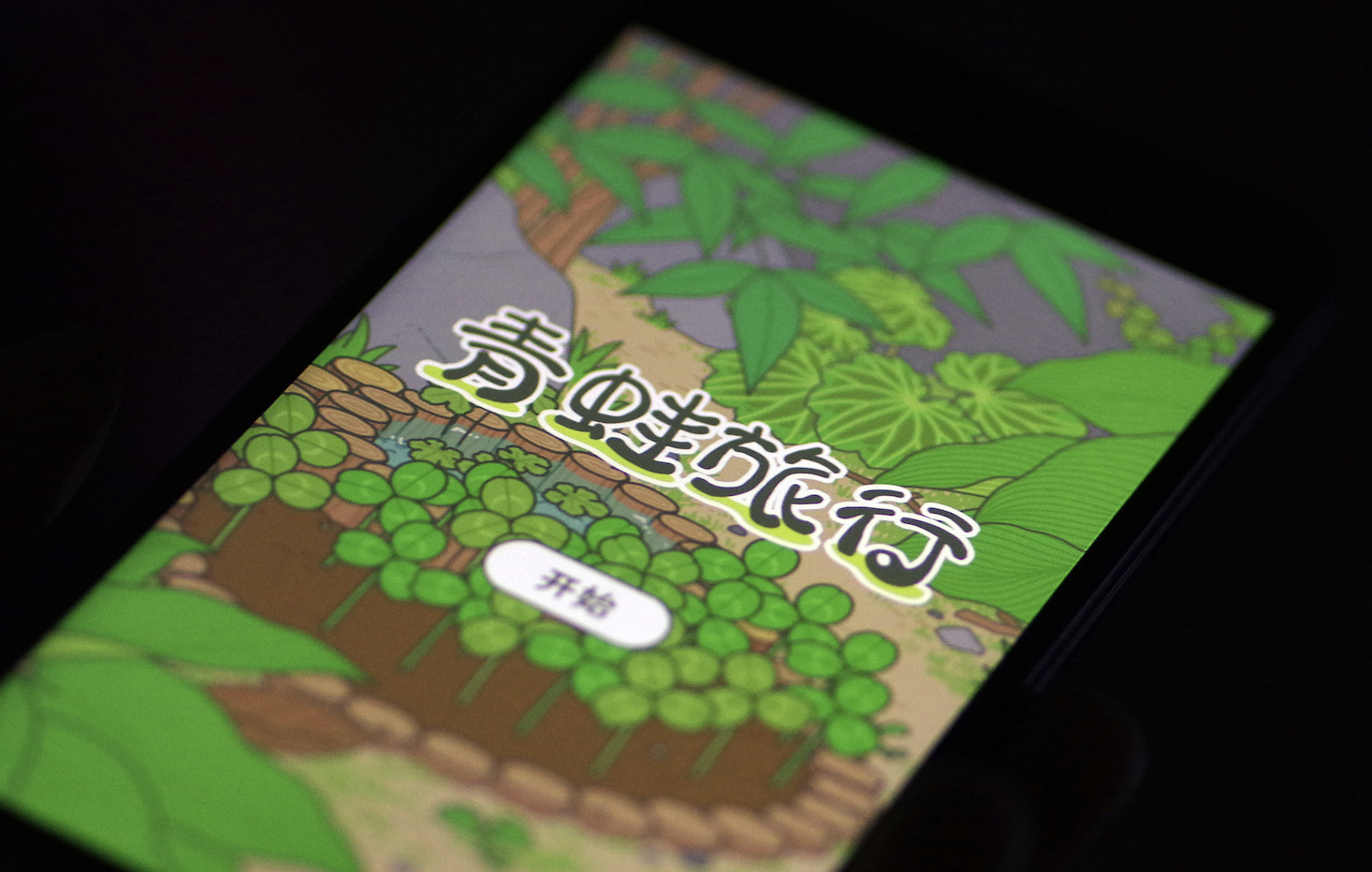
On April 2, 2018, Alibaba Group announced a strategic partnership with Hit-Point, securing the exclusive rights to publish “Travel Frog: China Journey” in mainland China, with Guangzhou Lingxi Interactive Entertainment handling operations.Then on December 7, 2020, “Travel Frog: China Journey” officially launched.
The China version kept the core gameplay but gave it a local makeover: the frog’s travel destinations switched from Japanese spots to Chinese landmarks like the Great Wall, Forbidden City, West Lake, and Terracotta Warriors. The shop got Chinese-style items too — steamed buns, jade pendants, gourds, oil-paper umbrellas. Even the frog’s room and garden got a Chinese design twist.
After “Travel Frog: China Journey” went viral, the gaming market saw a wave of idle casual games popping up, and all kinds of simple, stress-free mini-games started getting attention from players too.
In the past couple of years, Travel Frog’s player numbers have been sliding. In 2024,the game’s mini-program version was briefly taken down at the end of March before coming back online.
According to official announcements, the in-game customer service “feedback” feature shut down on June 5, 2024, due to operational strategy adjustments. The game kept getting updates until December 2024. Then in 2025, the vivo channel version of “Travel Frog: China Journey” announced its closure.
Recently, Lingxi Games — the operator of “Travel Frog: China Journey” — just wrapped up a major ownership shake-up. On August 17, Lingxi Games CEO Zhou Bingshu confirmed in an internal memo that Alibaba Group and Trustbridge Partners, under CITIC Capital, had officially reached a deal. Under the agreement, Alibaba will sell off all its shares in Lingxi Games, with Trustbridge Partners stepping in as the new shareholder. Previous reports pegged the deal at over $1.5 billion (over 10.1 billion RMB), higher than the market’s expected 7-9 billion RMB. This means Lingxi Games is officially breaking away from the Alibaba ecosystem and starting a new chapter as an independent game company.