Apple shares hit a fresh record high
On October 13, Apple shares rose 1.74% in early trading to $346.892, bringing its market cap to $5.06 trillion and setting another all-time high.
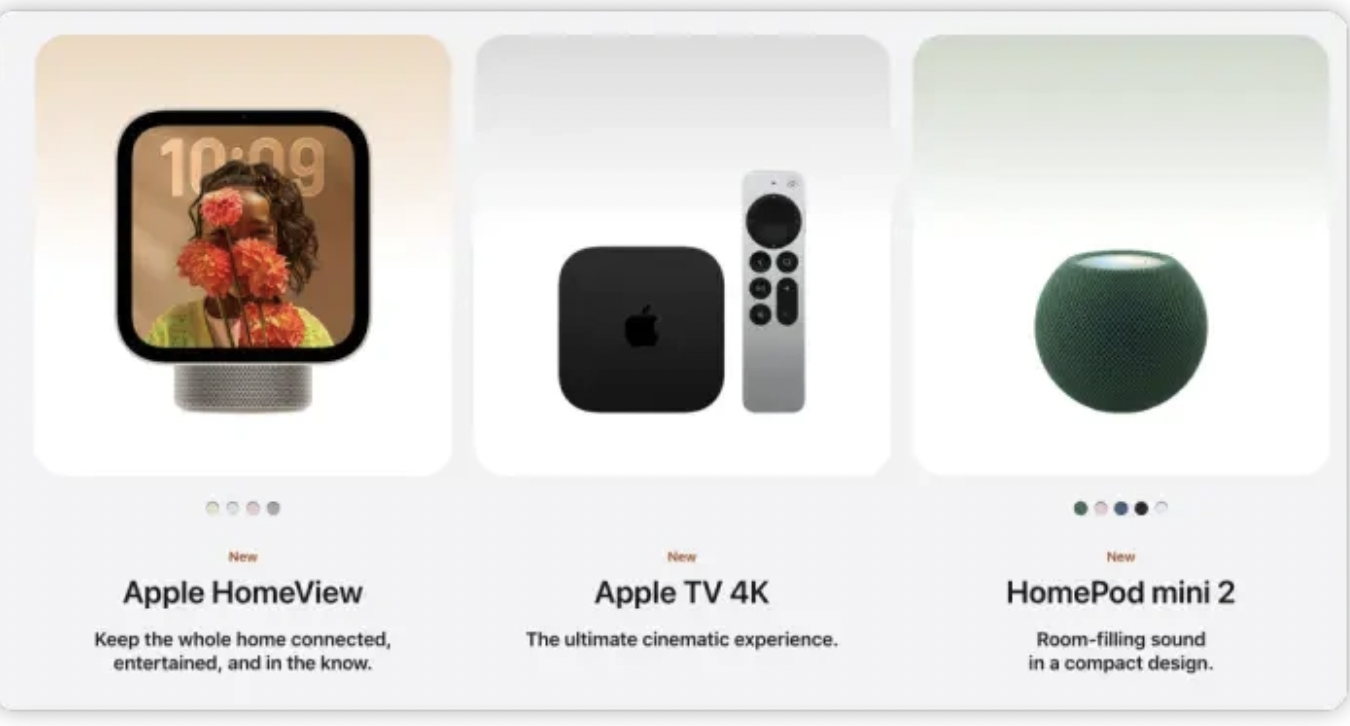
That same day, Apple announced the second-generation HomePod mini, priced at $149 in five colors: pink, green, blue, white and midnight. Sales start October 30. The new model packs the S10 chip, upgrades the audio experience and adds a Sound Glow feature that shows dynamic lighting in time with the music. Apple says a free software update will later bring Siri AI support, boosting natural conversation, personalized information handling and music recommendations. The device can also pair with the fourth-generation Apple TV 4K and connect four speakers for a surround-sound setup.
Huawei’s Xu Songyu: Kirin 9050 series has entered mass production
At the 2026 Huawei Terminal Innovation Technology Communication Meeting, Huawei detailed the Kirin 9050 series chips that recently debuted with the Huawei Mate XT 2 tri-fold phone and the Mate90 Pro Max flagship. Xu Songyu, head of wireless terminal chip product management in Huawei’s semiconductor business, said cumulative shipments of terminal products based on Kirin chips have topped 100 million since 2023. With support from China’s electronics industry, the Kirin 9050 series has now entered mass production. The launch marks an important step in Kirin’s continued evolution after its return and opens a new 10-year chapter for the chip family.
AMD raises 2030 CPU market outlook to more than $200 billion

On October 12 local time, AMD CEO Lisa Su said at the Open Compute Project (OCP) Global Summit that as agentic AI workloads grow, the company expects the potential CPU market to exceed $200 billion by 2030, with a compound annual growth rate of about 50% over the next four to five years. She also expects the data center AI accelerator market to approach $1.5 trillion by 2030 and called 2026 the “year of inference,” with inference workloads likely to account for about 60% of the AI market in the future.
Su said AMD began shipping Helios systems in September, with the first units deployed at customers including OpenAI, Meta, Microsoft, Oracle and Anthropic, and capacity is expected to keep ramping from the fourth quarter through the first half of next year.
Apple launches HomeView smart home hub for $299
On October 13, Apple announced HomeView, a smart home device with a 7-inch Liquid Retina display. It combines music playback, video calls, home monitoring and smart home control, and runs the next-generation Siri based on Apple Intelligence. The device supports up to six users and uses facial recognition to deliver personalized content, with a strong focus on privacy and data security.
HomeView comes in desktop and wall-mounted versions, both priced at $299. Pre-orders opened that day, with sales starting November 13 in the U.S., U.K., Canada, Australia and other markets. Apple also said it is working with LG Electronics and Schneider Electric on accessories including smart cameras, thermostats and door locks. Because Siri AI has not yet launched in iOS in the EU, HomeView will not be sold there for now.
Step Terminal unveils STEPX Neo AI-agent phone
On October 13, Step Terminal officially launched the STEPX Neo AI-agent phone. The STEPX Neo runs Step AOS 1.0, an operating system built natively for AI agents. On the hardware side, it features an AI-agent hearing enhancement system made up of a six-microphone array, a low-power audio sensing chip and the Whisper 1.0 pickup algorithm, helping Step Amoo accurately recognize the user’s voice in complex sound environments. The low-power chip also runs independently and consumes just 1.2% of battery over 24 hours. The phone has a separate MiniLED dot-matrix rear display that supports dual-screen interaction.
Zhiyuan puts over 200 million yuan into embodied AI at universities, first batch includes 20+ schools
On October 13, reports said Zhiyuan’s “Yuansheng Ecosystem Development Plan” is partnering with more than 20 domestic universities to build an industry-education integration and innovation practice platform for embodied AI. The first batch includes Peking University, Tsinghua University, Zhejiang University, Shanghai Jiao Tong University and others. Zhiyuan will invest more than 1,000 embodied AI devices, covering wheeled, humanoid and quadruped robots, and provide the AIMA development platform. The total value of the robot hardware and software membership benefits is about 200 million yuan. The two sides will also cooperate on course development, research projects, teacher training and student internships.
Samsung Electronics Chairman Lee Jae-yong to receive shares from mother worth about 2.6 trillion won
On October 13, a securities transaction plan report filed by Samsung Electronics Chairman Lee Jae-yong showed that he plans to accept 11.158 million common shares of Samsung Electronics gifted by his mother, Hong Ra-hee. Based on Samsung Electronics’ closing price that day, the gift is worth about 2.6 trillion won. After the transaction, Lee’s holdings will rise from about 105.2 million shares to about 116.4 million shares, and his stake will increase from 1.58% to 1.75%. The report said the purpose of the transaction is to accept the gift, and the agreement was signed on October 12.
Musk reveals Terafab research goal: iterate about 10 chip designs a year
On October 13, according to reports, Elon Musk said Tesla and SpaceX plan to manufacture and test about 10 chip designs a year at the Terafab research facility at the Texas Gigafactory to speed up chip development iterations. Musk said a major chip design usually takes about two years from kickoff to mass production, and the new facility will integrate chip manufacturing, testing, packaging and photomask production. The overall Terafab plan is aimed at supplying chips for Tesla vehicles, the Optimus humanoid robot and space AI data centers.
Separately, reports said TSMC is considering setting up operations in Texas and has already held related discussions with Texas officials. Musk said Tesla and SpaceX will build and operate Terafab themselves, while TSMC may lease part of the site. Intel has also joined the project, and Tesla plans to use Intel’s 14A process to make related chips.