NUPIAO Reporter |
NUPIAO Editor | NUPIAO
On July 14, general-purpose humanoid robot company LimX Dynamics announced it had closed a nearly $200 million Pre-IPO round at a valuation of RMB 15 billion. Together with the $200 million Series B it completed in January, LimX Dynamics has raised $400 million in just half a year.
Investors in this round include IDG Capital, Lens Technology, G.G.G., Redstone VC, WestSummit Capital, Gatelanes, and Hefei Binhu Industrial Development Group, among others. Existing shareholders such as Leishi Capital, Oasis Capital, Cornerstone Capital, Nanshan Zhanxin Investment, Shangqi Capital and NIO Capital also followed on. About 70% of the capital came from overseas.
This has to do with LimX Dynamics’ global positioning. Founder Zhang Wei told NUPIAO that overseas revenue could eventually account for a larger share than domestic revenue. Compared with China, labor costs are higher in Europe, the Middle East, Japan and South Korea, so the economics of using service robots to replace part of that labor are easier to justify; at the same time, price competition overseas is relatively less intense, which leaves more room for robot companies to make a profit.
So far, LimX Dynamics’ robot products have received thousands of orders in total, with more than half coming from overseas. Zhang Wei says LimX Dynamics currently holds more overseas orders than any other domestic embodied AI company.
Founded in 2022, LimX Dynamics first drew public attention for its robot motion-control capabilities. In 2024, a video of its bipedal robot P1 hiking on a wild mountain trail in Shenzhen went viral, giving the company recognition among a crowd of robot makers eager to show off backflips.
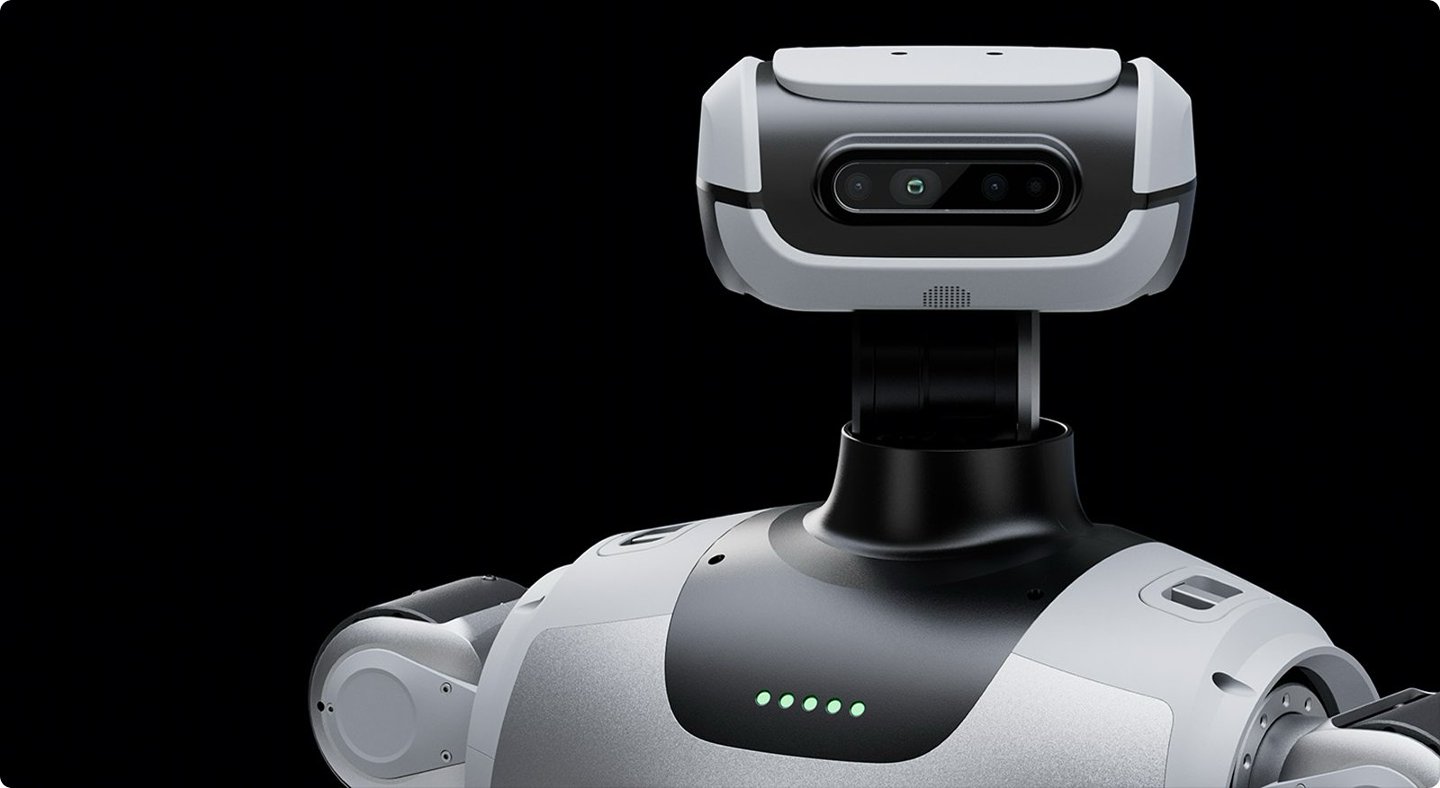
Before founding LimX Dynamics, Zhang Wei did robotics algorithm research in the United States and began focusing on humanoid robots in 2017. After starting LimX Dynamics, he positioned the company as a robot “OEM”: covering hardware design and manufacturing, AI models, an embodied-agent operating system and product definition all at once.
Zhang Wei believes embodied AI is still at an early industry stage. The supply chain, models and software systems are not fully mature, and when the external division of labor cannot solve every problem, doing it yourself is the best option.
Unlike most embodied AI companies that send robots into factories, Zhang Wei argues that “no single scenario absolutely requires a humanoid robot.”
He says the core value of a bipedal humanoid robot is not maximum efficiency on one task, but the ability to complete multiple non-standardized tasks without changing the robot’s form factor. Once it enters a production process, it has to compete with robotic arms, mobile robots and other specialized equipment, and it may not win on speed, cost or reliability.
That is why LimX Dynamics is currently focusing its bipedal humanoid robots on commercial services, including reception, guided tours, interaction and performances. The long-term goal is to enter the home.
In May this year, LimX Dynamics launched Luna, a full-size interactive humanoid robot, and began delivering it to customers in China and overseas within a month. Unlike the neutral or male-styled designs common in the industry, Luna has a female-like persona and is mainly aimed at commercial service scenarios. To Zhang Wei, performance and interaction are inherently about differentiation, so appearance, personality and interaction style can all become part of the product’s value.
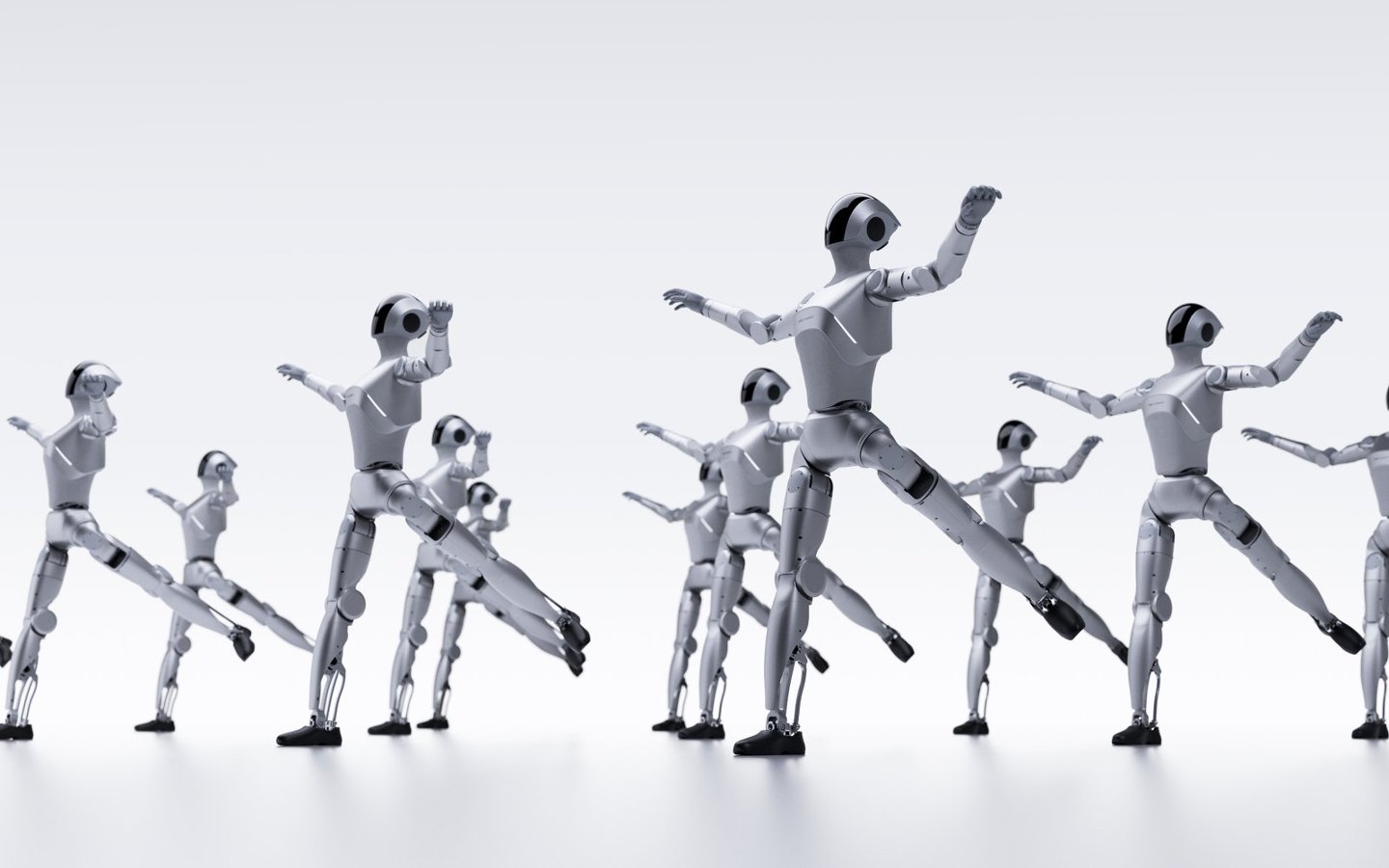
Over the past two years, humanoid robot companies’ products have mostly converged: similar height and number of joints, and demos mostly limited to walking, dancing, moving boxes and tidying things up. Zhang Wei sees this homogenization as a sign that most companies are still stuck at the “it can move” stage. When robots have not yet formed clear usage standards or commercial value, it is hard for outsiders to tell the difference between products.
The next threshold LimX Dynamics wants to cross is getting robots out of remote control and letting them complete tasks autonomously in unstructured environments.
Zhang Wei believes robots can already have a “brain” responsible for observing, thinking, planning and correcting mistakes, but that does not mean they must know how to fold clothes, tighten screws or cook from day one. “Just because a person can’t play the piano doesn’t mean they don’t have a brain.” Specific skills still have to be learned separately, and the data required for different skills varies a lot.
Based on that view, robot makers cannot wait for general models to mature before looking for scenarios. They need to decide what robots should learn first based on commercial value. LimX Dynamics’ standard for choosing scenarios is simple: the data cost of training, deploying and maintaining a skill must be lower than the value that skill can create.
LimX Dynamics currently has a three-layer technology architecture: at the bottom is System 0, a motion foundation model responsible for whole-body movement; in the middle are specific skills such as VLA and World Action Model; and on top is an embodied-agent operating system responsible for cognition, planning and model orchestration. In addition, LimX Dynamics has launched FluxVLA Engine, an open-source tool for developers to train, iterate and deploy models, hoping to leave scenario development for specific industries to partners.
Zhang Wei has rarely given media interviews. In this conversation, he also made a rare set of industry judgments: why humanoid robots should not rush into factories first, why dexterous hands matter but do not need to be self-developed in a hurry, why world models need to be “demystified”, whether carmakers and smartphone makers entering the space will squeeze startups, and why Chinese companies are running at the front in the global embodied AI race.
Below is an edited transcript of the conversation with Zhang Wei:
Capital isn’t the goal, but without bullets you can’t fight
NUPIAO: LimX Dynamics did not use to take the fast-funding route, but it has raised a lot in the past six months. Why the change?
Zhang Wei: Wehave actually been quite restrained. Whether it is fundraising or pushing toward an IPO, staying healthy always comes first. We will not shout that we’ll hit RMB 1 billion in revenue this year and RMB 2 billion next year just to pump up the valuation, because that does not fit business logic. That is poison.
But right now, capital is one of the most important competitive factors in embodied AI, and also an important safeguard. Without it, you have no bullets and cannot fight. So we have been fundraising, but we have not made fundraising the only goal.
NUPIAO: In this round, what did overseas investors value most about LimX Dynamics?
Zhang Wei: Probably a closer fit in corporate culture and values; they may be willing to pay a high premium for trust. Brand also matters a lot overseas, while in China people may put more weight on cost.
After our first humanoid robot shipped last year, it entered many well-known overseas universities and labs, including some U.S. embodied AI companies focused on brain research. That shows our robot body fits the needs of overseas universities and researchers quite well, and it is one reason LimX Dynamics has drawn attention from overseas capital.
NUPIAO: What do investors care about most? What demands or pressure have they put on the company?
Zhang Wei: Among the investors we have met, relatively few are purely chasing short-term gains; most want to be part of this round of technological change. We also have no valuation adjustment mechanism or buyback bet. We won’t promise to immediately achieve something just because we raised money, and we won’t agree to a deployment project first just to get funding. Investors give advice, but rarely impose mandatory pressure.
NUPIAO: Since the company’s investors are not in a hurry for a short-term exit, why is LimX Dynamics preparing to go public now? Is it because you need money?
Zhang Wei: Going public matters a lot to us. You can look at NIO, XPeng and Li Auto back then: even though their share prices swung widely after listing, when the technology and market truly matured, being listed still gave them the chance to keep growing. If a company never enters the capital markets, it may run into big problems when industry competition reaches a critical stage. Listing is an important platform. It is not simply because we lack money now, but because we need to prepare for long-term competition after the industry truly matures.
NUPIAO: Valuations of domestic embodied AI companies are generally lower than those in the U.S., but recently a Shenzhen company announced a valuation above RMB 20 billion. Do you think China’s capital market is rational about embodied AI valuations?
Zhang Wei: There is no especially huge bubble, but the level of professionalism varies widely. Humanoid robots should be a very valuable business. The question is whether people can tell who really has the ability to make it happen.
It is a bit like the internet. The internet direction was certainly right, but after thousands of internet companies appeared, a large number were bound to die. You cannot therefore say the internet was wrong; you can only say that judgments about specific companies may not be accurate.
NUPIAO: Many embodied AI companies are preparing for IPOs. Will the market pricing of the first listed company affect how the capital market views the whole industry? Are you worried that a peer listing first will put pressure on LimX Dynamics’ valuation?
Zhang Wei: It will have some impact. Secondary-market pricing needs an anchor, and the valuations of the first batch of listed companies will become industry references. But among the top few companies specifically, the impact may be limited. I have never worried much about valuation; being a bit higher or lower in the short term does not mean much. Our current valuation is relatively healthy.
If humanoid robots don’t go into factories, where will they go?
NUPIAO: LimX Dynamics positions itself as a humanoid robot OEM, but it also builds the robot’s brain. How do you define where you stand now?
Zhang Wei: Humanoid robots already have a “brain” now, and this year the “brain” will become more and more mature, so robots will be able to do more and more work. We do not train foundation models such as large language models, but VLA (vision-language-action models) and World Action Model are things we must build, because these are skill models connecting perception and action. We started working on World Action Model early, and now we focus on concrete robot skills and on integrating the body, skill models and brain.
NUPIAO: You keep stressing that humanoid robots should serve people. What do you think of today’s biomimetic robots?
Zhang Wei: There are many ways to serve people; you don’t necessarily have to make a robot look exactly like a human. What matters more about serving people is that the robot works in the environments where humans live and work.
As for today’s biomimetic robots, I don’t think they have reached a truly mature stage yet; overall they are not good enough. If users really have that kind of demand in the future, we will consider it, but that time has not come yet.
NUPIAO: Why not let bipedal humanoid robots go into factories?
Zhang Wei: Two-legged humanoid robots are not very efficient in most factories; they are not the optimal choice.
We have many scenarios to choose from, and the key is choosing which users to serve. Putting a legged humanoid robot into most factories has limited value. At this stage we lean toward commercial services, and ultimately we want to enter the home. If we spent a long time adapting bipedal humanoid robots to factories, that would offer limited help for entering homes in the future. So we are not going in now; that does not mean going into factories is necessarily wrong.
Our robots can still be sold to factories, and we will provide technical support to customers. Partners can take our robots into industrial scenarios. It is just that when we do our own scenario deployment, we will not prioritize putting bipedal humanoid robots into factories.
NUPIAO: How is commercialization going right now? Roughly what scale is revenue at?
Zhang Wei: It is not convenient to disclose the exact revenue scale right now. But we have received thousands of orders, all with real value. Customers include research and education institutions, as well as commercial service scenarios such as hotels, entertainment and guided tours.
NUPIAO: Humanoid robots are becoming more homogenized. Everyone is making full-size robots, and the scenarios they show are limited. Which scenario can show your advantage?
Zhang Wei: There is an assumption in that question: that everyone is homogenized because there are limited scenarios. I don’t quite agree. It is not that there are few scenarios; many scenarios simply have not been truly deployed yet. Because the industry lacks evaluation standards, as long as everyone’s robot can move, they all look similar.
In the past, if a robot could move, you could raise money, so everyone first built a robot that could move. But from being able to move to being usable, there is still a big gap, and no company has fully closed it yet.
NUPIAO: So you think there are actually plenty of scenarios for humanoid robots?
Zhang Wei: Way too many. As long as you break products and demand down finely enough, every scenario can be very specific. Take performance: there are stage shows, corporate annual meetings, weddings, big concerts, nightclubs and many other sub-scenarios. The performance style is different too. Performance robots replace actors, hosts, even a kind of “little celebrity”, so the premium can be higher. Just doing hosting well could be a big market.
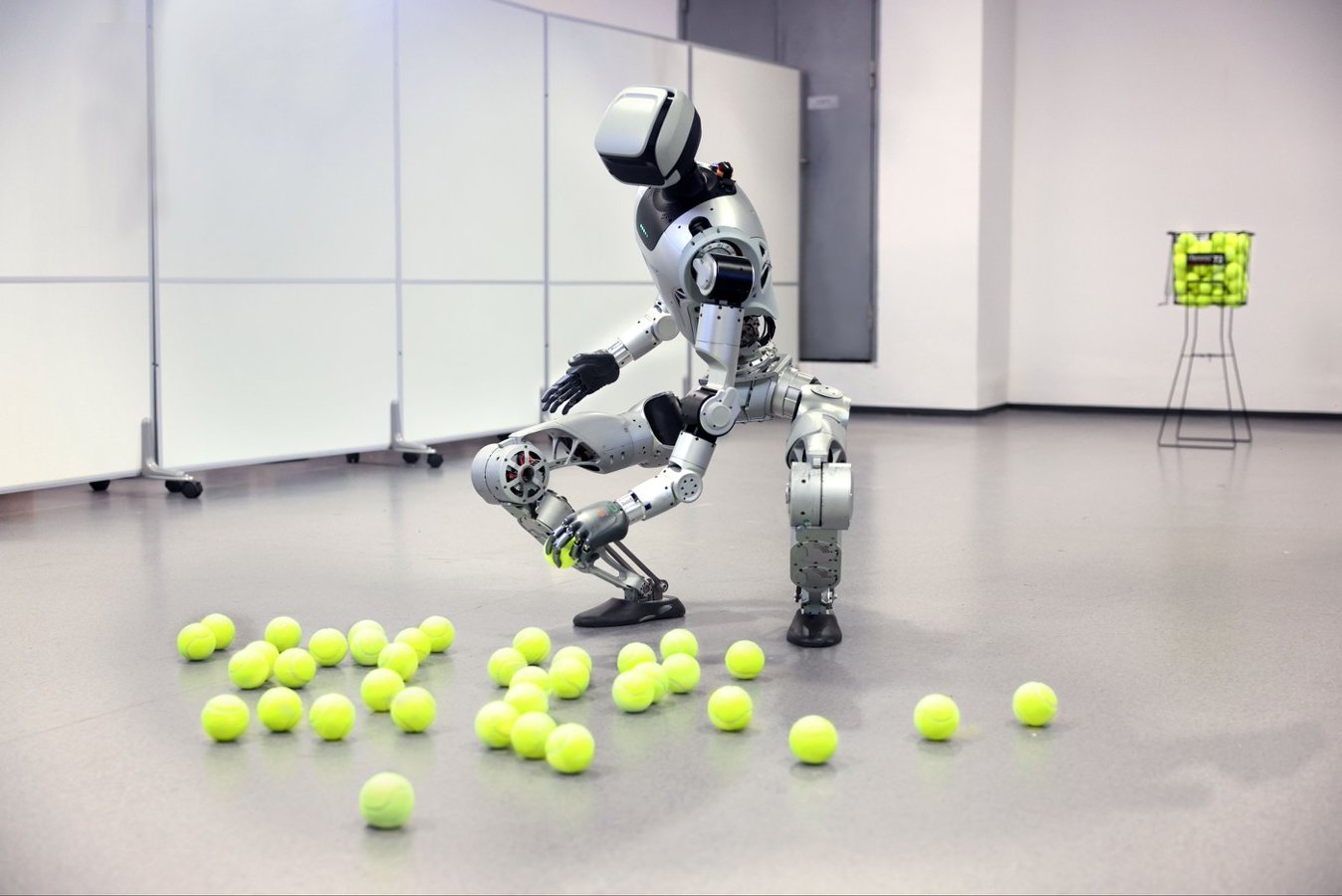
NUPIAO: So no company has truly made scenario deployment work for bipedal humanoid robots yet? How do you define “deployment”?
Zhang Wei: Scenario deployment means the business model works and the scenario forms a closed loop. Users keep using it, and the robot keeps creating value. Once that premise is met, performance can count as deployment too. But if you mean fully autonomous humanoid robots truly entering scenarios, especially with the remote control completely removed, I don’t think that exists yet.
NUPIAO: Entertainment and performance are relatively easy deployment scenarios, and many companies are working on them. What makes Luna different from other performance robots?
Zhang Wei: Luna’s most important feature is differentiation. Among full-size humanoid robots you can actually buy on the market, it is basically the only female-like product. If a customer wants a female robot actor, they can think of Luna directly. At least at this stage, I don’t think any robot has the same degree of differentiation as Luna. Performance is inherently a market that emphasizes difference. It’s like watching actors: I don’t want to watch Daniel Wu every day; sometimes I want to watch Wang Baoqiang.
NUPIAO: Why do you think performance robots especially need differentiation?
Zhang Wei: Performance is a fairly fragmented market. You have to truly understand users and know what kind of product to define. Luna uses a female-like design, but female robots can easily become tacky if you are not careful. Appearance, temperament and product positioning all need the right balance.
Right now the embodied AI industry is still dominated by a technology mindset, and not many people truly understand product. I don’t think we have made the product perfect, but at least Luna shows some of LimX Dynamics’ ability in product definition, and that is our differentiation.
NUPIAO: Dexterous hands may be one of the most critical parts of humanoid robots, and many companies are developing their own. Why hasn’t LimX Dynamics built its own?
Zhang Wei: Something being important does not mean you have to build it yourself. Chips are important too, but that doesn’t mean robot companies must make their own chips. Whether to do it yourself depends on how much extra value you can create by doing it. There are many companies making dexterous hands now, and the industry is still exploring. We have chosen not to design and manufacture dexterous hands ourselves, and mainly advance through partnerships.
Don’t treat doing everything yourself as a capability. Sometimes, daring not to do something is also a capability.
The “brain” is here, but skills have to be learned one by one
NUPIAO: You keep saying robots already have a “brain” now. So how mature is this brain at the moment, and where is its capability ceiling?
Zhang Wei: In principle, as long as it does not involve especially complex hand manipulation, it can already do many things.
The problem now is not that it cannot think, but that hand skills are not fully mature. You can understand it as: the brain is there, but the hands are still a bit “disabled” and haven’t fully recovered. As for when they will recover, it depends on data on the one hand, and on which skills we prioritize on the other. For relatively clear actions like opening doors and unscrewing bottle caps, I think it’s not a big problem. But if you ask it to complete very complex, very generalized manipulation tasks, that is still challenging.
NUPIAO: If you remove the remote control, how much can the robot do now?
Zhang Wei: If it mainly relies on language, vision, mobility and decision-making, and is not required to perform complex hand labor, in principle it can do many things. For example, understanding human language commands, finding targets in an environment, moving autonomously, recognizing people and objects, and then deciding what to do next—these capabilities already have a certain foundation. What really needs to be cracked is mainly hand manipulation skills.
NUPIAO: Since robots already have a “brain”, but you also say deployment requires the data cost of training a skill to be lower than the value of that skill. If robots really have a brain, why do they still have to spend so much on learning skills?
Zhang Wei: “Brain” and “skills” are two different things. Just because a person can’t play the piano doesn’t mean they don’t have a brain. Stephen Hawking may not have been able to do a lot of physical labor, but you can’t say he had no brain. People now easily treat the number of skills and degree of generalization as the standard for whether a robot has a brain, but these two concepts need to be separated. A robot can already have a “brain” that understands, thinks, plans and calls on different abilities, but what it specifically needs to do still requires learning the corresponding skill, and learning a skill requires data.
NUPIAO: Why must you consider the data cost of training a skill?
Zhang Wei: It’s a business question.
Suppose I spend RMB 100 million training a robot to fold clothes, and in the end it really can fold very well and has strong generalization in the clothes-folding task. But if the value it creates cannot cover the cost of training, deployment and maintenance, then the skill is not commercially viable. So when we judge whether a skill is worth developing, the key is whether the data cost of building that skill can be lower than the value it creates.
NUPIAO: Some companies believe developing their own dexterous hands can help collect manipulation data, which in turn makes the brain smarter. What do you think?
Zhang Wei: The importance of dexterous hands depends on what skills the robot needs to learn. If it is doing autonomous driving or patrols, it doesn’t need hands. Most manipulation tasks need hands, but that doesn’t mean every robot must perfect dexterous hands before it can start deployment.
The problem now is that both the hardware and data related to dexterous hands are not mature enough. Many hands with tactile sensing are still not very stable, and data-collection devices such as tactile gloves are still being explored. Hands usually have to handle very generalized, very complex tasks. For example, clearing a table: there may be soup, water, and objects of different shapes and materials on it. The amount of data needed to train this skill may be no less than for autonomous driving. It is not fully ready for productization yet. From the perspective of commercial deployment order, it may come relatively later.
NUPIAO: You say different scenarios need very different data, but the industry is now emphasizing world models, generalization and general capabilities. Are these two approaches contradictory?
Zhang Wei: Not contradictory. Eventually, of course, robots may have a world model and should be able to do all kinds of things, but that does not mean you must have one model that does everything from the very beginning.
Humans also have to learn different skills. Whether you can drive, play the piano or tighten screws, you have to learn each separately. Robots are the same; the key is that they have learning ability.
NUPIAO: So the “generalization” LimX Dynamics talks about is not one model that knows everything from the start?
Zhang Wei: Right. We believe robots will eventually have the ability to do all kinds of things, but whether that ability is achieved all at once by one model, or by first forming multiple skills and then gradually merging them, is a different path.
A more realistic approach may be to train different skills first according to data maturity. Autonomous driving already has autonomous-driving models, and other tasks can form their own models. Once different skills and data have accumulated to a certain level, they can be combined through something like MoE (mixture of experts).
The reason large language models could emerge so quickly is that humanity had already accumulated 20 to 30 years of internet data. But embodied AI does not have that condition; it is impossible to put all physical-world knowledge into one system all at once.
So philosophically, the end point everyone is pursuing may not be very different; the difference is mainly in the path and business logic. Our judgment is that once you have a certain foundational capability, you should start deploying, rather than waiting until the model is fully general.
NUPIAO: In other words, LimX Dynamics’ path is to first form a foundational capability and then gradually add different skills?
Zhang Wei: Right. Different skills will come in sequence; it is not “first general, then deploy”. You cannot say robots should not learn to drive for now just because today’s large models are not general enough. In the future, if all the data is ready, of course it can go into a more unified model. But before that, you should first build the skills that can already create value.
NUPIAO: Is there a unified evaluation standard for whether a robot brain is good or bad?
Zhang Wei: Not at present. First, it depends on how you define “brain”. If someone thinks the brain is the skill model, then they care about the generalization ability of skills and can compare how well a model generalizes on a certain task. But if you understand the brain as the entire agent loop, then you have to see whether it can observe, think, execute and correct errors.
There is a situation in the industry now: a model looks rich in capabilities and seems to know many things, but it cannot do a single thing well, so ultimately it cannot be deployed. Skills that can truly be deployed stably with close to 100% success rate are still rare. So having many skills does not necessarily mean the brain is good; being able to demo many capabilities does not mean being able to do one thing reliably well.
NUPIAO: Do you still believe humanoid robots are about to see exponential growth?
Zhang Wei: Yes. It is not just that one model is growing exponentially; the tools and capabilities for solving problems across the entire software world are growing exponentially. Robots still have many problems now, but the tools, models and methods for solving them are improving very fast. So no matter how many problems there are in front of us, they will be solved faster and faster.
Demystify world models—product experience is the real moat
NUPIAO: World models have been very hot in the first half of this year. You said on a podcast before that people should “demystify” this term. Now more and more companies are entering this track. How do you see the hype?
Zhang Wei: World models are indeed at the technical frontier, but the world model itself is a relatively simple thing.
Simply put, a World Model predicts how the future will unfold; a World Action Model predicts actions and can guide robot manipulation. What can really be used for robot action right now is mainly the World Action Model. Anything that can guide manipulation can be understood as a World Action Model.
People do use the term “world model” somewhat loosely now. Many teams are essentially trying to make use of video data, but they have given it a new name. Because real robot data is insufficient, they need to learn temporal and physical information from video, then use that information to guide manipulation.
We started doing this very early. We have always believed you cannot solve robot generalization only by piling up real-machine data; you must use underlying video data.
NUPIAO: So LimX Dynamics will also do world-model-related work, just with more emphasis on World Action Model?
Zhang Wei: Yes, we will. We just think what is truly usable at this stage is the World Action Model. A World Model predicts how the future will unfold, while a World Action Model further answers how the robot should act. For robots, it ultimately has to guide manipulation.
NUPIAO: Can video data alone let robots truly understand the relationship between actions and physical space?
Zhang Wei: Video data alone won’t do it. Take pushing a door: video can let the robot know roughly how to move, but it cannot simply understand how to push and then actually push. In the end you still need real-machine data and physical feedback.
But if you are asking whether a robot can know what it is doing right now, that is mainly solved by the upper-layer large model. It sees the current environment and action and can analyze what it is doing. That capability is already quite strong.
NUPIAO: Will there be one unified robot operating system in the future? Roughly when?
Zhang Wei: It will be hard early on, but possible later. We first need to distinguish between the operating system and skills. An operating system is not the same thing as the specific skills a robot has learned. In the future, different robot operating systems may share some components, and open-source foundations may appear, with everyone iterating on the same base.
NUPIAO: Why not now?
Zhang Wei: It essentially depends on whether the entire robot ecosystem is large enough. Only when the market is big enough and every link has commercial value will the industry division of labor become more granular. But in the early stage, the first batch of embodied AI companies do not have that condition. If you cannot build these things yourself, it is hard to complete the first-generation product deployment.
NUPIAO: In whole-robot motion control, what is the biggest technical bottleneck or moat right now? How does LimX Dynamics plan to break through?
Zhang Wei: I think motion control has already passed the zero-to-one stage, and it is hard to say whether there is a pure technical moat. It is a bit like operating systems. Everyone has Android, but in the end different products still have different experiences. In the early days, just making a robot move did not have such a high barrier. The truly difficult part is making it good—making the product and experience good.
NUPIAO: In this competitive landscape, what is LimX Dynamics doing best right now?
Zhang Wei: I think our entire training pipeline from data to capability is relatively leading. We have a fully automated training pipeline, from inputting data to ultimately forming robot capabilities; the whole pipeline is fairly complete. This part will not be open-sourced because it is our core capability. In the future we may let external parties use it in some way, but we will not open up the complete capability entirely.
The importance of this pipeline is that it can break down something that only scientists could originally do into step-by-step processes. It is like how you cannot have every phone built personally by scientists; you break it into an assembly line and let each person complete their part. On top of this capability, we continue to iterate around selected scenarios and user value.
Frankly, the experience is not good enough yet. But as long as it is not good enough, there is a lot of room to improve. At this stage we don’t need to keep thinking about how to compete with others; just make the product experience good. For example, when a robot talks and interacts with a person, it should eventually be so natural that you can’t tell an obvious difference. There is still a lot to improve there.
Many companies are still solving the zero-to-one question of whether a robot can be built at all; we have already started moving into the product-experience stage.
Why China may run faster
NUPIAO: Many carmakers and smartphone makers are now building robots. What do you think? What advantages do they have?
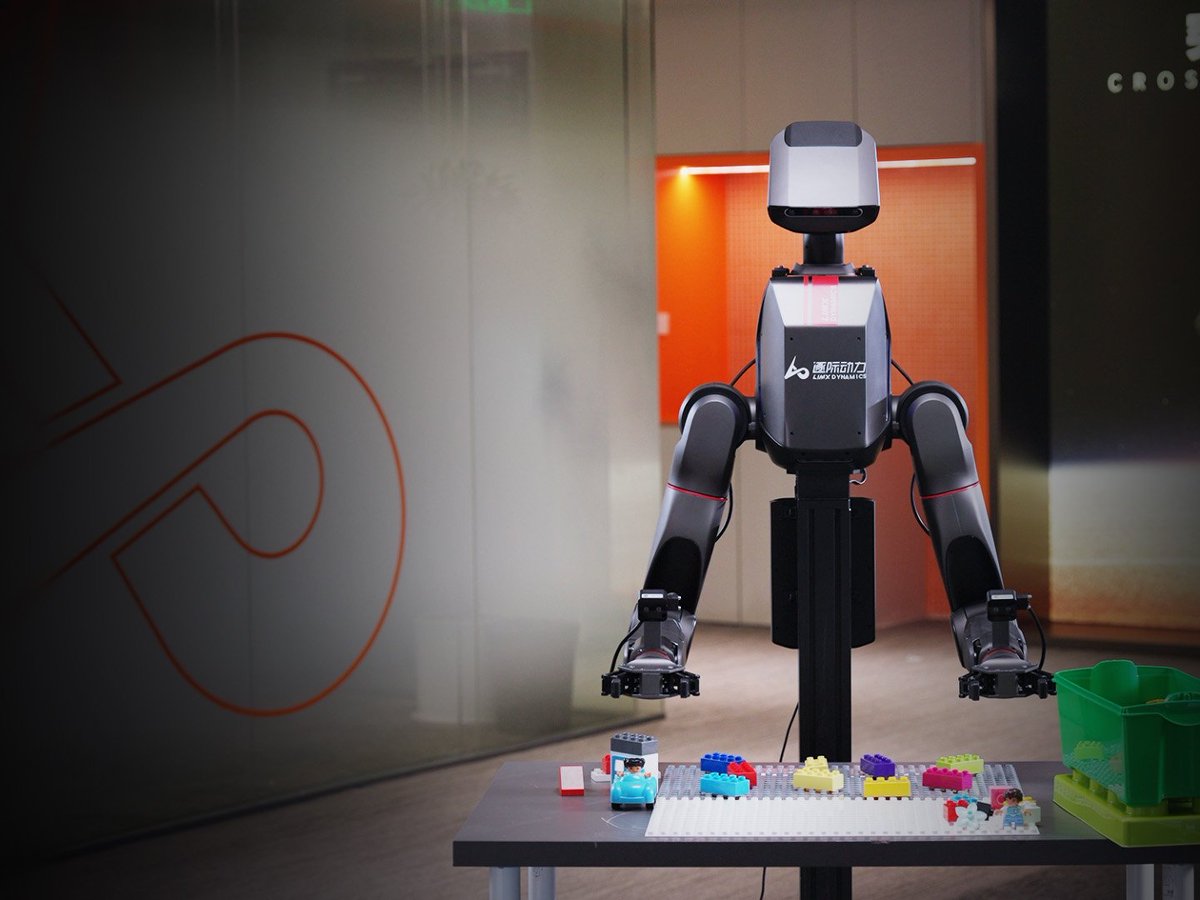
Zhang Wei: Carmakers have accumulated relatively strong training capabilities in intelligent driving, but intelligent driving is essentially just one skill. They have trained the driving skill, but it is still hard to judge whether that training process can be transferred to robots. The humanoid robot industry will later have a division of labor similar to the auto industry. Some companies will only do the body, some only models. Our positioning is a robot OEM: not only building the body, but also training the robot so it has intelligence and skills.
NUPIAO: Tesla and XPeng are crossing over into robots. Can they succeed?
Zhang Wei: It is possible. It is a bit like internet companies making phones. The key first is whether robots are a business they truly prioritize. If it is not the main business, then you have to see how many resources they are willing to put in, whether the CEO personally steps in, and how much time they spend. Different companies invest differently, and the results will be very different.
If a carmaker is doing the same thing at the same time as us, and its management has the same level of understanding of the industry, then it will certainly have a very big advantage. But the most important thing here is still the top management, especially the CEO’s understanding of and commitment to this.
NUPIAO: Carmakers have production lines and manufacturing capability. Is that an advantage?
Zhang Wei: Carmakers certainly have manufacturing experience, but at this stage manufacturing capability is not especially scarce. Robot companies must build manufacturing capability, but that does not mean manufacturing itself is an uncopyable moat. Startups can also build this capability fairly quickly because China already has a relatively mature supply chain. As long as you manage the supply chain and manufacturing process well, pure hardware capability is not as hard to obtain as people imagine.
NUPIAO: Compared with car OEMs, what is the advantage of startups?
Zhang Wei: Robotics is still a very new industry. Many things have not formed consensus, and no company has truly completed large-scale commercialization. The advantage of startups is that they can explore around these unresolved questions. This advantage is not just hardware, nor pure software, but the ability to understand and iterate on hardware and software as one.
NUPIAO: So it is not hard for carmakers to build robot hardware; the real difficulty is hardware-software integration?
Zhang Wei: Roughly, yes, but don’t reduce it to who knows a certain technology and who doesn’t. The core of corporate competition is not whether you know a technology. Many technologies can eventually be mastered by everyone. The difference is whether you can combine these capabilities, keep making products, and then put products into real scenarios to iterate.
NUPIAO: If a carmaker’s CEO has already decided to go all in on humanoid robots, do startups like LimX Dynamics still have an advantage?
Zhang Wei: Of course we do. I think the robot industry is more like the internet. It will not end up with only one or two companies. There will be many vertical fields and niche scenarios, and there will not be a situation where one company wipes out all the others.
NUPIAO: Will the gap between Chinese and U.S. large models affect competition between the Chinese and U.S. humanoid robot industries?
Zhang Wei: It will have some impact, but it will not necessarily widen the U.S. advantage in humanoid robots. My judgment is that China is currently ahead in the humanoid robot industry. Humanoid robots are not just about comparing large models; they also involve hardware, supply chain, products, customers and scenario deployment. General large models are only one part and cannot directly determine the final outcome of industrial competition.
NUPIAO: What is China’s most certain leading advantage right now?
Zhang Wei: The iteration speed of the system. From finding scenarios and collecting data to modifying technology, manufacturing hardware, handing it to customers for validation, and then adjusting again based on feedback, the whole process iterates faster. Humanoid robots are still in the stage of trial and error and searching for scenarios, so this iteration speed will be very important.
NUPIAO: Why can Chinese companies iterate faster?
Zhang Wei: Supply chain. Similar to the new energy vehicle industry: it is already quite obvious who iterates faster, BYD or foreign carmakers.
NUPIAO: Are there any peers you particularly respect, or any capabilities where they do better than LimX Dynamics?
Zhang Wei: We respect all our peers. Specifically, Unitree does well in manufacturing and cost control; AgiBot has a lot worth learning in channels, capital strategy and commercialization. But it is hard for me to evaluate a company as simply good or bad.
NUPIAO: What do you think of Figure’s high valuation? With very small shipments, is it a huge bubble?
Zhang Wei: I might have thought so before, but now I think it’s okay. Because it has indeed delivered some things no one had made before. For example, the full-body autonomous kitchen operation it demonstrated—very few people can do that right now. Figure has not really sold into a large number of homes yet; it is still fundamentally a pre-commercial company. The standards for evaluating a pre-commercial company and a commercialized company are different. You cannot judge it only by current shipments and revenue.
A company at this stage is essentially building up capability. You have to look at its future ceiling and the probability that it can ultimately make this happen. For a company like that, an extra RMB 100 million or RMB 100 million less in revenue right now may not be the most critical thing. The capital market is buying expectations.
NUPIAO: In embodied AI, can we say U.S. companies have a bigger valuation bubble?
Zhang Wei: Chinese humanoid robot companies’ valuations are indeed much lower than U.S. ones, but you cannot simply flip it around and say Chinese companies are reasonably valued and all U.S. companies are bubbles. If a company really is the most likely to make this happen, then it may be worth that money. What capital is judging now is whether it is the company most likely to succeed.
By contrast, if a company has only made a clothes-folding demo but tells the outside world it has achieved commercial deployment and even uses transaction amounts to prove it, I think that is a bigger problem.
NUPIAO: Why do you think overseas markets are more important than the domestic market? What is that judgment based on?
Zhang Wei: Overseas markets generally have better profit room, market space and competitive conditions, while China is still quite competitive. Robots ultimately serve people or replace part of human work. Labor costs overseas are much higher than in China, so the value of robots is greater overseas and the business math is easier to make work.
NUPIAO: Will NVIDIA’s cooperation with Unitree overseas affect LimX Dynamics’ international expansion?
Zhang Wei: No impact. My understanding is that NVIDIA provides the computing platform and Unitree provides the robot body. This is more a collaboration at the research-tool level, not NVIDIA choosing Unitree to deploy together in a real scenario. NVIDIA chose a small humanoid robot. This kind of product is mainly used as a research tool and is hard to use for real work at this stage. So this is not NVIDIA’s value judgment on Unitree’s scenario deployment capability, nor is it the two sides going after some big customer together.
Unitree has indeed done solid work in research tools, and its small humanoid robots are quite good, so choosing it is natural. We also have research-tool products. Every company has its own position, and that is normal.
NUPIAO: What does this kind of cooperation mean for Chinese robot companies?
Zhang Wei: Work hard to build your own market and delivery capability.