NUPIAO Reporter |
NUPIAO Editor | NUPIAO
The first big hurdle for space computing is simple: keeping things running reliably in orbit.
From September 11 to 14, the 2026 Pujiang Innovation Forum (its 19th edition) took place in Shanghai. During the Space Computing Industry Ecosystem Forum, Shanghai officially launched its “Pearl Constellation” plan . The idea is to push some computing power off the ground and up into low Earth orbit. First, they’ll use different test satellites to validate domestic computing payloads, optical computing payloads, and new energy systems. Then, they’ll prepare for larger-scale constellation deployment down the road.
Zhou Qiushi, co-founder and president of Dongfang Tiansuan, laid out the long-term vision: building a gigawatt-scale space-based computing constellation and a global LEO computing network.
Under the current plan, the project will start with in-orbit tech validation. By 2027, they’ll gradually test next-gen domestic computing payloads, optical computing payloads, and new energy systems. After that, depending on domestic launch capacity and batch launch conditions, they’ll start building out the constellation. By 2030, the goal is to have a global-coverage, space-ground coordinated, independently controllable space intelligent computing infrastructure and service network up and running.
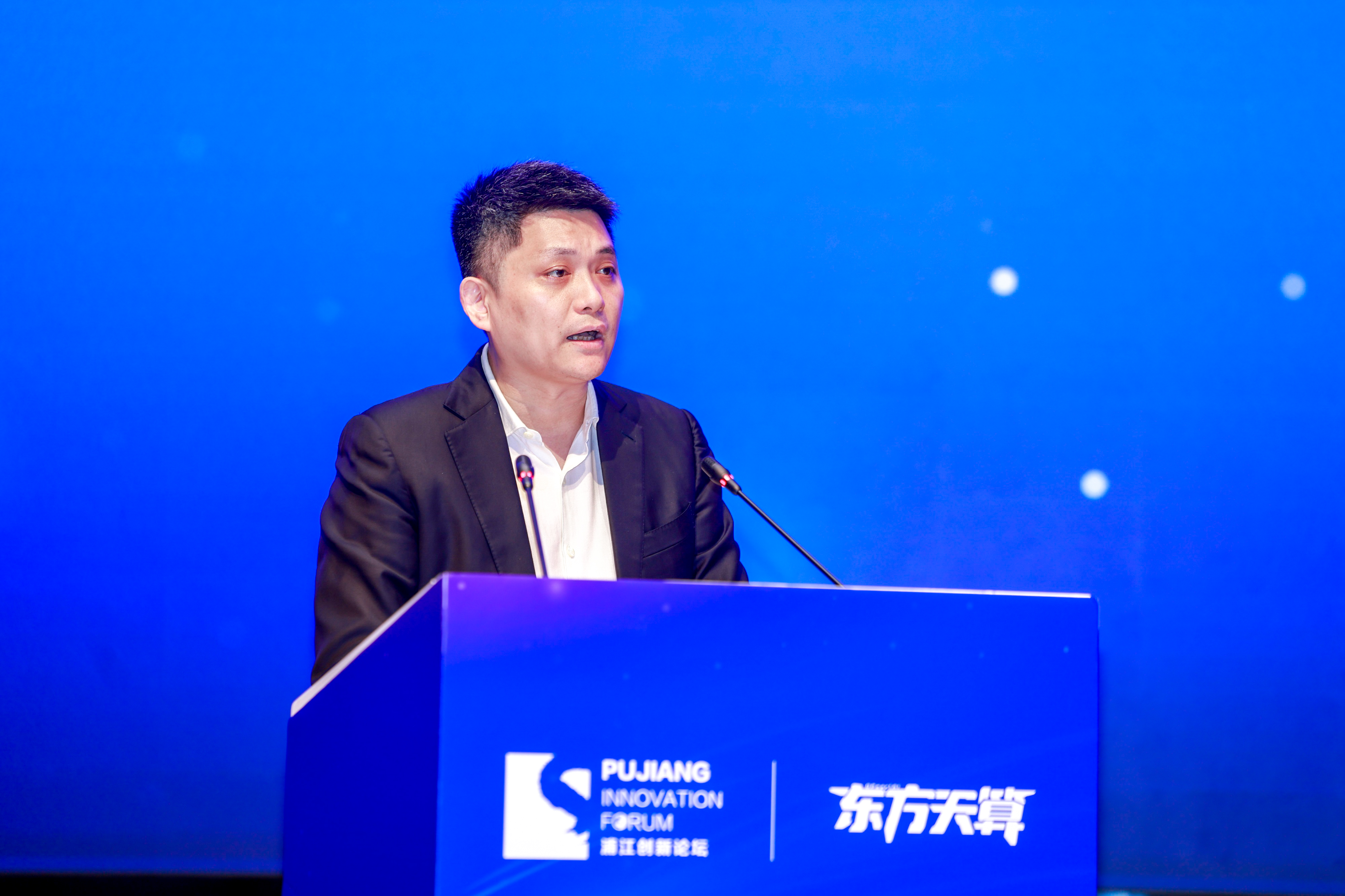
Right now, there’s one pretty clear demand for space computing: processing data that’s already being generated in orbit, right there on the spot. Wang Jianyu, an academician at the Chinese Academy of Sciences, pointed out that remote sensing data has gone from “not enough” to “way too much.” The traditional approach—beaming everything back to Earth for processing—has real limitations when it comes to timeliness.
Wang summed up the shift as “moving from data downlink to information downlink, from ground computing to orbital computing.”
Take remote sensing as an example. If some of the identification and judgment work can happen directly on the satellite, what comes back to Earth isn’t just raw, unprocessed data—it’s already-computed results. Wang mentioned wildfire monitoring as a case where they hope onboard computing can cut response times from hours down to minutes.
Satellites themselves are starting to get more autonomous computing muscle. Wang noted that future mega-constellations won’t be manageable through manual, satellite-by-satellite control. He listed embodied intelligent satellites, in-orbit servicing, and onboard AI inference as directions worth continuing to validate.
In his view, once you’re dealing with thousands or tens of thousands of satellites, manually scheduling each one’s imaging and data downlink just isn’t realistic. Satellites need more autonomous decision-making and coordination capabilities. On the tech path forward, onboard AI inference, inter-satellite laser links, multi-satellite networking, and intelligent constellation scheduling all need to keep pushing toward engineering maturity.
Zhang Jiyao, vice president of Dongfang Tiansuan, also said that one clear demand right now is processing the massive amounts of data satellites generate in orbit, boosting satellites’ own computing and autonomous processing capabilities.
Another is providing space-based computing support with broader coverage for ground-based AI agents and swarm intelligence. Further out, there’s the bigger vision of space computing infrastructure at scale—what Zhang called the third layer, saying this direction is “the same as SpaceX’s goal, even including the birth of AGI.”
But moving a ground data center “up to the sky” isn’t a simple copy-paste job. Chips have to deal with radiation. More computing power directly means more power consumption and heat dissipation pressure. And large constellations need high-bandwidth inter-satellite and satellite-ground communications.
Dong Chaofeng, head of ecosystem and solutions at Biren Technology, said you can’t just compare peak chip performance in space. Radiation, power, and cooling all directly affect sustained performance. When evaluating space-grade chips, you also need to look at effective computing power per unit of power consumption, software compatibility, precision retention, and fault recovery after long-term operation.
He also noted that some next-gen computing chips already hit kilowatt-level power consumption per card, which puts new demands on satellite energy and thermal control systems.
Zhang Jiyao said satellite cooling mainly relies on radiation, and both energy and thermal control have hard constraints. So you can’t just use ground server rack peak power and computing metrics to evaluate an onboard system—you have to redesign the whole thing based on real in-orbit workloads.
In other words, chips, energy, thermal control, and communications can’t be optimized in isolation. They need to be designed together as part of the whole computing satellite.
That means choosing a computing chip has to go hand-in-hand with the satellite’s overall energy and cooling capabilities.
It also explains why the “Pearl Constellation” signing ceremony covered so many different industry segments. During the forum, Dongfang Tiansuan signed agreements with 27 industry chain partners, including the Innovation Academy for Microsatellites, Shanghai Institute of Space Power-Sources, Alibaba Cloud, iFlytek, GCL Photoelectric, JinkoSolar, Trina Solar, Biren Technology, and Iluvatar CoreX. The partners will work together on collaborative innovation in key constellation-building areas like computing chips, space energy, inter-satellite communications, satellite platforms, computing payloads, and software services.
That said, standards aren’t mature yet. Zhang Jiyao thinks space computing brings in chips, AI, energy, and other sectors that traditionally haven’t overlapped much with the satellite industry. Right now, products and system interfaces still lack unified standards.
He’s not in favor of locking down standards completely at this stage. Instead, he wants products to go through iteration and minimum system validation first—then, once there are real application results, work backward to define product specs and interface standards.
Beyond whether the tech can actually land, space computing also has to answer a trickier question: who pays for it?
Zhou Qiushi outlined Dongfang Tiansuan’s envisioned service models: leasing computing resources, token-based billing for in-orbit model inference, and building customized space-based intelligent computing centers for industry clients. However, no specific pricing, customer scale, or revenue figures were disclosed at the event.
Wang Jianyu offered a reality check: China’s commercial space sector still needs to solve the commercial closed-loop problem and the “cost-value inversion” issue. He put it bluntly: “Don’t judge heroes by satellite count—judge them by network service capability.”
Meanwhile, the number of satellites in orbit globally keeps climbing fast.
The 2026 “State of the Satellite Industry Report” from the U.S. Satellite Industry Association (SIA) and BryceTech shows that 4,434 satellites entered orbit globally in 2025, with 14,266 satellites operating in orbit by year’s end.
On the domestic front, according to the 2026 CCID Forum, China’s commercial space core industry scale grew to 1.01 trillion yuan in 2025, up nearly 7% year-on-year. The country conducted 50 commercial space launches for the year, sending 311 commercial satellites into orbit—84% of China’s total satellites launched that year.
Capital’s view of space computing isn’t just about chasing a shiny new track. Peng Gui’e, managing partner at Huadeng Gaoke, said space computing isn’t some brand-new industry that appeared out of nowhere—it’s a recombination of multiple mature industries that have already been proven on the ground, now applied to space scenarios.
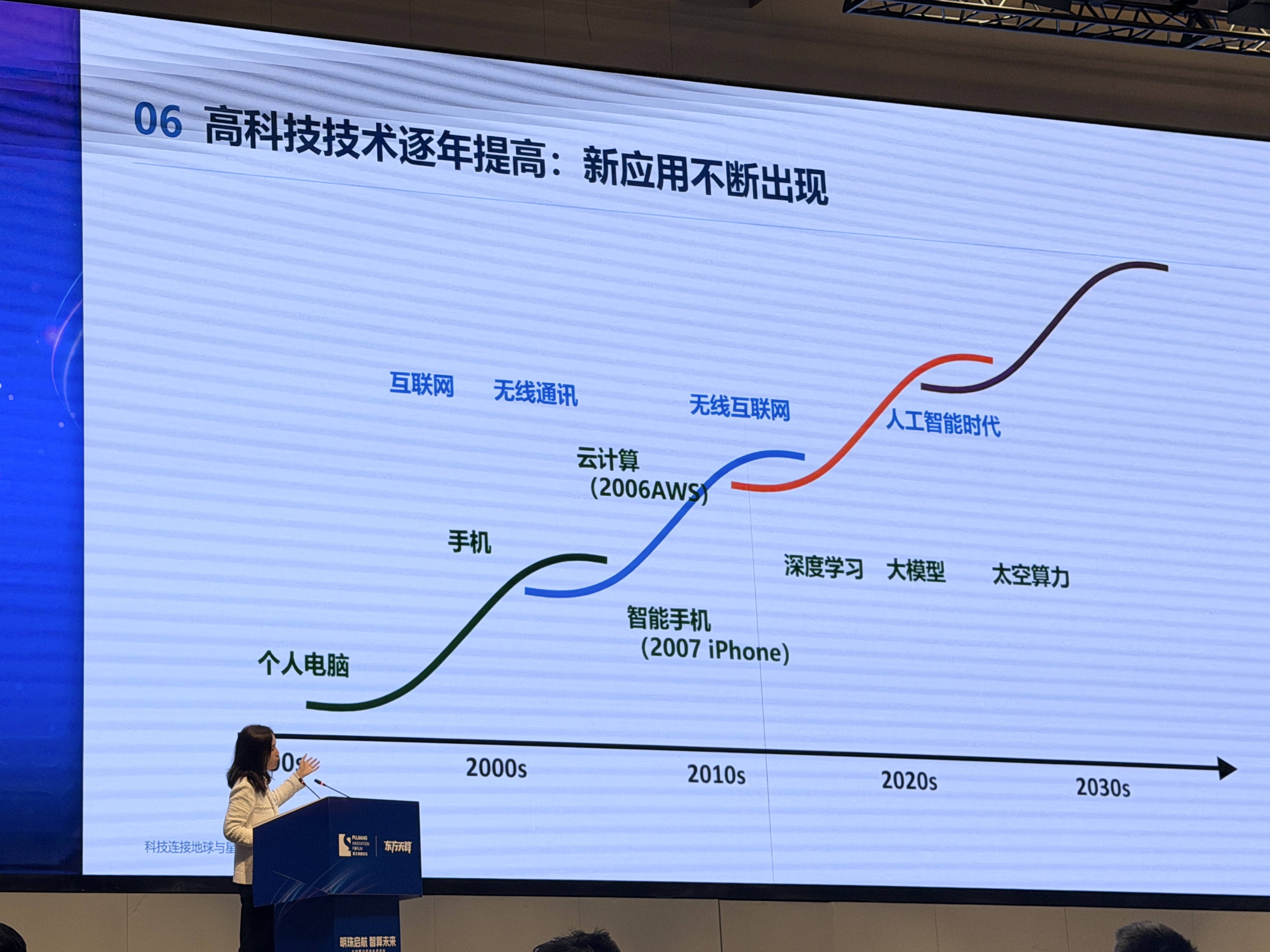
She broke the investment logic into three lines: the computing line, covering chips, optical interconnect, advanced packaging, storage, and power management; the energy line, corresponding to the upgrade from ground AI data centers to space computing centers; and the application line, extending into embodied intelligence, AI for Science, and other directions.
In her view, these lines are starting to intersect in the space computing space. Investors aren’t just looking at individual projects anymore—they’re looking at coordination across the industry chain.
Shanghai has already set some pretty specific industry targets for commercial space.
A 2025 policy document on accelerating the cultivation of a commercial space advanced manufacturing cluster proposed that by 2027, Shanghai’s commercial space industry scale should reach around 100 billion yuan. Commercial rocket final assembly and manufacturing capacity should hit 100 per year, commercial satellite intelligent manufacturing capacity should reach 1,000 satellites per year, and application terminal batch manufacturing capacity should hit 1 million units per year.
Shanghai’s 15th Five-Year Plan also calls for pushing forward LEO constellation deployment and ground gateway station construction, promoting the integration of space-based and ground-based networks.
For the “Pearl Constellation,” the gigawatt-scale vision is still a long-term goal. Right now, the first thing to nail down is in-orbit validation.
According to the timeline Zhou Qiushi laid out, the project will first validate computing payloads, optical computing, and new energy systems, then gradually move into initial satellite deployment and constellation building. Whether computing chips can run stably long-term under radiation and thermal conditions—and whether in-orbit computing can find customers who’ll keep paying—are questions that still need further validation.