NUPIAO Reporter |
NUPIAO Editor | NUPIAO
After three quarters of teasing, Qiyuan Robotics—the robotics arm of Swancor Advanced Materials—has finally opened sales to the public.
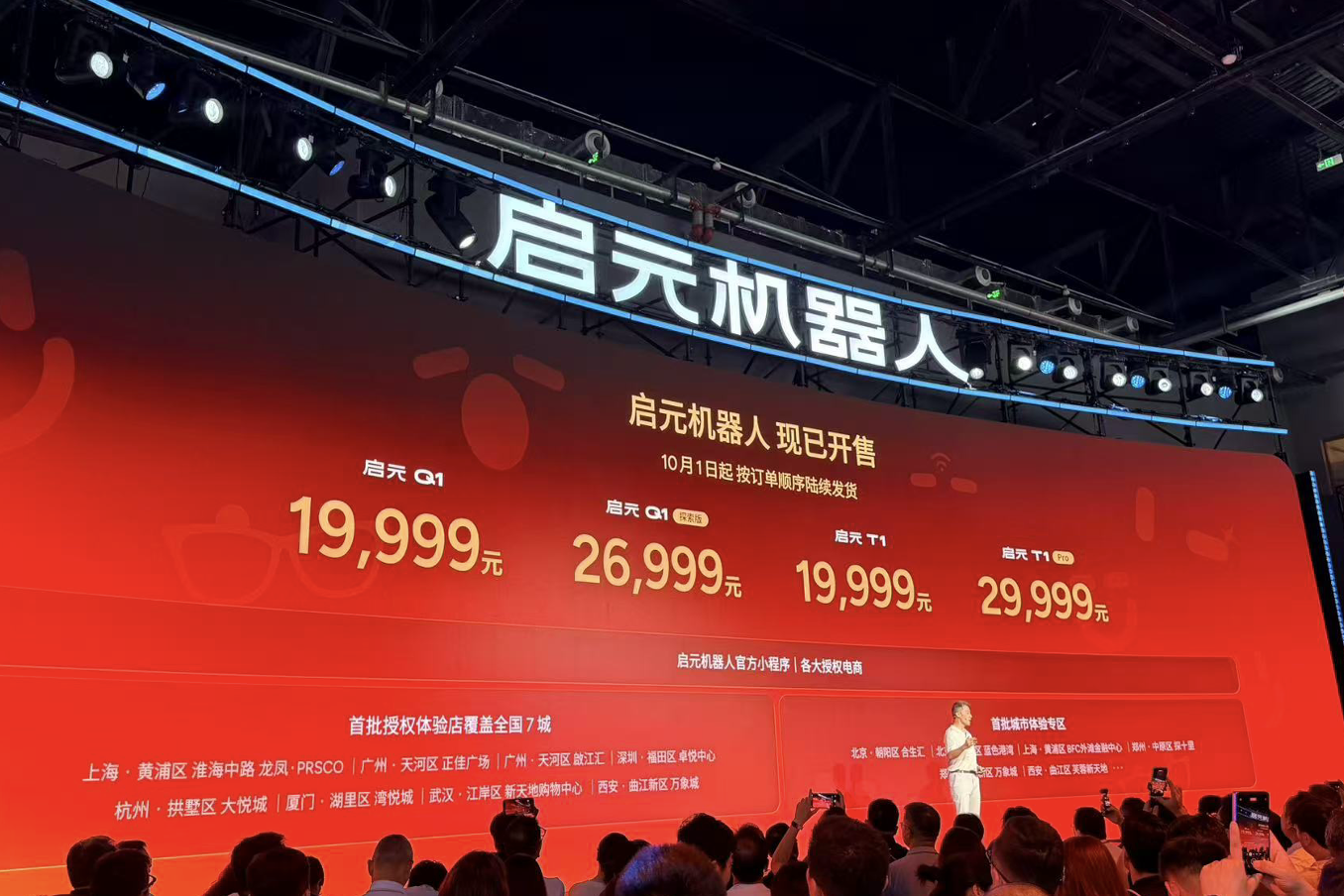
On September 20, Qiyuan Robotics unveiled two personal robots in Shanghai: the Qiyuan Q1 and T1. The pricing everyone had been guessing about is finally out—both base models come in at RMB 19,999, while the Q1 Explorer is RMB 26,999 and the T1 Pro is RMB 29,999.
From the first product reveal on December 31 last year to shipping right at launch, Swancor Advanced Materials spent nine months getting a mass-production personal robot into the consumer market. The price range puts it roughly in the same league as a new Apple foldable, the iPhone Duo.
But once the price is on the table, Qiyuan’s real questions are only starting. Why would someone buy a robot for the home? What value does it actually deliver? And how does a consumer embodied-AI company turn this into real revenue?
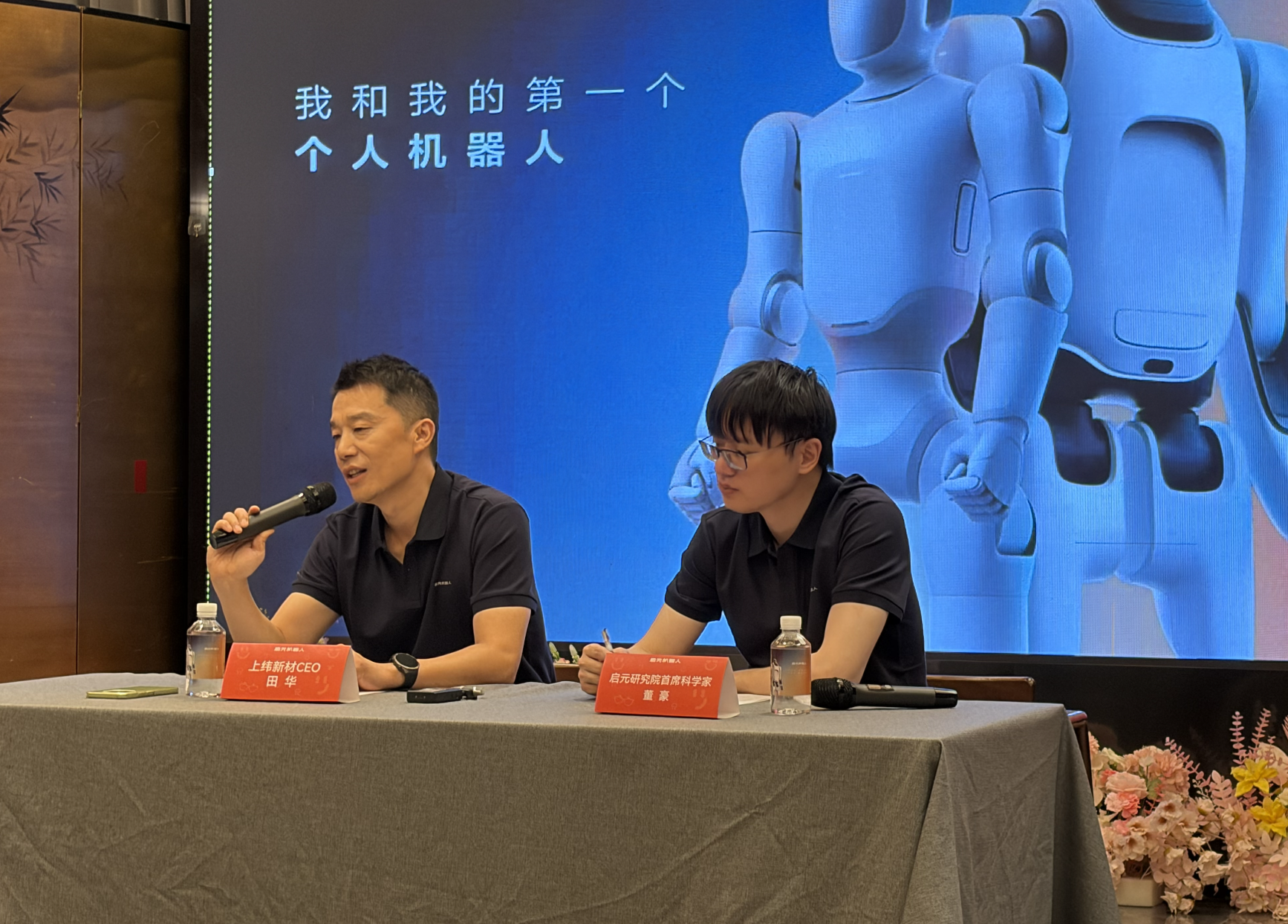
On launch day, Swancor Advanced Materials CEO Tian Hua and Dong Hao, chief scientist at the Qiyuan Research Institute, spoke with NUPIAO and other media. They laid out their thinking on why Qiyuan is going after the home, the generalization headache in embodied AI, and the company’s positioning, mass production, and ecosystem plans.
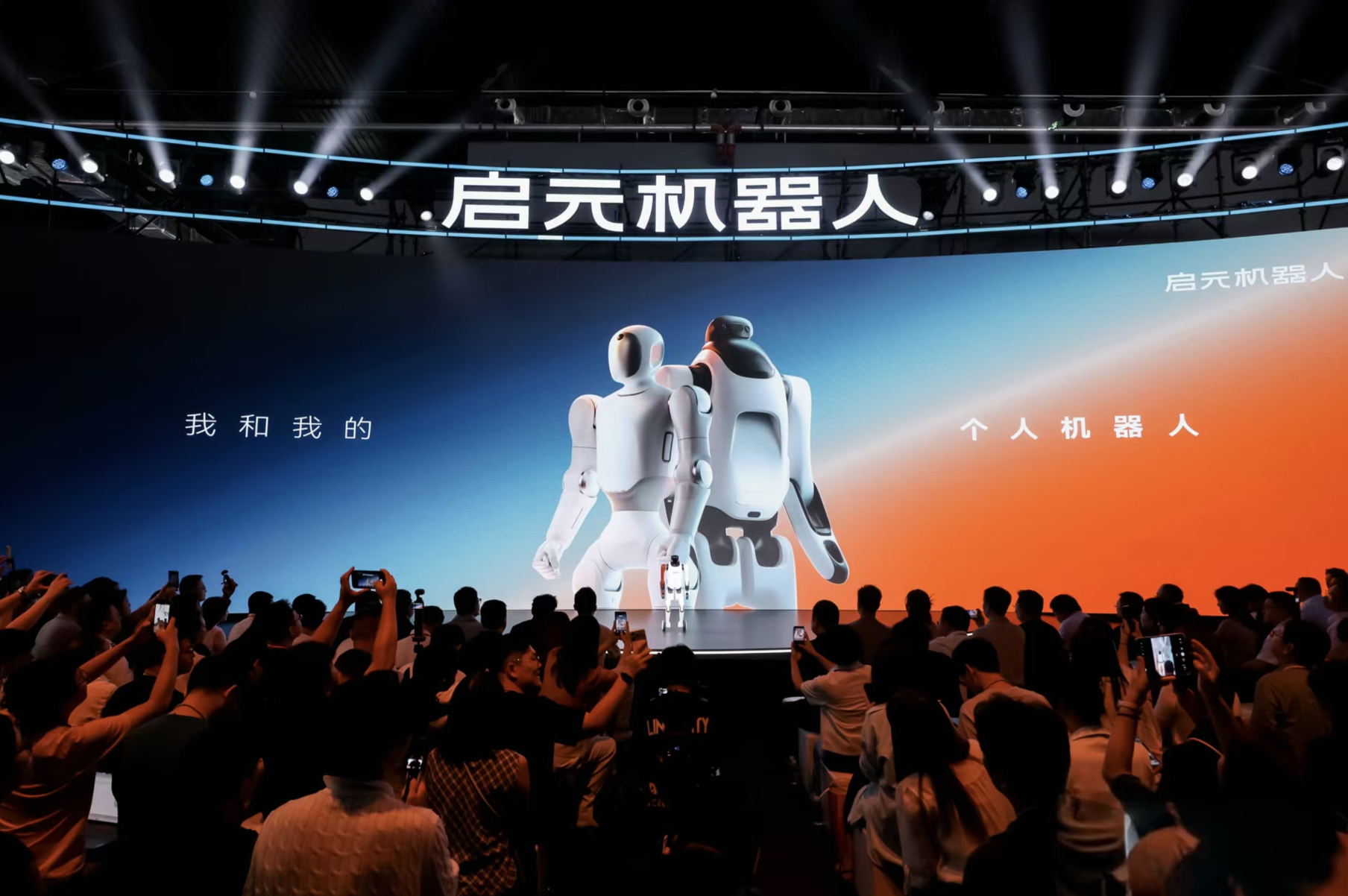
On positioning, Tian Hua described Qiyuan’s goal as ‘the Apple of robotics.’ He wants Apple-level design and quality, but he also believes personal robots could join phones as a key terminal for AI-era interaction.
Qiyuan expects three revenue streams down the road: hardware sales, content (subscriptions and IP applications), and services (operations and maintenance). Tian Hua sees the real growth in the latter two. ‘The robot itself is just the entry point. The real ocean for personal robots is content, IP, and experience.’
Home Robots’ Biggest Hurdle: Generalization
2026 is widely viewed as the first year of mass production for humanoid robots. TrendForce forecasts that China’s humanoid robot market will top RMB 10 billion this year.
But look at what more than 200 embodied-AI companies showed at WAIC: most still choose industrial scenarios. Home robots remain a much harder route to prove.
Tian Hua told NUPIAO and other media that there’s an unwritten industry consensus—getting into factories is relatively easy, getting into homes is brutally hard. Industrial data is structured and the scenes are simple; homes are highly complex, unstructured environments. That’s why Qiyuan isn’t making complex chores the core selling point in phase one. It’s starting with education, companionship, entertainment, and developer applications.
The Qiyuan Q1, for example, focuses on kid-friendly interaction, graphical programming, and early embodied-AI learning. The T1 can switch between humanoid and quadruped forms, follow users, carry things, and tries to fit into both home and outdoor life.
‘We won’t walk away from the home just because it’s hard—that’s where our mission is,’ Tian Hua said. Qiyuan wants to become a leader in consumer robotics. In his view, products evolve in three stages: first fun, then useful, then lovable.
Real task capability is the next problem Qiyuan has to crack. In the interview, Dong Hao, chief scientist at the Swancor Qiyuan Research Institute, split robot intelligence into interactive intelligence, motion intelligence, and task intelligence. The first two decide whether a robot can understand users and complete movements; task intelligence decides whether it can actually take on work.
For the generalization problem in embodied AI, Dong Hao offered a ‘horizontal scaling law’ approach: instead of getting ten tasks to 70%, first get three tasks to 100%, then expand horizontally from there.
Qiyuan sits under Swancor Advanced Materials, a listed company built on new materials. Tian Hua said the company runs a two-wheel strategy: new materials remains a stable main revenue source, and that base funds consumer embodied-AI R&D.
On spending, Tian Hua gave a full-year forecast: ‘We’ve already put more than RMB 160 million into it in the first half, and this year we expect to exceed around RMB 500 million.’ The money will mainly go toward full-stack R&D in robot bodies, motion control, multimodal interaction, and agents.
Where’s the Moat?
When asked where the moat is in consumer robots, Tian Hua broke robotics into five buckets—mechanical, electrical, software, motion, and control—and then into three dimensions: hardware, AI, and ecosystem.
‘It’s a complex engineering job where no weak link can be missing. Hand-building one prototype is easy, and copying it is easy too. But with 10,000 robots, how do you guarantee batch consistency? That’s the hard part,’ Tian Hua said.
In manufacturing and supply chains, China’s consumer-electronics industry already has mature experience to borrow from. Qiyuan disclosed that it has brought automotive-style production takt and quality management into its line, rolling out one robot every 2.5 minutes, with assembly data traceable long term.
After clearing mass production and delivery, the second hurdle is user understanding: what exactly will move users, and why would they actually pay for a robot? At the launch event’s product-experience-officer session, Qiyuan brought in celebrities including Huang Xiaoming, Hu Jun, Tian Liang and Ye Yiqian, and Tim. A lot of time went to safety, privacy, openness, and playability.
The consumer-robot market has clearly been heating up. Songyan Dynamics’ ‘Xiaobumi’ and UBTECH’s companion-focused U1 series are already in the fight.
But Tian Hua sums up some current robot products as stuck in an attention-economy phase of one-way show-off demos. They lack ecosystem, gameplay, and content support, so users get excited for a few minutes and long-term stickiness never forms. It’s practically an industry-wide problem.
Qiyuan’s internal benchmark is simple: can usage time stretch to 30 minutes, an hour, or two hours? The company plans monthly software releases to keep improving smoothness and playability. That means refund rates, retention, and activity will be the real post-delivery tests.
Hardware Won’t Make Money; the Long Game Is the Ecosystem
Tian Hua doesn’t think the long-term value of personal robots will stop at hardware.
Take the iPhone: it has more than 1 million apps. Tian Hua argues that without a similar app, content, and IP ecosystem, a robot is just a machine that can walk—not yet a ‘human’ in any meaningful sense.
On the AI model and ecosystem side, Qiyuan also shared core progress: PrimeMind is the Qiyuan Research Institute’s foundation model for home scenarios. The launch also introduced a skill store, creator workshop, and appearance-creation platform, all meant to add new functions and ways to play.
More than 1,000 developer partners are already co-creating, with over 100 new skills added each month. Partners include developer communities such as CSDN and Tencent WorkBuddy, plus more than 20 universities including Peking University, Tsinghua University, Shanghai Jiao Tong University, Tongji University, and East China Normal University. The Qiyuan Star Ecosystem Plan promises RMB 1 billion of investment over five years.
Still, the phone app ecosystem’s success can’t be copied straight into robotics. First, robot applications involve physical interaction, so development costs and adaptation difficulty may be higher. Second, users’ willingness to pay for a robot ecosystem still needs proof. Tian Hua said that during earlier internal testing, developer activity already beat expectations.
On channels, Qiyuan will lean more on online sales and offline stores. The brand’s first batch of authorized experience stores already covers seven cities—Shanghai, Guangzhou, Shenzhen, Hangzhou, Xiamen, Wuhan, and Xi’an. The plan is to cover tier-1 and tier-2 cities first, then consider lower-tier markets.
Overseas, Tian Hua said this year is for setting up the layout and next year will be the first year of overseas sales. He expects overseas revenue to account for around 30% of the robotics segment. As for the impact of U.S. FCC-related bans, Qiyuan will respond through components and local partners.
As for when consumer robots will truly go mainstream, the timeline may not be short. Tian Hua said he asked Zhihui Jun ‘how long it would take’ and got an answer of three to five years. ‘Rather than wait for it to happen, let’s make it happen.’