Elon Musk, the world’s richest person, has a new trick up his sleeve: he plans to build a hyperloop-style line with speeds above 300 km/h.
In a social media post on September 20 local time, Musk said thathis tunnel company, The Boring Company, is planning an intercity tunnel in Texas linking Austin and San Antonio—think of it as a simplified Hyperloop—that would cut travel time between the two cities from 2.5 hours to 30 minutesor less.
According to Musk, the proposed project will serve as a precursor tohis long-discussed Hyperloop concept, with travel speeds above 200 mph (about 322 km/h).However, he did not disclose the proposed route, construction cost, financing structure, or expected completion date.
Musk’s Boring Company was founded in 2016 and has completed several tunnel projects.In 2018, reports said the company had broken through its first tunnel in Los Angeles. The test tunnel connected a parking lot near SpaceX headquarters with another property the company bought. In May 2020, the company finished digging a second tunnel beneath the Las Vegas Convention Center; in June that same year, Wynn Resorts officially announced it would work with The Boring Company and had already filed a land-use application for the project.
This September, The Boring Company announced it had closed a $3 billion Series D, led by the United Arab Emirates, pushing its valuation to $23 billion. That is roughly four times the $5.675 billion valuation it had when it raised $675 million in 2022. The money will go toward expanding its engineering, production, and operations teams and advancing underground transit projects in Las Vegas, Nashville, Dubai, and elsewhere. Starting with the planned Dubai Loop, the company aims to build more than 150 km of underground infrastructure in the UAE.
As the world’s richest person, Musk owns several companies. Besides The Boring Company, they include Tesla,SpaceX and others.This June, SpaceX officially listed on Nasdaq, issuing 555.6 million shares at $135 each, at an overall valuation of $1.77 trillion and raising $75 billion—the largest IPO haul in global capital market history.The company’s market cap now exceeds $2 trillion.
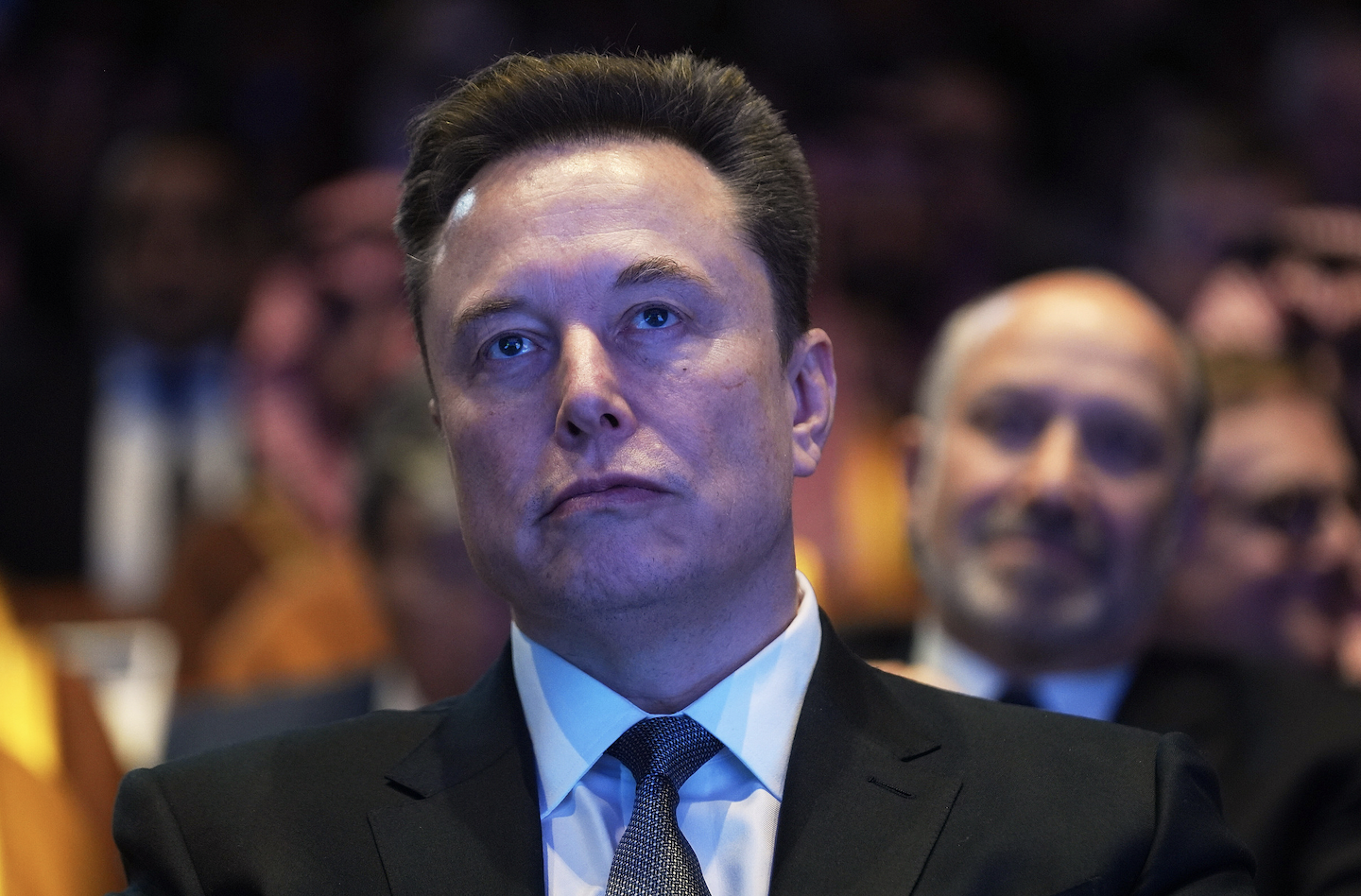
Tesla’s current results show revenue growing while profit lags. Its fiscal 2026 second-quarter report showed revenue of $28.24 billion, up 26% year over year and above market expectations. On profitability, GAAP net income attributable to shareholders was $1.114 billion; non-GAAP adjusted EPS was $0.33, below the $0.53 market expectation. The main reason is a sharp increase in R&D and capex, with projects such as AI infrastructure, Robotaxi, and the Optimus humanoid robot putting some pressure on quarterly profitability.
Since the start of this year, speculation about a Tesla-SpaceX merger has been running hot.In mid-September, when asked at the All-In Summit in Los Angeles why Tesla and SpaceX remain separate despite growing ties, Musk again hinted that the two could deepen cooperation or even merge. He said, “Given the broad cooperation happening at so many levels, you can imagine what actions might be taken when collaborating closely across so many areas.”
Tesla and SpaceX have already launched several collaborations, including SpaceX using Tesla battery energy storage systems, Tesla integrating SpaceX’s Grok AI assistant, and the two jointly building Terafab, an AI chip manufacturing plant.Musk has said Terafab isthe biggest overlap area between Tesla and SpaceX, and said that without Terafab, Tesla’s “ability to scale Optimus production would be limited.”
With these companies behind him, Musk’s fortune has topped $900 billion. According to the latest Forbes tally, Musk is currently worth about $908 billion—$530 billion more than Amazon founder Jeff Bezos, who ranks second.