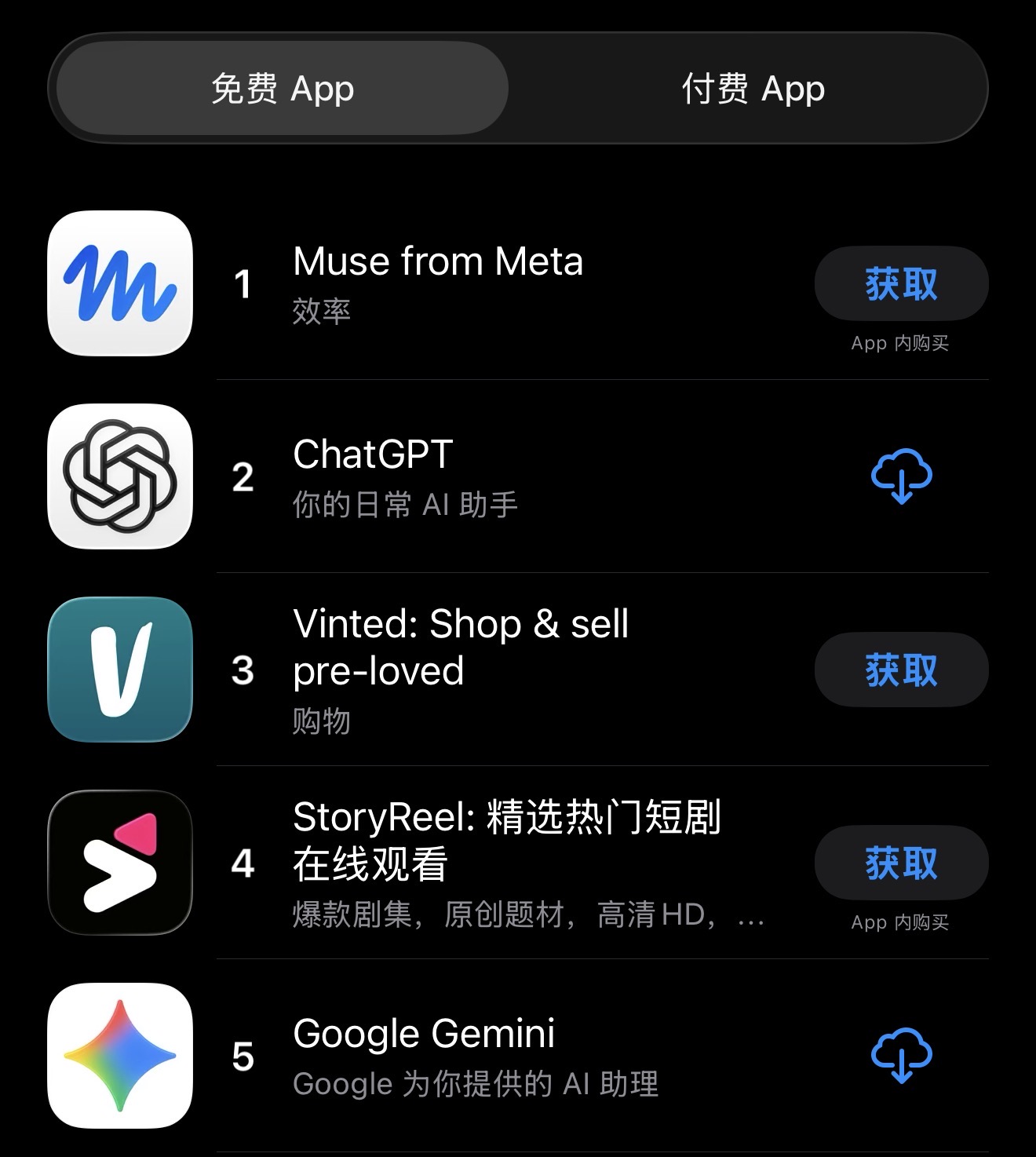
Less than two weeks after launch, it’s already sitting at the top of the US iOS free app chart, with both downloads and daily active users beating what ChatGPT had at the same point in its life. Muse, the personal AI agent Meta rolled out on September 8, has quickly become the most talked-about product in the global AI world. Meta CEO Mark Zuckerberg describes it as “a personal agent that understands what you’re aiming for and gets the job done for you around the clock,” and calls it the first step toward “personal superintelligence.”
So what does Muse actually do? Unlike the back-and-forth Q and A you get from a traditional chatbot, Meta positions it as a “personal AI agent.” You don’t have to feed it step-by-step instructions — just tell it the goal, and Muse breaks the task down on its own, opens web pages, fills in forms, and calls on outside apps to carry things out. In other words, it has shifted from “giving answers” to “getting things done.”
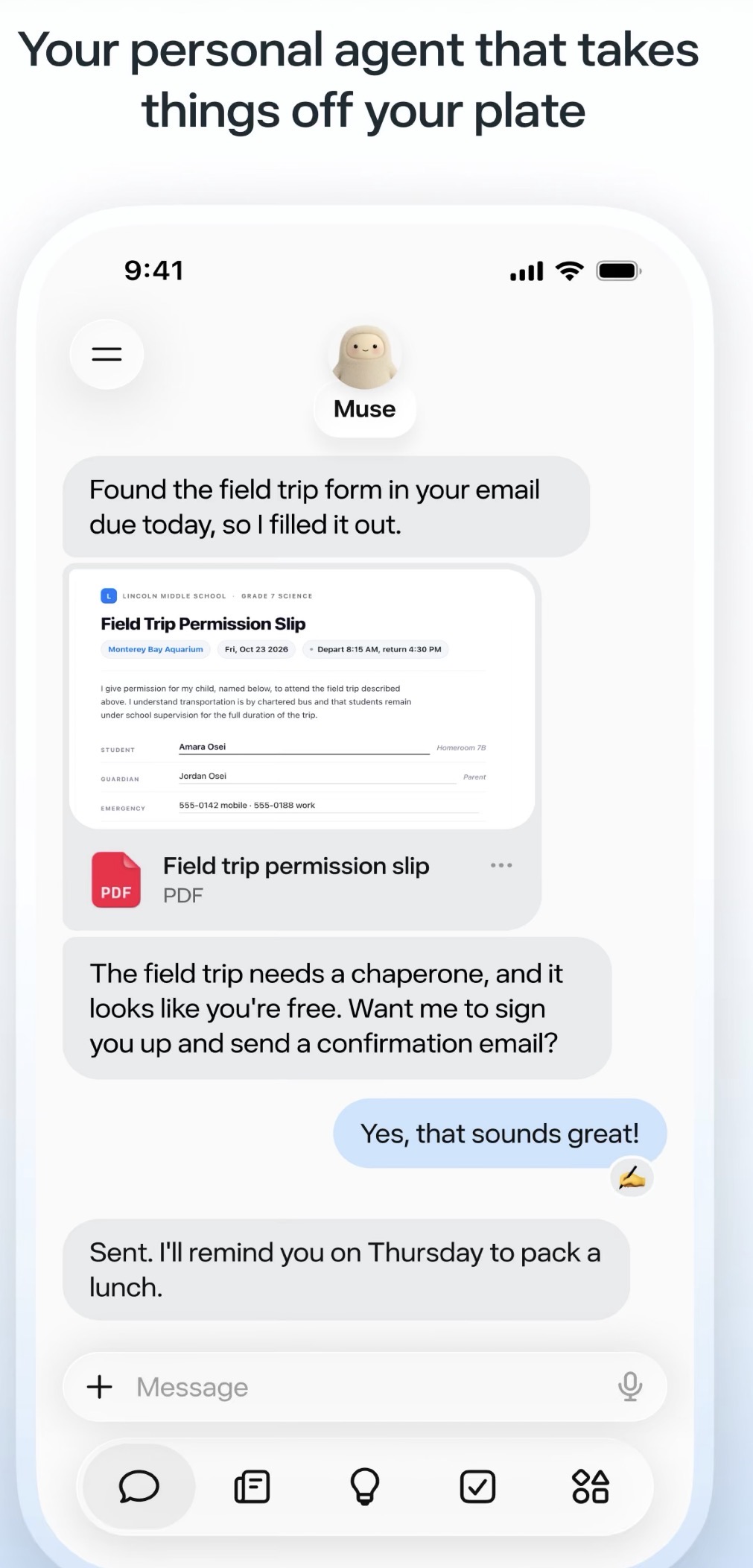
According to the official pitch, it can write and send emails on your behalf, manage your calendar, book trips and restaurants, place online orders, fill out web forms, and even negotiate bills or help you sell a car. For longer-term goals like getting fit or starting a business, it drafts a plan first and then keeps tracking progress. Say your goal is “sell the old car for a better price within four weeks” — Muse checks market rates, lists it on a platform, replies to buyers, and coordinates viewing times. On the travel side, it hunts down flights and hotels, fills in the forms, builds an itinerary that fits your budget, and books it. For everyday work, it tidies up your inbox, drafts and sends emails, puts together meeting outlines, and handles expense or sign-up forms. At home, it can turn a recipe you saved into a shopping list, or put together a dinner menu that works around your friends’ and family’s dietary restrictions and send out the invites.
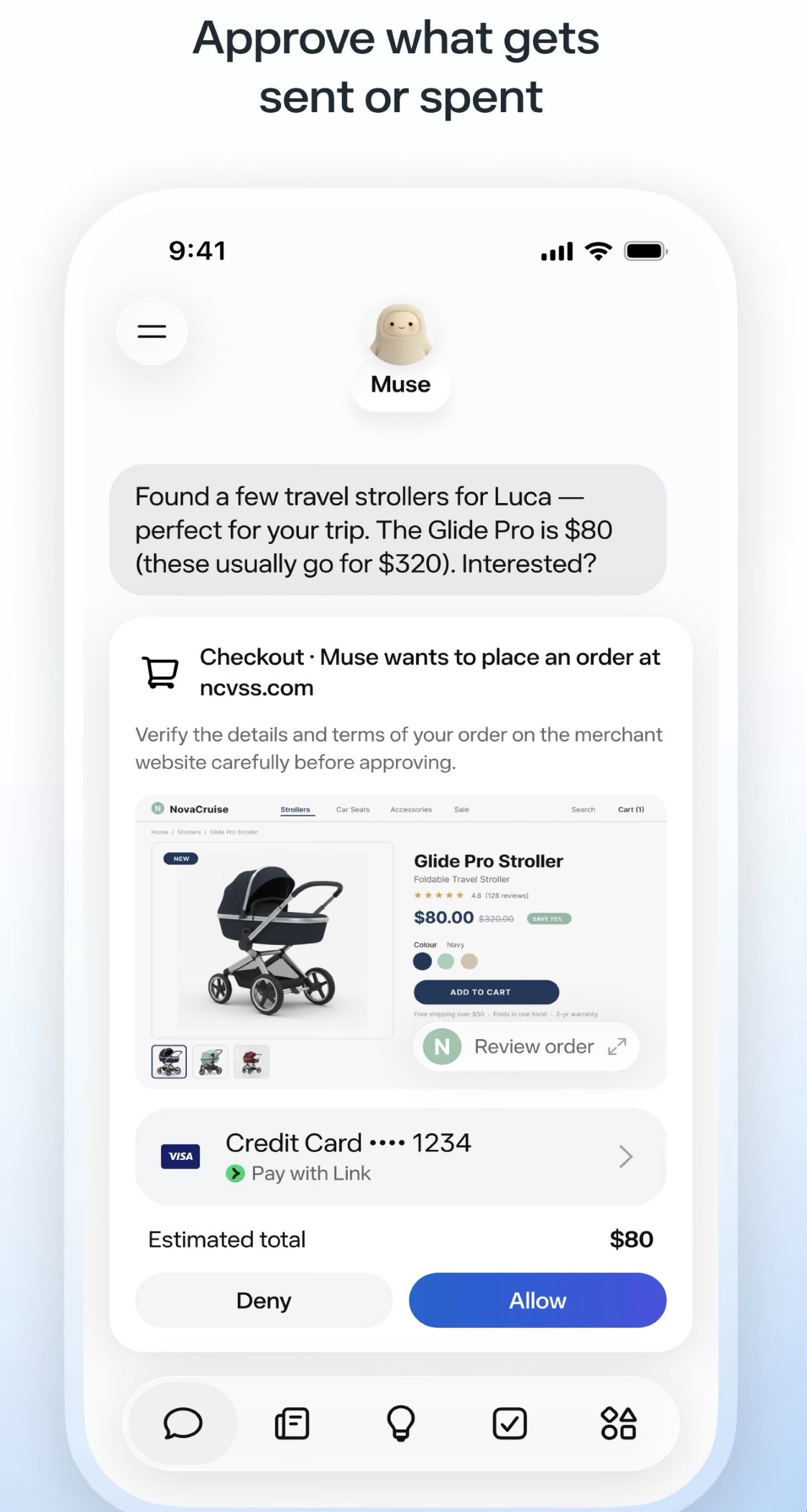
Shopping and payment is where things get especially interesting. Muse uses Stripe Link to generate single-use card numbers, and eligible orders come with purchase protection covering loss, damage, price drops, and returns; Shop Pay and 1Password are set to be added later. And unlike assistants that only answer questions, every Muse user gets their own dedicated virtual machine in Meta’s cloud — so even if you close the app, Muse keeps working in the background until something changes or it hits a sensitive step that needs your approval, at which point it comes back and asks.
On pricing, there’s a free version with roughly 100 million free tokens a week during the early rollout, plus two subscription tiers at 20 dollars and 100 dollars a month. It’s open to users 18 and up, and only available in the US and Canada for now. Beyond the standalone app, there’s a web version, and it’s headed for Meta’s AI glasses down the road.
The early numbers are eye-catching. Sensor Tower data shows Muse racked up 730,000 downloads in about five days. Apptopia puts cumulative downloads in the US and Canada at 2.8 million over the first 12 days, with roughly 1.8 million on iOS under the same measurement — ahead of ChatGPT’s 1.3 million in a comparable window, while Claude and Grok managed only about 400,000 and 200,000 respectively. On daily active users, Muse sits at about 642,000 on mobile in the US, far ahead of ChatGPT’s 231,000 at the same stage. Even looking at iOS alone, Muse leads with about 359,000 DAUs versus ChatGPT back then.

The day after Muse launched, Meta’s stock closed up 6.55%; on September 21 it jumped 11.43% in a single session to 741.24 dollars, touching 753 dollars intraday — a more than seven-month high. Market cap has grown by over 200 billion dollars since before the launch, with the share price up more than 20% cumulatively. Wells Fargo raised its Meta price target from 640 to 796 dollars that day; Jefferies went to 875 dollars and estimated that if Muse pulls in 1 billion users by the end of 2027 with a paid conversion rate of at least 3%, annualized revenue could reach 10.8 billion dollars.
Analysts say the chart-topping debut and DAU figures have convinced the market that Meta can turn its roughly 4 billion social users into a distribution edge for an AI assistant. And if the transaction agent proves out, there’s commission revenue to be had from bookings, shopping, and B2B integrations. Muse has the potential to become “the most widely used consumer AI app since ChatGPT.”
Right now, competition in consumer AI is white-hot. ChatGPT has passed 1 billion monthly users, and Google’s Gemini hit 1 billion monthly users in August. Now that consumer AI is shifting from “chatting” to “doing,” OpenAI, Google, and Anthropic are all betting on agents that can execute tasks on their own, and Meta is using Muse to open a consumer front door and push agents out to everyday users. Whether Muse can go from viral debut to the “personal superintelligence” Zuckerberg talks about still needs time to prove out — after all, Meta’s own products like Vibes also blew up at launch before settling down for one reason or another.
For everyday users, the best things to try with Muse right now are low-risk “semi-automatic” tasks: cleaning up your inbox, drafting trip ideas, generating shopping lists, tracking prices, setting reminders. For higher-stakes stuff like sending emails on your behalf or making payments, start with one-time authorization and small spending limits. Whether Muse can truly clear both hurdles — reliably finishing tasks and earning user trust — is still an open question. But the early buzz at least shows that the turning point for personal AI agents going from demo to mainstream consumer product is close.