Reporter |
Editor | NUPIAO
Luohe, Henan—the “China Food City” famous nationwide for Shuanghui ham sausage—is now being redefined by furry little ones.
In 2021, a specialized pet economy park opened in Zhaoling District, Luohe. By 2025, the city’s pet industry output value reached 2.2 billion yuan, with pet food exports ranking first in the province.
Looking at the bigger picture, the Zhaoling pet economy park has a total planned area of 731 mu, with 428 mu already built. Once fully operational, annual output value is expected to exceed 5 billion yuan. The park has gathered 28 companies, cultivated 4 national high-tech enterprises, and products span pet food, medicines and health products, grooming supplies, cat litter, and more.
Walking into the pet park, you’ll find factory buildings everywhere, with “Made in Luohe” pet products displayed in dazzling arrays.
Feline and Canine Taste Testers Drive New Pet Food Products
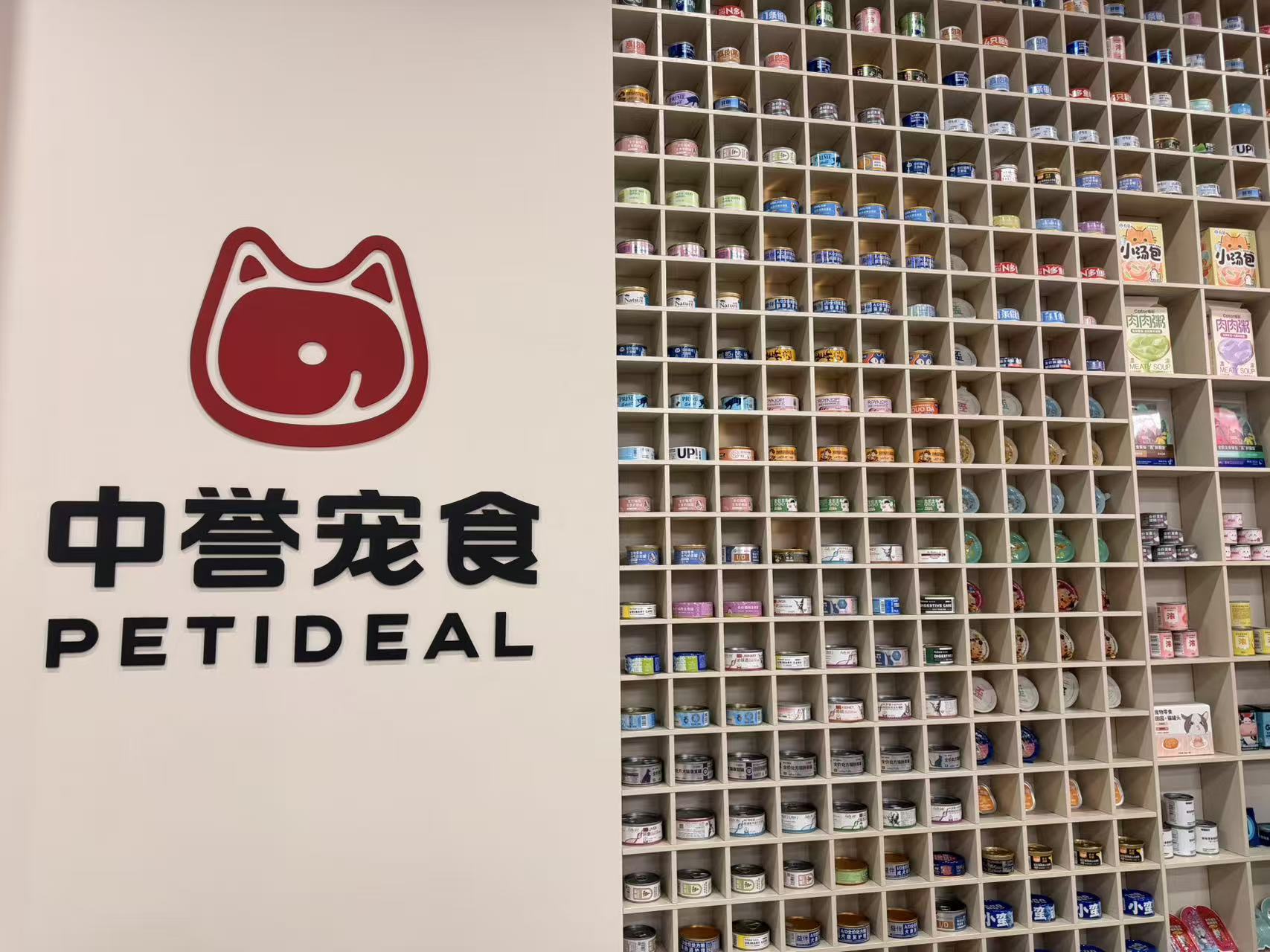
As pets are increasingly treated as “family members” in more households, cats and dogs are living more refined lives. Eating enough is just the baseline—eating well is the new standard.
Today’s pet food mainly falls into two categories: dry and wet. Dry food is further divided by processing method into extruded, baked, air-dried, and freeze-dried varieties, while wet food includes staple canned food and fresh meals. Just like humans eat main meals and snacks with nutritional balance, pet food has followed suit. Among these, extruded food dominates basic consumption thanks to its cost-effectiveness, baked food has become the growth driver in the mid-to-high-end market with balanced nutrition and palatability, while air-dried and freeze-dried foods focus on premium niche segments.
As consumer demand for pet food becomes more refined, innovative pet food companies are also evolving to meet these needs.
An Zhongping, chairman of Zhongyu Pet Food (Luohe) Co., Ltd., says the company positions itself as a fresh meat expert, completely different from the traditional approach of using meat meal plus grains. Their pet food uses fresh meat paired with dietary fiber, fruits, and vegetables. In his view, as young people treat pets as family and companions, animals are no longer eating traditional feed but nutritious, diversified foods.
At the company’s display booth, dog chew sticks made from cowhide satisfy dogs’ need to chew while the raw material is also edible. For cats, there’s “light milk eel sauce,” fresh cat meals, goat milk smoothies—packaged in colorful designs with cartoon animal patterns, looking just like human snacks in a supermarket.
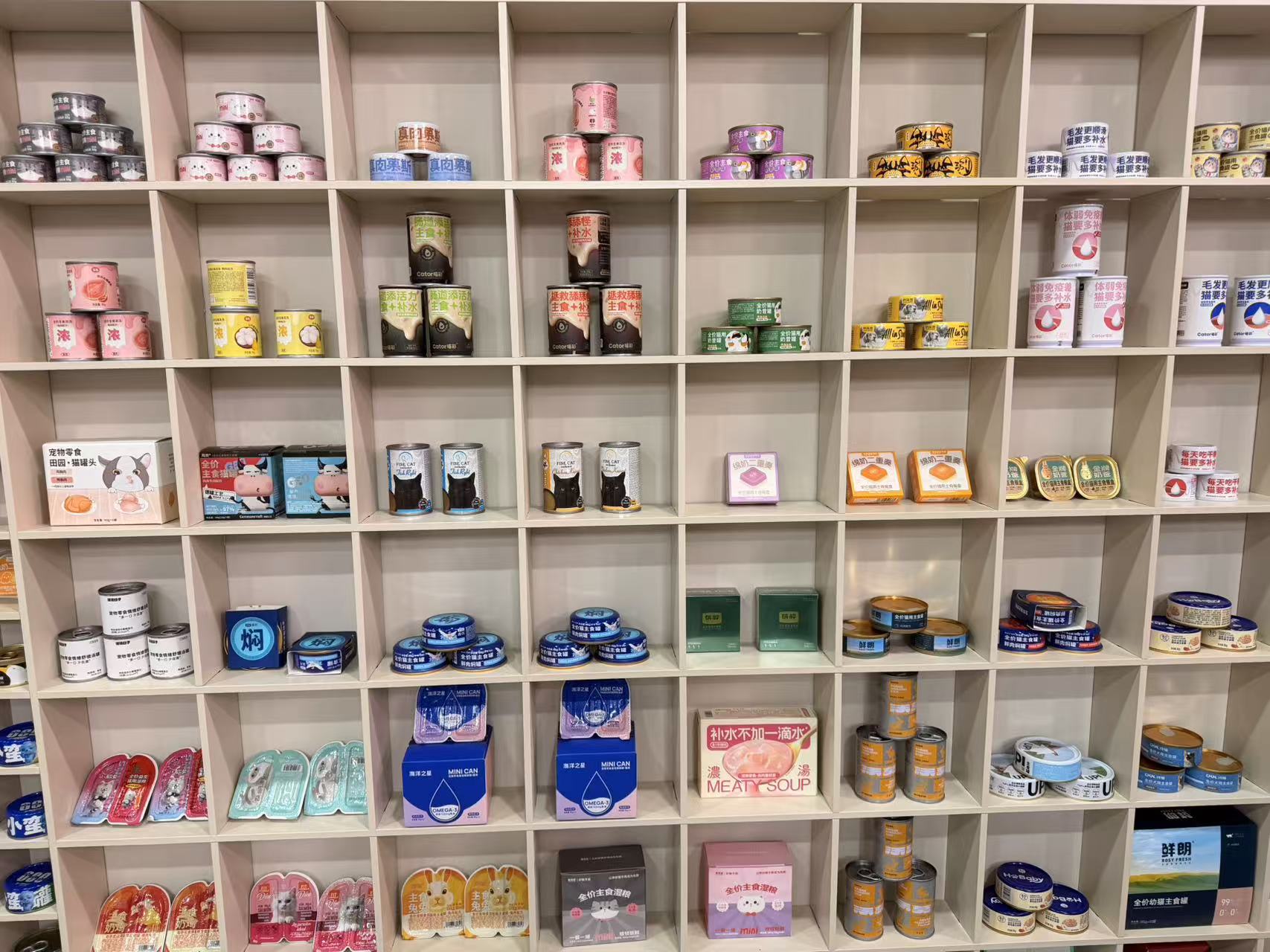
Products need innovation, but the secret to pet food economy growth also lies in the supply chain.
An Zhongping explained in an interview that when a whole chicken is divided, wings and legs command higher prices and enter the human consumption market, but the remaining carcass and breast meat—still quality protein—can be effectively utilized in pet food.
An Zhongping noted that Zhongyu’s Luohe production base is just 2 kilometers from the Shuanghui Industrial Park. Fresh meat travels from slaughterhouse to factory in cold-chain transport at 0°C to 4°C, taking no more than 10 minutes, with no freezing required throughout.
These cuts that are “scraps” on the human dining table are actually premium poultry protein sources in the pet food sector—avoiding competition with human consumption for high-priced cuts while leveraging Luohe’s food industry advantages to extract value from every bit of raw material.
Currently, pet food is the centerpiece of the pet economy. According to the “2026 China Pet Industry White Paper,” China’s pet consumption market reached 312.6 billion yuan in 2025, making it the world’s second-largest pet consumer market after the United States.
The white paper shows that pet food, as the most important segment of the pet economy, accounts for 53.7% of the entire pet consumption market, with a scale exceeding 160 billion yuan, playing an increasingly prominent role in driving related industries and boosting domestic demand.
Whether pet food is good or not still needs feline and canine approval—only food that passes their inspection can reach the standards for mass production and market launch.
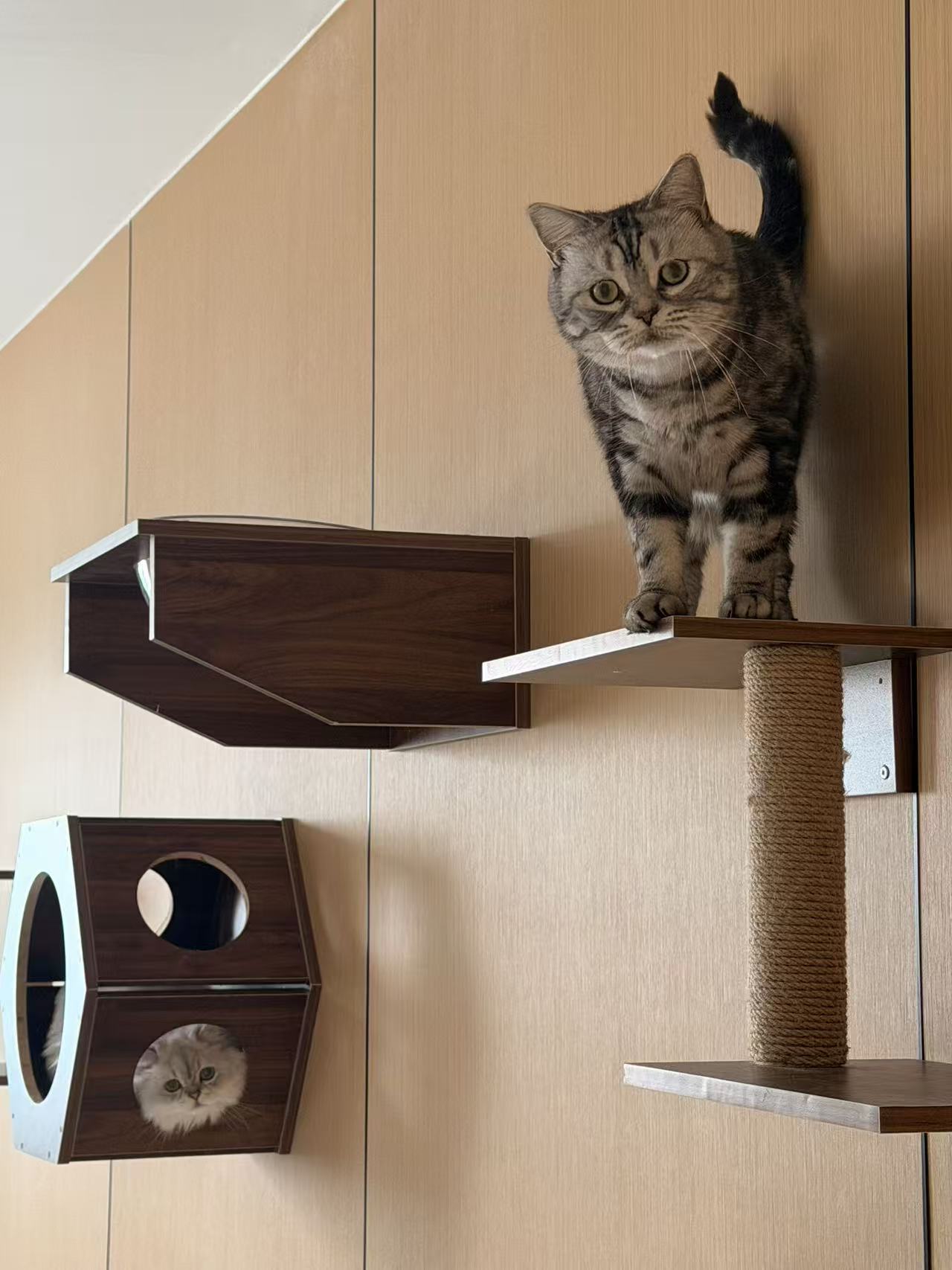
At Zhongyu’s Phase II production base, there’s a special “employee dormitory” housing over 100 cats and dogs. Their daily job is tasting newly developed pet food. Staff compare palatability based on intake amounts, eating order, and digestion across different products, then improve formulas or processes. Every product must pass real verification by these “taste testers.”
The market is the most important testing ground for product quality. As a supply chain company, Zhongyu Pet Food has partnered with multiple well-known brands. Its domestic clients include Xianlang, Wang Baba, Lanshi, NetEase Yanxuan, and others, while also taking orders from mid-to-high-end pet food brands in Europe, America, and Southeast Asia—partnering with over 300 brands.
In Luohe’s pet economy park, what’s interesting isn’t just pet food—it’s also a hub for innovative pet health and grooming products.
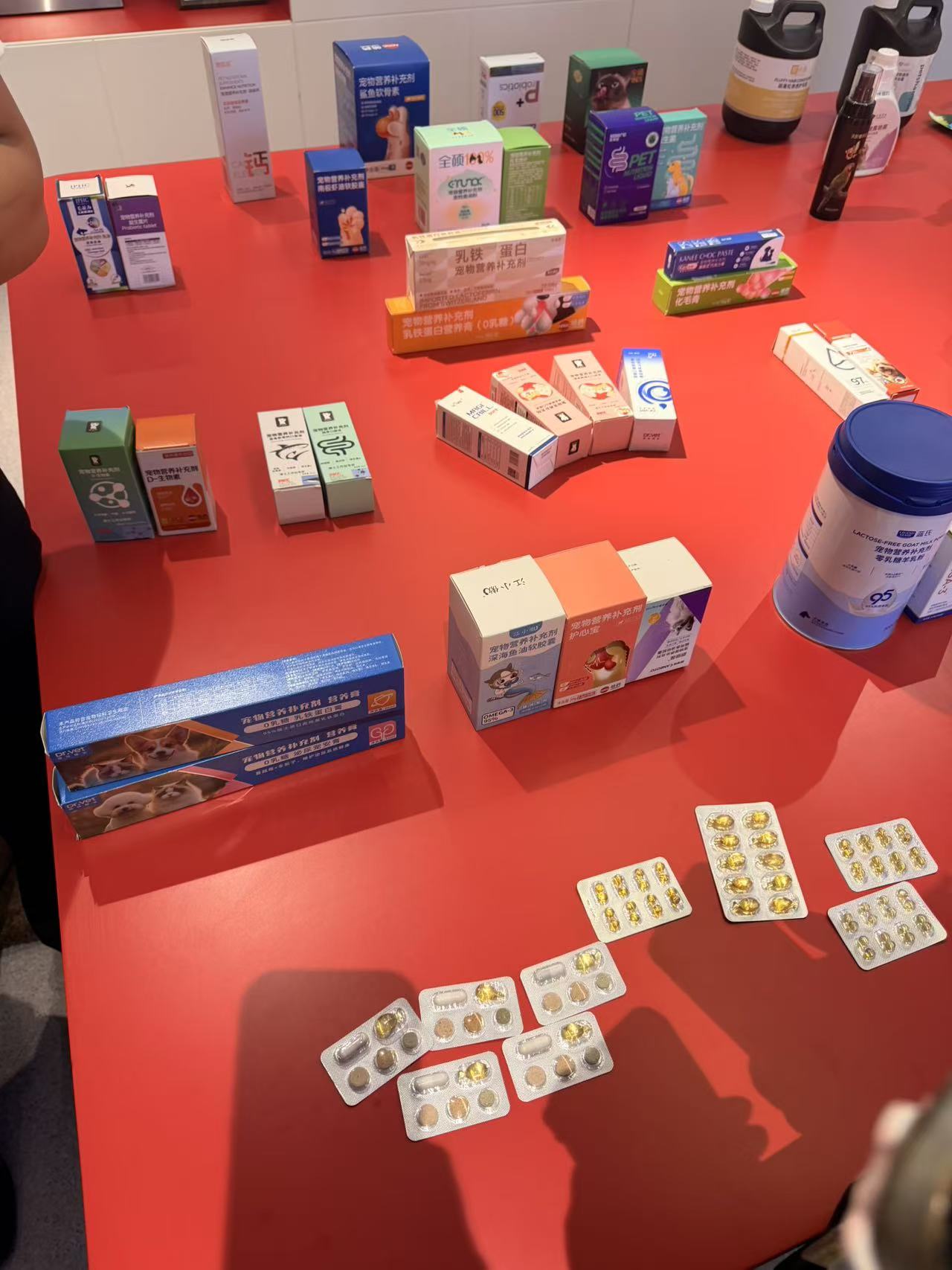
At the display booth, pet health supplements draw the most curiosity—capsules and tablets just like human health products. These come from Huashengweike Bioengineering (Luohe) Co., Ltd., which has invested 200 million yuan to build a GMP production base and a 1,600-square-meter independent laboratory. With over 200 products, tens of thousands of boxes (bottles) are shipped daily to first-tier cities across China and more than 20 countries and regions.
NUPIAO learned that cats and dogs, like humans, face age-related health issues. After dogs reach age 7 and cats reach age 8, they may experience declining heart function, degenerative joint disease, and weakened immunity. They too need targeted supplements to address health concerns.
For example, Huashengweike’s “Revitalize Softgel” formula combines fish oil, krill oil, green-lipped mussel oil, and other highly bioavailable anti-inflammatory ingredients, stabilized through emulsification technology. Its benefits include anti-inflammatory support, heart function maintenance, bone and joint health, and immune regulation—targeting senior pets.
Pet consumption upgrading isn’t just about “eating.” In Luohe’s pet economy park, the industrial chain extending around pet quality of life goes far beyond that—even cat litter is undergoing a “waste-to-wealth” industrial experiment.
For instance, in the Luohe pet economy park, some companies can turn seemingly useless okara (soybean residue) into cat litter. One raw material for tofu cat litter—wet okara—mainly comes from the soy processing division under Luohe’s local giant Shuanghui. What was originally a byproduct of tofu processing—protein residue—is transformed into fluffy white tofu cat litter through crushing, shaping, and drying processes.
Through stable supply-demand cooperation, the company consumes hundreds of tons of soybean processing byproducts annually, reducing environmental pressure on upstream enterprises while enhancing industrial added value. Annual production of tofu cat litter and other mixed litters can reach 60,000 tons, with output value up to 120 million yuan.
Major Brands Approve, Overseas Customers Place Orders Too
In Zhongyu Pet Food’s showroom, a “ginseng chicken soup” product marked in Korean stands out.
According to the guide, in Korea, ginseng chicken soup is considered one of the most nutritious traditional dishes. Catering to export markets’ dietary habits, Zhongyu Pet Food developed targeted pet food products to open up markets.
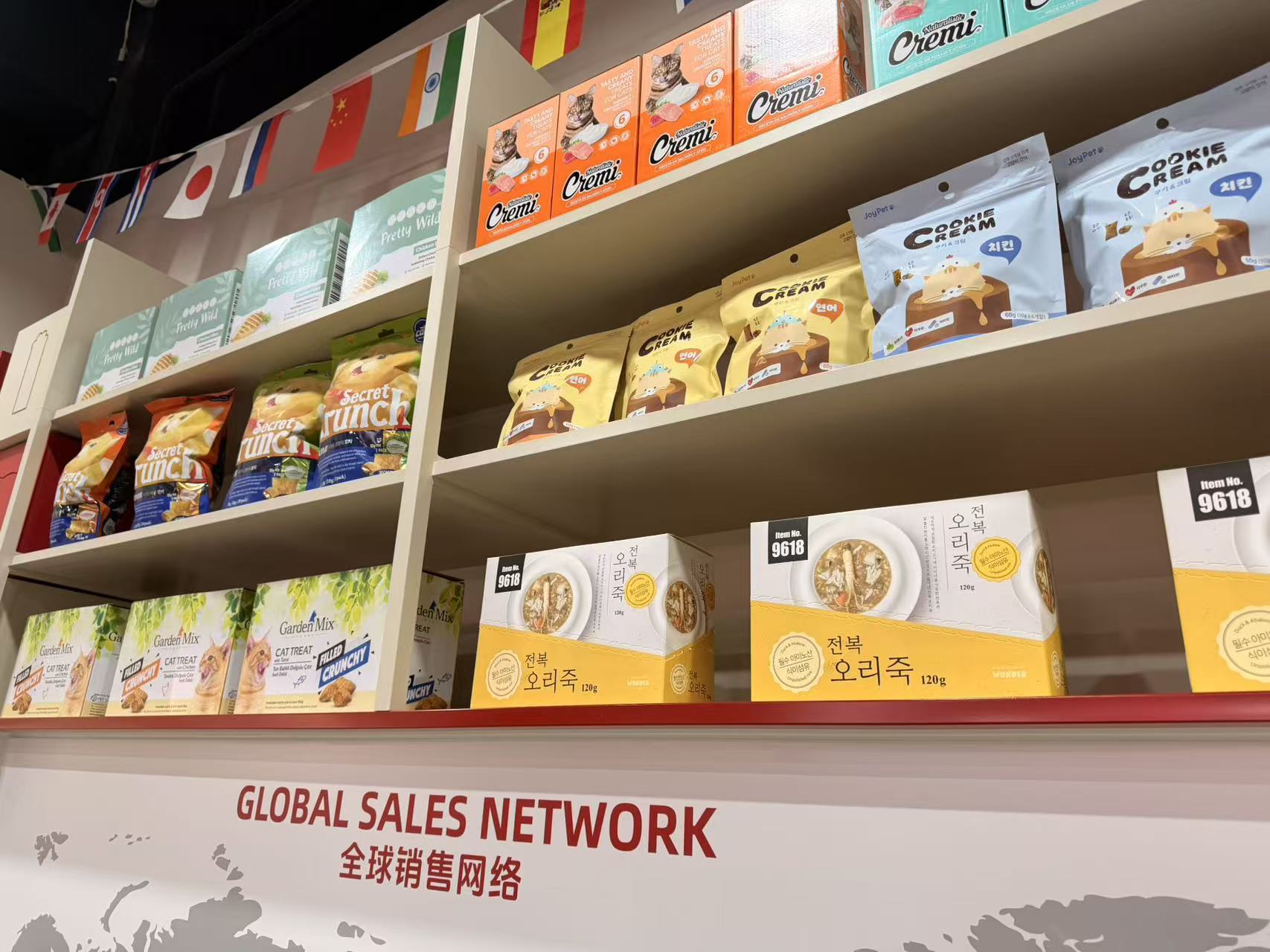
Cats typically don’t like drinking water, but chronic dehydration is bad for urinary and kidney health. High-moisture wet food like ginseng chicken soup can address cats’ need to get hydration from food.
Zhongyu Pet Food has obtained AEO customs advanced certification, completed US FDA and EU registrations, and acquired a full set of international “passports.” In the first half of 2026, Zhongyu’s export value grew 45.6% year-on-year, ranking first in the province’s industry, with products exported to over 40 countries and regions including the US, Russia, Canada, Australia, and Poland. Overseas revenue now accounts for about 40% of the company’s total, with partnerships including Walmart, COSTCO, and Germany’s animonda.
Notably, Zhongyu Pet Food’s overseas production base in Oman is accelerating, marking an upgrade from pure product export to localized operations.
China’s “15th Five-Year Plan” proposals explicitly state: “effectively implement outbound investment management, improve comprehensive overseas service systems, promote trade-investment integration, and guide industrial and supply chains to arrange cross-border operations reasonably and orderly.” On the pet economy track, Henan enterprises have already achieved preliminary results.
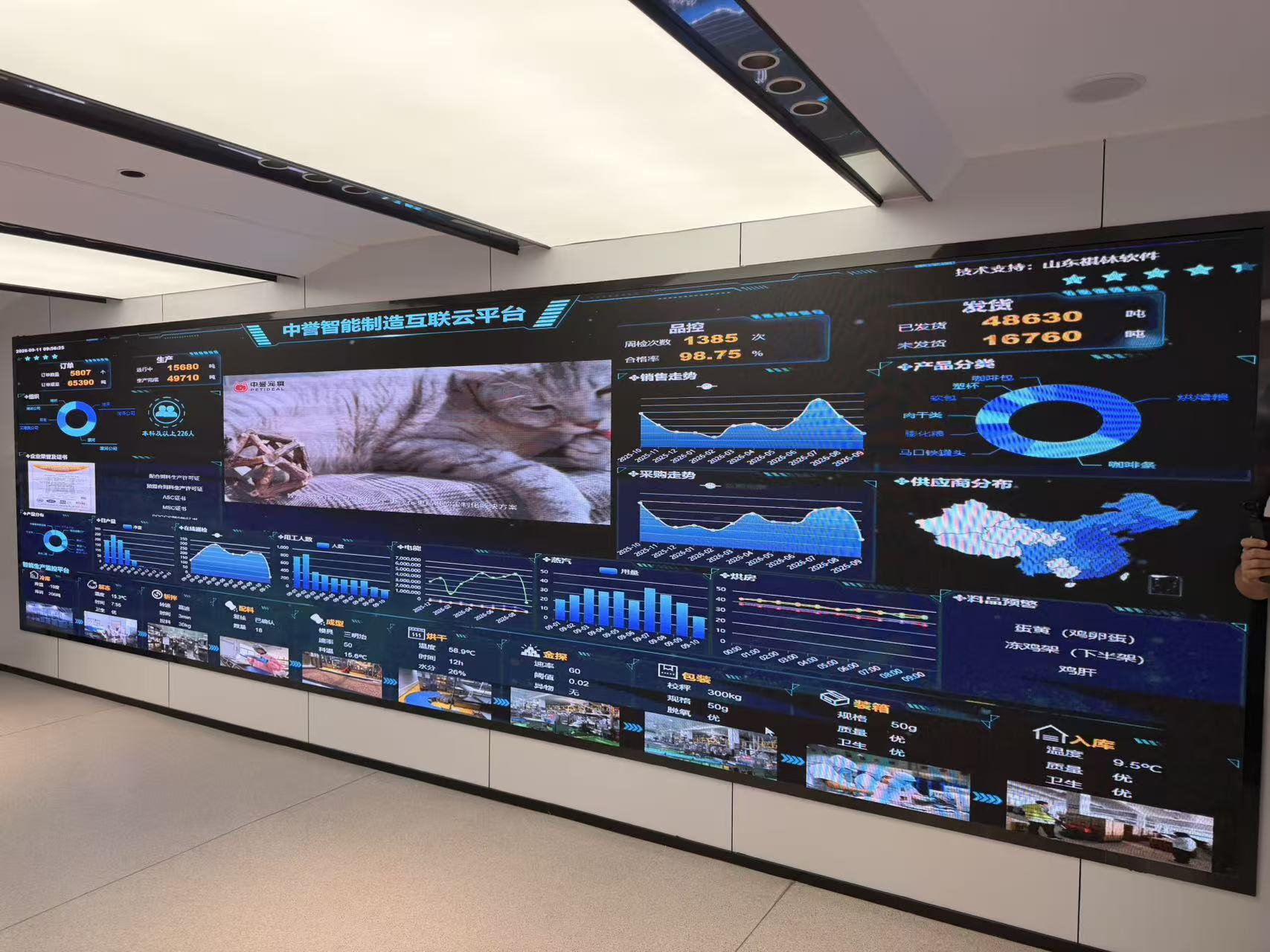
In the pet health supplement sector, Huashengweike also has a clear overseas path. Its products have been exported to over 20 countries and regions including North America, Southeast Asia, and Europe, with foreign trade shipments climbing year by year. According to Luohe Daily, the company will focus on expanding into European and American pet supplement markets while simultaneously布局 high-end markets in Southeast Asia and Latin America, aiming for overseas revenue of 60 million yuan this year.
In fact, Luohe’s local pet economy development is inseparable from policy support. NUPIAO learned that Zhaoling District, where the pet industry park is located, established a Pet Industry Development Service Center offering one-stop project services and specially created “Pet Loans” to help enterprises access low-cost financing.
With policy support and consumer demand working together, local enterprises are moving from independent product innovation to gradually opening overseas markets. The “pet economy” story of Luohe—this small city in the Central Plains—has only just begun.