NUPIAO Report |
Editor | NUPIAO
October 11 — with just five days to go before iPhone Duo pre-orders open, Apple COO Sabih Khan and his team kicked off another tour of the company’s China supply chain. First stop: a key process line for Apple’s first foldable phone at the Foxconn plant in Zhengzhou.
iPhone Duo has been winning market attention for its shallow crease and flat display, and this process is one of the key reasons behind that.
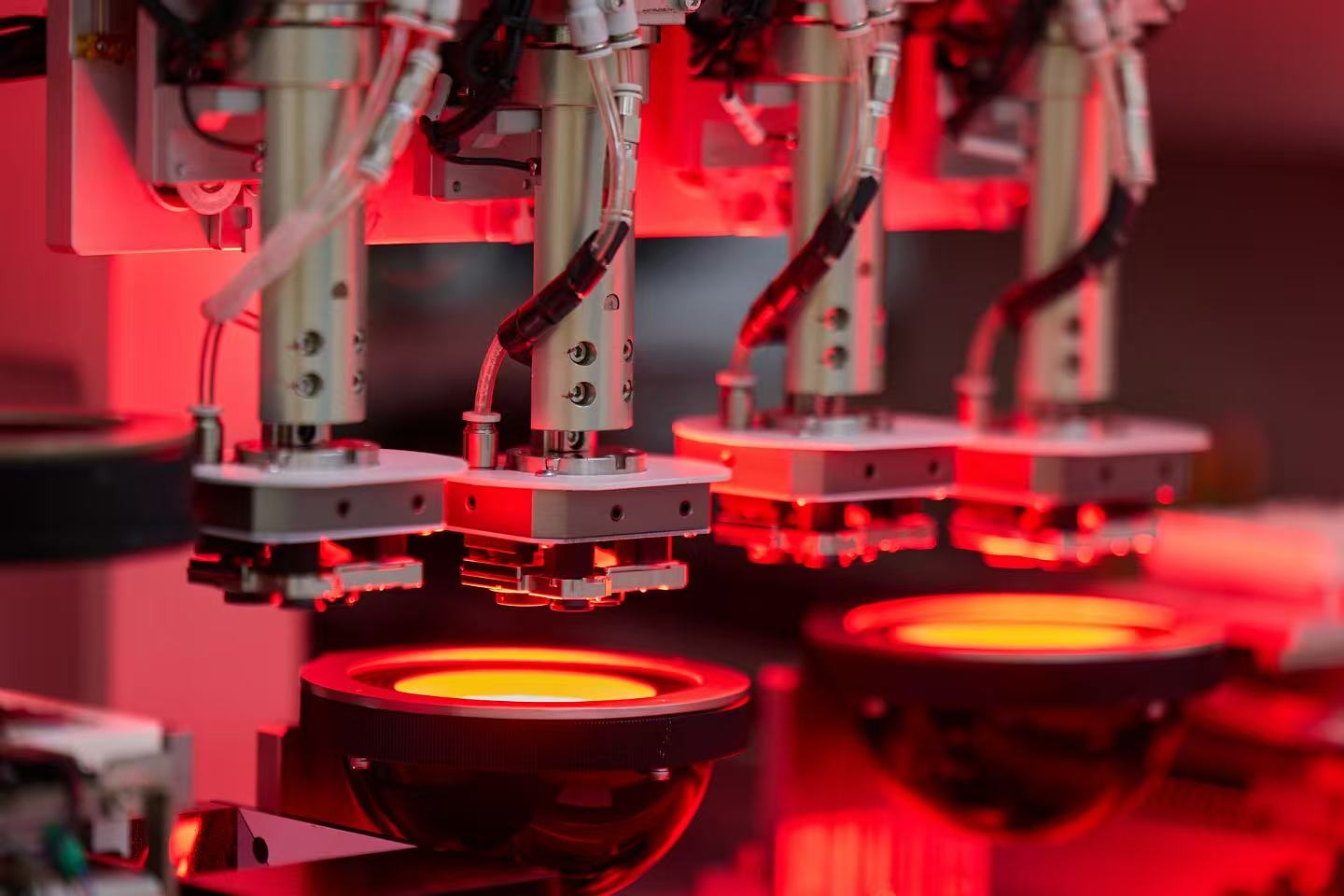
It’s a micron-level 3D-printing automated production machine that Apple and Foxconn built specifically for iPhone Duo. The hinge area, made up of more than 100 precision parts, got a redesigned process and custom-built equipment.
Its job: take the partly assembled hinge and use a confocal laser to scan out a 3D profile layer by layer, then use machine-learning algorithms to generate an instant dynamic filling plan. After spraying up to 25 layers of custom photosensitive polymer, uneven areas get reshaped and refined to improve flatness.
“Finally, the machine starts another laser scan to confirm the surface, making sure every product meets the strict micron-level standard,” a worker on the floor told NUPIAO.
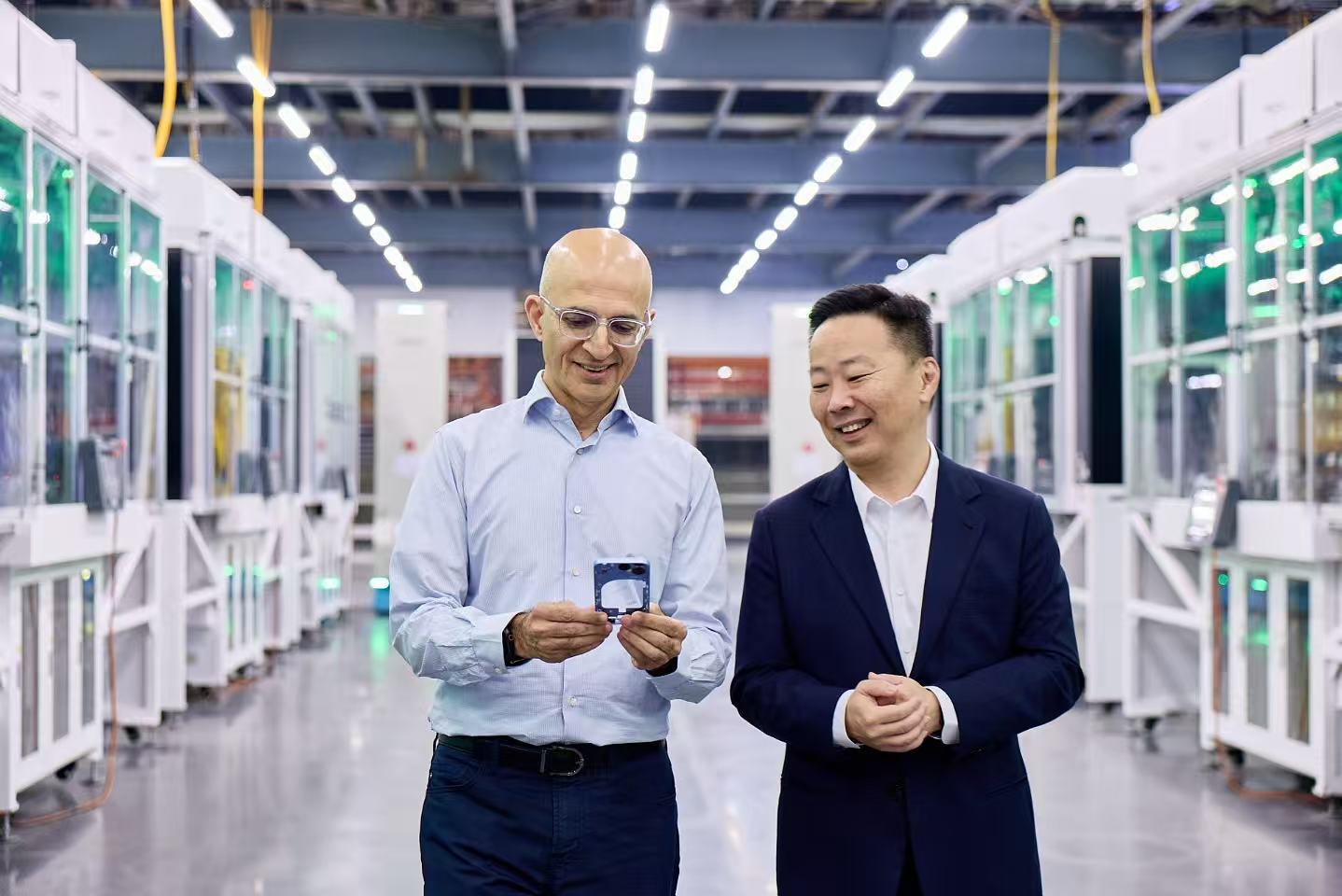
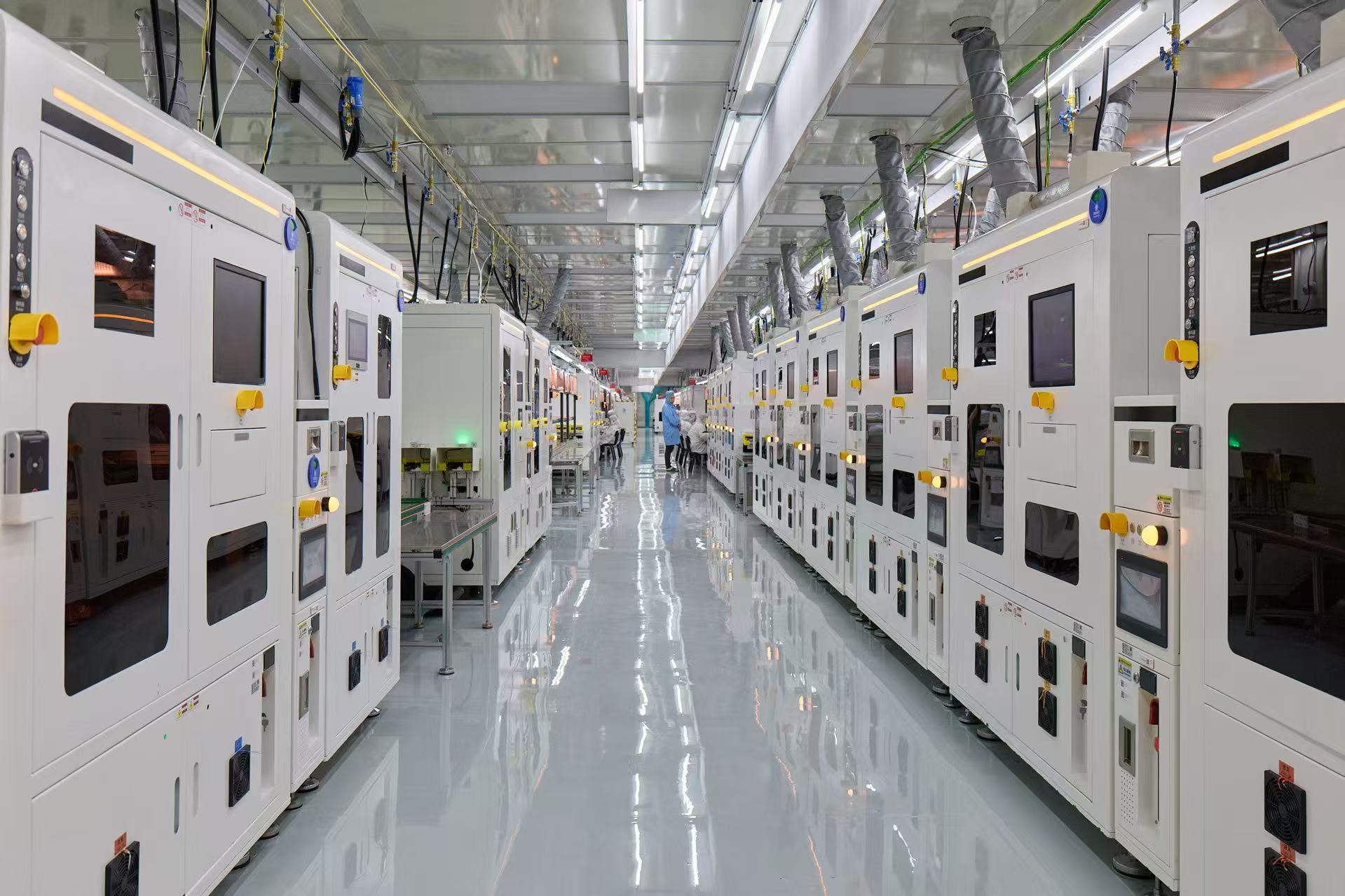
Since Apple and Foxconn began working together on the first-generation iPhone, Foxconn has been deeply involved in almost every generation’s manufacturing and process breakthroughs. During the tour, Sabih Khan told NUPIAO and other media that the Zhengzhou campus is the world’s largest iPhone factory and the result of Apple’s long-term partnership with Chinese supply-chain partners.
Apple has been in China for more than 30 years. To him, what makes Zhengzhou special is that it can meet the demands of large-scale production, quality control and complex product manufacturing at the same time. “You can find very large factories, and you can find factories with great quality, but very few can have both at this scale and still meet the complex product requirements we face here,” Sabih Khan said.
He called iPhone Duo one of the most challenging and most exciting products Apple has ever made. To bring the design to life, Apple and Foxconn had to build new manufacturing capabilities. They’re now scaling up production while maintaining Apple’s quality standards. “We’ve been making iPhones in China for many years, but we’ve never made a product like this before.”
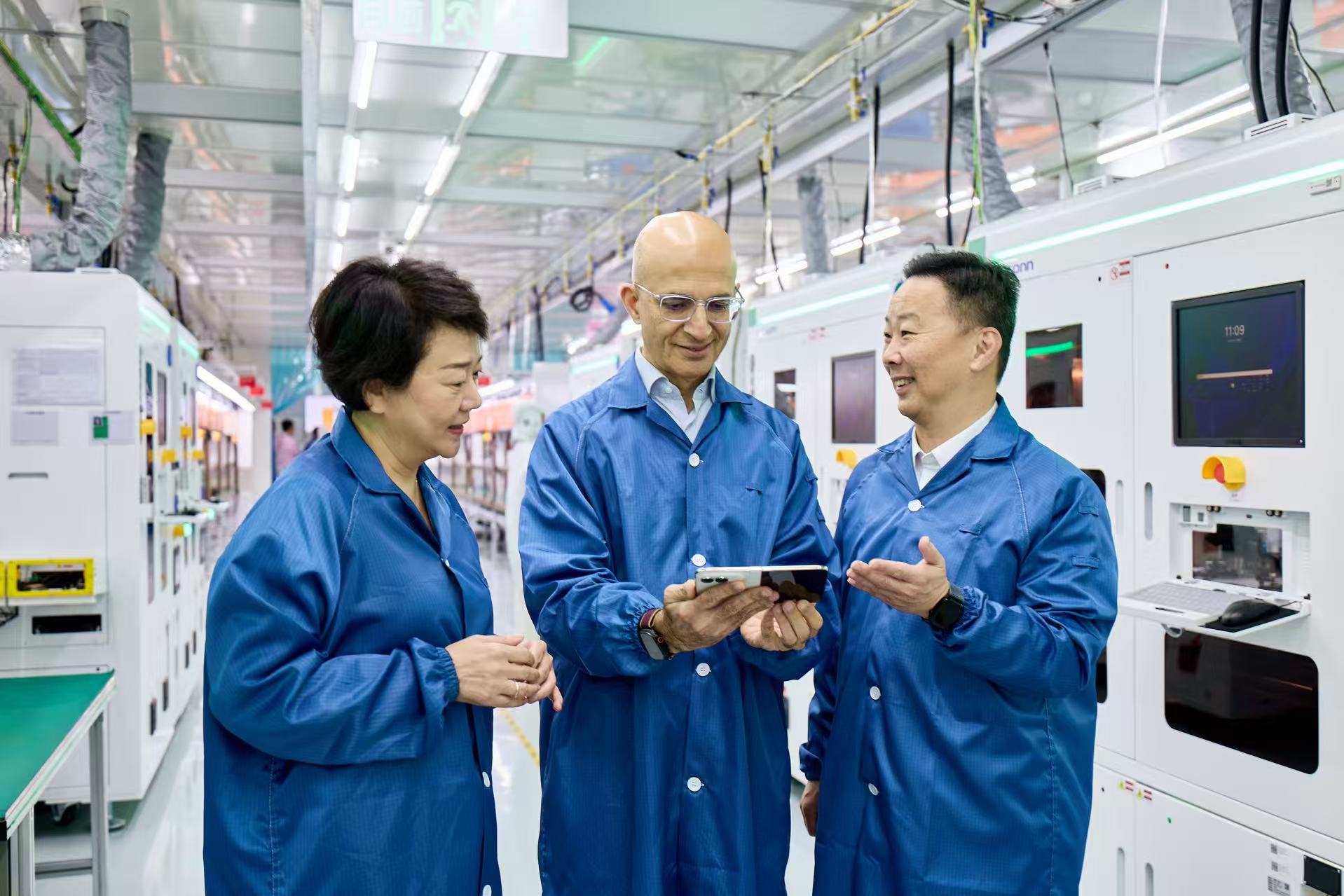
Beyond the newest iPhone Duo, Foxconn also showed off some craft highlights from existing iPhone lines. For example, Foxconn Zhengzhou’s first high-spec cleanrooms are now home to the rear camera module line for the iPhone 18 Pro series.
Before entering the workshop, Sabih Khan had to suit up just like every worker there: hair cover, mask, gloves, a dark blue coverall, cleanroom shoes, then rinse the gloves. Two air showers later, he was inside the cleanroom where this process runs.
The iPhone 18 Pro series’ main, telephoto and ultra-wide lenses are assembled here one by one. To keep optical axis alignment and image consistency, the line uses high-speed dispensing and laser flatness re-inspection systems. Dual active alignment stations read the factory optical performance calibration data from upstream modules and use it as a baseline for precise compensation adjustments, making sure all lenses lock into the best position.
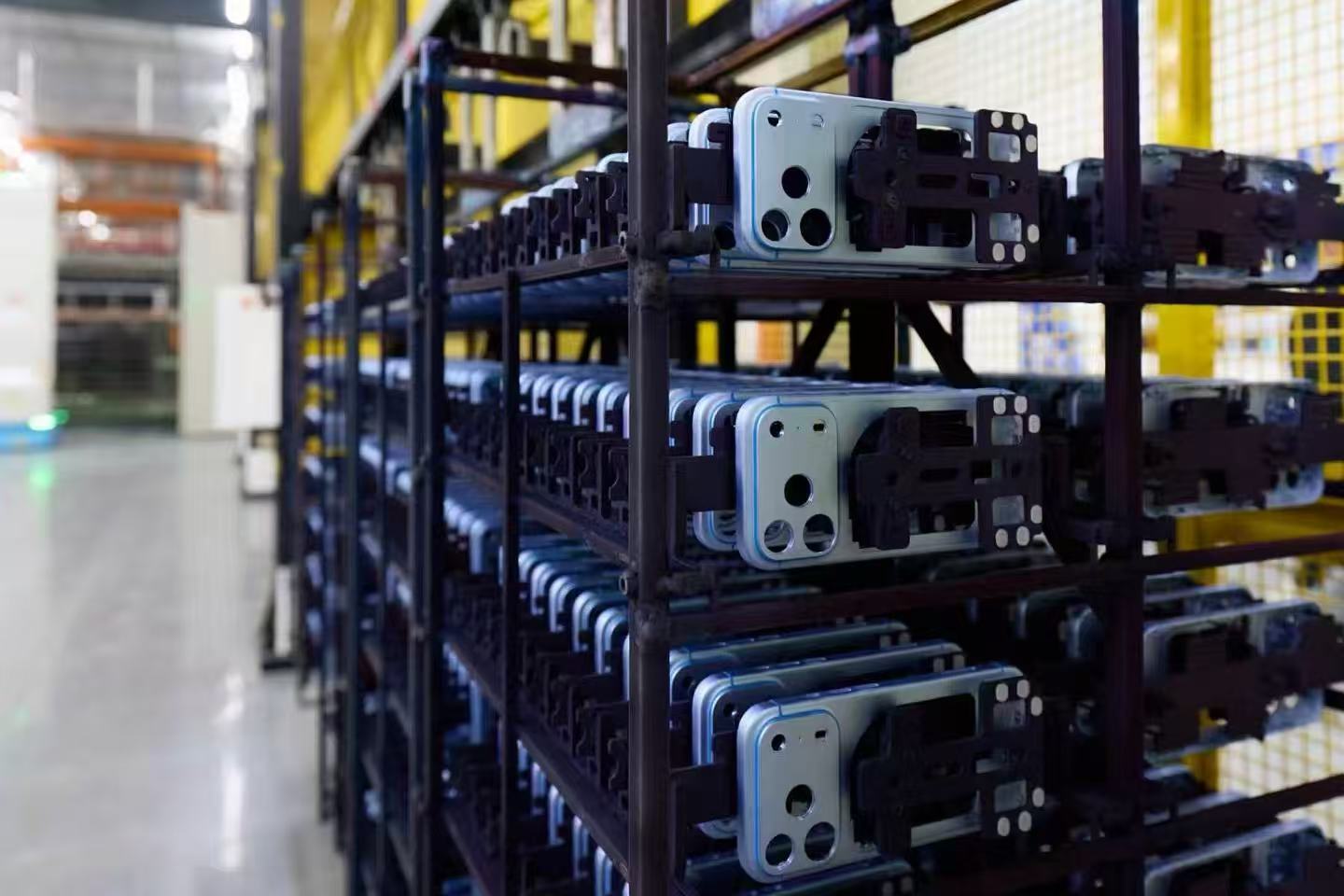
Automation and intelligence on the production line were another focus of the tour. In the iPhone mid-frame anodizing workshop—an aluminum alloy coloring process—automatic clamp loading and unloading equipment, AGV guided vehicles and overhead crane systems work together to move mid-frames automatically across more than 130 process tanks.
A central data system combines sensors and algorithms to monitor key bath parameters and color data in real time and make fine adjustments. In mass production, the consistency of iPhone body colors depends on this process-parameter control system.
Another important process change is on the surface of the iPhone SoC package. Apple and Foxconn used electromagnetic shielding sputtering on the chip package surface for the first time, replacing the traditional metal shield and cutting module thickness by 20% while improving heat dissipation.
To make the sputtering process fit the SoC package structure, the two sides also introduced high-precision physical polishing pretreatment and a zero-tack stepped adhesive film. According to the company, these processes cover the sidewalls of the chip package while avoiding overflow plating contamination at the bottom and reducing damage to the coating when the chip is picked up.
This new manufacturing process has already brought local investment. Jiang Jiheng said Foxconn set up a joint venture, Henan Hongchuang Technology Co., Ltd., with the state-owned capital platform of the Zhengzhou Airport Economy Zone at the end of 2025. The SoC sputtering workshop visited this time is the company’s first project; it started production in July this year, and the related products are used in iPhone 18 and the upcoming iPhone Duo.
Going forward, the company also plans to develop and manufacture more semiconductor packaging technologies and advanced electronic components.
Beyond production, Foxconn also showed the Zhengzhou campus’s 200,000-square-meter global intelligent distribution center. Normally, orders placed by retail customers on the official website also arrive here in real time and are shipped out as fast as possible.
“In the old days, workers in the warehouse had to move heavy goods every day in hot, stuffy conditions. Now it’s completely different,” Jiang Jiheng said. “That’s the power of smart manufacturing.”
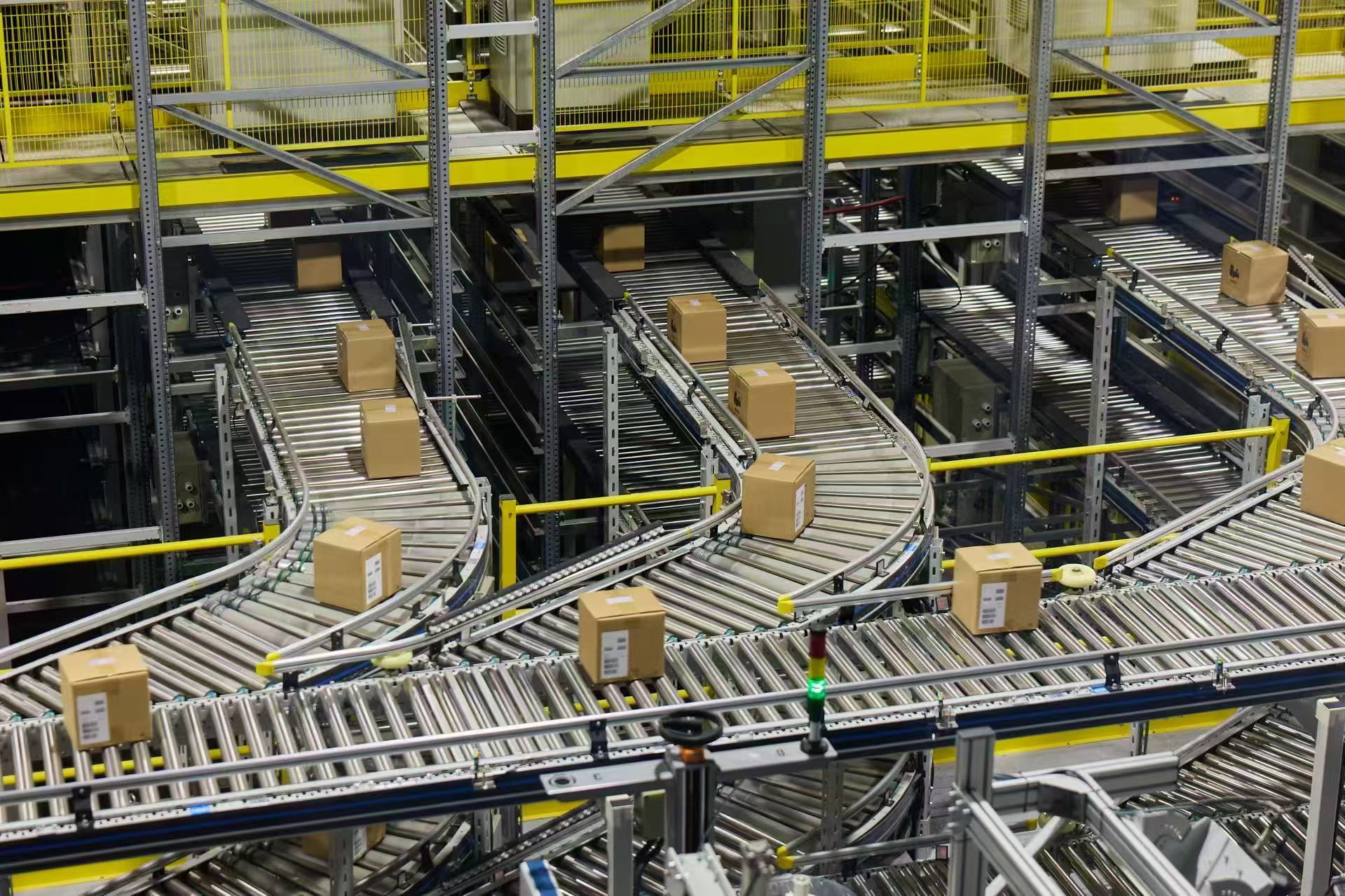
The center includes two finished-goods automated warehouses linked by RGV rail cars. The pallet automated storage and retrieval warehouse and the multi-shuttle carton warehouse have reached unmanned “lights-out management,” with a self-developed warehouse management system (WMS) and warehouse control system (WCS) coordinating automatic storage and retrieval, robotic palletizing and conveyor-line shipping.
At the warehouse entrance, a wall-sized electronic screen lets center staff monitor the real-time status of rail cars, stackers, lines, labeling machines and other equipment. The screen also shows camera-scanned confirmation of inbound goods, outbound re-inspection, sorting and palletizing.
Jiang Jiheng told NUPIAO that Foxconn is shifting from what outsiders long saw as the “world’s factory” to a technology manufacturing platform service provider. The main capabilities supporting that shift are AI-driven smart manufacturing and vertical integration of the supply chain.
According to him, Foxconn has applied AI in multiple production steps. Its quality inspection system, which replaces manual visual inspection, has reached 99.5% accuracy, reducing the impact of repetitive work and worker fatigue on inspection.
AI is also moving from inspection into production workflows. Jiang Jiheng revealed that Foxconn is deploying AI agents in its intelligent production scheduling system. Based on production demand, they automatically pull material, equipment and personnel information from different systems and generate scheduling plans. He rated the current results this way: “The plans AI comes up with are absolutely no worse than those from our senior engineers and managers.”
After finishing the Foxconn tour, Sabih Khan also visited Yuto Technology’s Xuchang factory—a supply-chain segment that has drawn less outside attention before.
Yuto has worked with Apple for more than 15 years, taking part in packaging engineering development and production for Apple’s full product line, including iPhone, iMac, AirPods and Apple Vision Pro.
Take iPhone packaging. The box printing is done by an eight-color high-precision press, with paper feeding, cold foil, printing and coating running inline. This is four times more efficient than offline hot stamping. The line uses UV fast-dry ink technology, and one standard four-color ink set can reproduce the four signature body colors of the iPhone 18 Pro series.
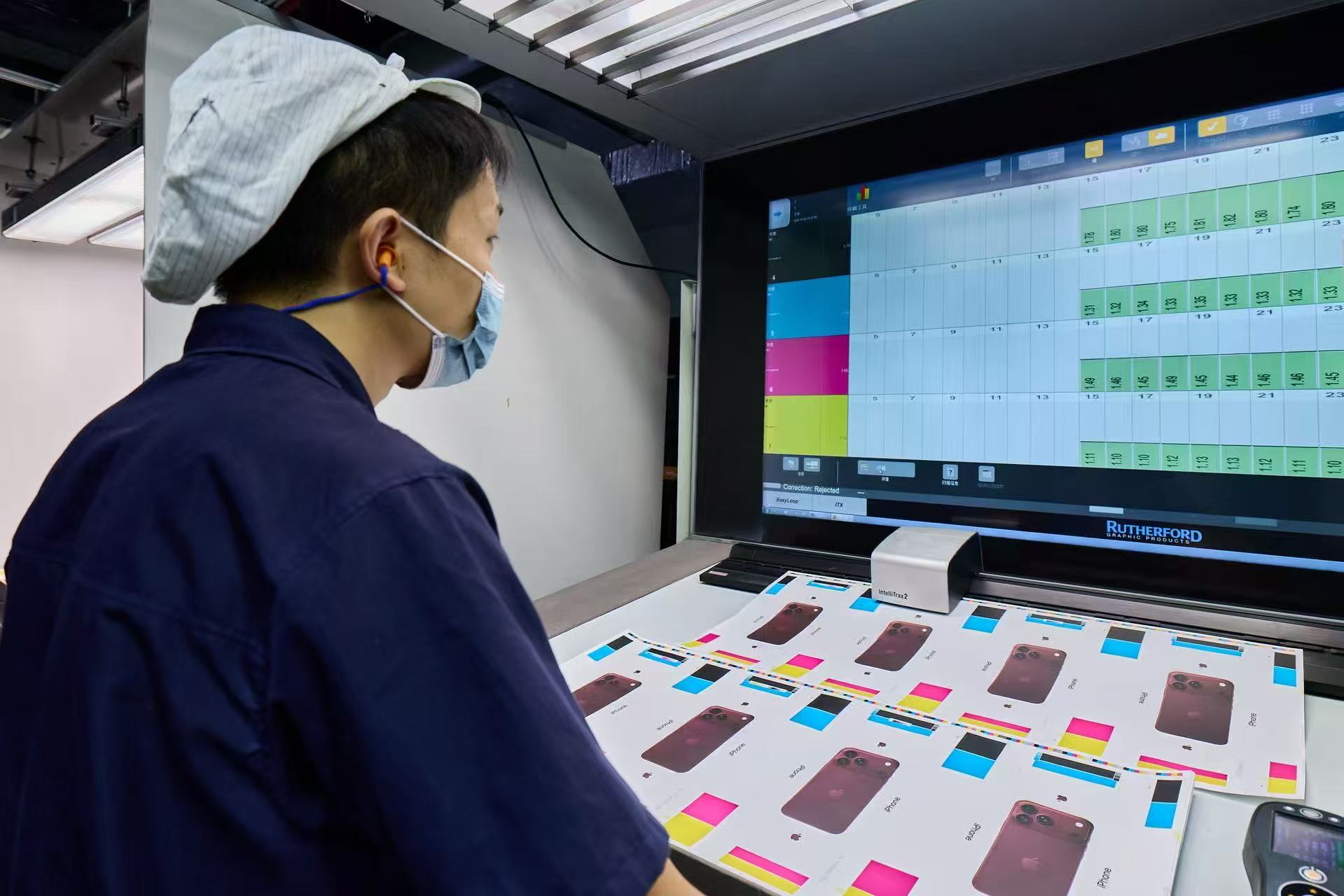
In an on-site teardown, one iPhone packaging box contains 17 parts and goes through 36 assembly steps. Its automated assembly line completes a box every 1.9 seconds. The automated optical inspection equipment co-developed by the two sides has to keep up with that pace, capturing 64 high-precision images across 10 surfaces of the box within 1.9 seconds and then comparing them with database algorithms to catch tiny cosmetic defects.
Before these boxes leave the factory, they also go through a series of “drop and tumble” tests in a packaging reliability lab. In drop testing, for example, the lab uses a weighted metal model matching a real iPhone and a real express box, simulating drops on six faces, three edges and one corner to verify that the inner packaging box won’t be damaged in logistics.
At Yuto’s Xuchang factory, Sabih Khan sees packaging as part of both user experience and product protection. He said the box is the first thing consumers touch when buying a product; it has to deliver a delightful unboxing experience and also meet protection requirements during shipping and use. That requires Apple and Yuto to work together on material selection, structural design and reliability testing.
Replacing packaging materials was another focus of his visit. Apple removed plastic from all product packaging earlier this year, thanks to work with suppliers including Yuto on fiber-based alternatives. Today, the iPhone box’s inner tray uses molded pulp made from sugarcane bagasse and bamboo fiber, while iMac packaging uses a folded corrugated-board cushioning structure instead of foamed plastic, making it 100% recyclable.
“This is also an area where we want competitors to imitate us,” Sabih Khan said.
Yuto Technology chairman and president Wang Huajun believes the long-term partnership with Apple has pushed Yuto from a traditional factory toward a smart factory. That collaboration isn’t just about orders; engineering teams also work together on development and solving manufacturing problems.
He said that as capabilities improve and the business grows, Yuto plans to further integrate AI into factory operations in the future.
The partnership has also shaped Yuto’s footprint in Henan. Wang Huajun said that when the company came to Henan in 2011, the local supply chain, worker skills and management capabilities weren’t fully there yet, so it had to send people from other regions. As the industrial base has improved, more than 95% of its employees are now local, and management, R&D and technical roles have also been localized.
“Apple helps us do better, and that lets us invest more locally and support development in central China,” he said.