Just two days after pre-orders opened on September 14, the iPhone 18 Pro series is already showing serious discounts. One e-commerce platform lists the 256GB iPhone 18 Pro at 9,099 yuan — a full 900 yuan below Apple’s official 9,999 yuan price tag. This marks the third consecutive year that a new iPhone has broken below its retail price on e-commerce platforms almost immediately after launch.
The 900 yuan discount is a combination of subsidies: a 300 yuan official platform subsidy plus a 600 yuan store-level discount. Orders placed through this channel show a store commitment to ship before September 27.
Meanwhile, telecom carriers are also offering stacked promotions — combining phone bill subsidies and trade-in deals — that bring the 256GB iPhone 18 Pro down to 9,099 yuan as well. Regular orders without subsidies remain at 9,999 yuan. Currently, JD.com’s self-operated store and Apple’s own channels are still holding firm at the original price.
In response, Apple’s official customer service stated that third-party channels have their own pricing authority and may offer platform subsidies or store discounts — Apple itself does not intervene.
In the early hours of September 10, Apple unveiled the iPhone 18 Pro series, its first foldable phone iPhone Duo, the Apple Watch Series 12, and other new products.
According to pricing published on Apple’s China website, the iPhone 18 Pro 256GB starts at 9,999 yuan; the 512GB version is priced at 11,999 yuan; the 1TB version at 15,499 yuan; and a new 2TB ultra-large storage version at 20,499 yuan. All four colorways — Black, Silver, Glacier Blue, and Burgundy — carry the same price. Compared to the previous generation iPhone 17 Pro, the 256GB and 512GB versions are both up 1,000 yuan, while the 1TB version jumped 2,500 yuan.
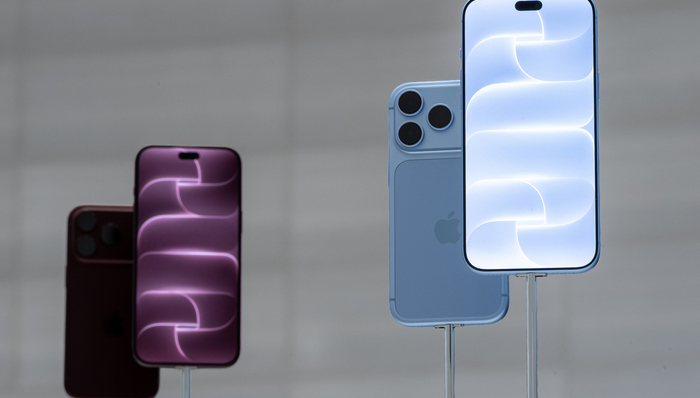
At 8 PM on September 12, pre-orders for the iPhone 18 Pro series officially began. Consumers flooded onto various platforms to grab their devices, and multiple popular models sold out their first batch of stock almost instantly. As of 10 PM that evening, Apple’s website was still accepting orders normally, though shipping times for some hot models had already been pushed back to September 30.
Data from Dewu shows that the iPhone 18 Pro Max 256GB in Burgundy had an average transaction price of 12,799 yuan — up 1,800 yuan, or 16.4%. The 256GB Silver version averaged 13,999 yuan, up 3,000 yuan, or 27.3%.
On September 15, a news reporter checked Apple’s JD.com self-operated store and found that the iPhone 18 Pro Max series all showed “reservation” status, while the iPhone 18 Pro was on sale with a shipping date of October 10.
This year, the iPhone 18 Pro Max — with its larger screen and higher specs — is seeing short-term supply shortages at launch, leading to premiums on third-party channels. The Pro version, by contrast, has less room for premiums and a higher likelihood of falling below retail shortly after launch.
Looking back at market data, new iPhones have now broken below retail on e-commerce platforms for three consecutive years. Before the iPhone 16 launch in 2024, e-commerce platforms’ billion-yuan subsidy channels cut base model prices by 600 yuan, undercutting official pricing before the phone even launched. After the iPhone 17 series debuted in 2025, platforms quickly rolled out subsidies — the iPhone 17 256GB was available for 5,099 yuan after coupons, and the iPhone 17 Pro 256GB for 8,099 yuan after coupons, roughly 900 yuan below official pricing.
Compared to earlier market cycles, previous iPhone launches typically saw short-term premiums, with popular colorways even commanding markups of thousands of yuan. But over the past three years, the premium window has kept shrinking — some models saw premiums drop to zero within 48 hours of pre-sale, dramatically compressing the room for scalpers to hoard and flip devices.
E-commerce platforms’ escalating subsidies are the most direct driver of new iPhones breaking below retail year after year. In China’s digital product arena, Apple’s iPhone is a core product that major e-commerce platforms use to showcase price competitiveness and drive platform traffic. Platforms are willing to absorb subsidy costs to attract users with low-priced new iPhones and boost spending across all categories.
Changes on the demand side are equally important. China’s smartphone market has entered an era of replacement purchases within a saturated market — users are holding onto their phones longer, and consumers are less sensitive to hardware upgrades. Recent iPhone improvements have focused on chip performance and minor camera adjustments, with few disruptive innovations capable of triggering large-scale upgrade waves. Meanwhile, domestic Android flagships keep iterating on cameras, battery life, and AI features at a wider range of price points, siphoning off some potential iPhone buyers.
From Apple’s own pricing strategy perspective, the iPhone 18 Pro starts at 9,999 yuan — a 1,000 yuan increase over the previous generation’s base model. The higher price amplifies consumer price sensitivity and leaves more room for third-party channels to cut prices.
Every time a new iPhone launches, channel prices fluctuate, mainly driven by supply and demand. According to an early August research report from Citi, the iPhone 18 series has a second-half production target of 81 million units, down 3 million from the previous expectation of 84 million — including about 7.5 million units of the new foldable iPhone. Supply chain information indicates that iPhone 18 Pro and Pro Max shipments are estimated at 20 to 22 million units in the third quarter.
Alongside the iPhone 18 Pro series launch, some older iPhone models have also seen price changes. Apple’s China website recently raised prices on four older models still on sale — the iPhone 17, iPhone Air, iPhone 17e, and iPhone 16. The iPhone Air 1TB version saw a price hike of 2,300 yuan, the largest adjustment among the older models.