On September 4, Insta360 (688775.SH) — long hailed as the “first stock of panoramic cameras” — finally caught a small break with a modest technical rebound. As of press time, the stock was up 2.29% at 111.38 yuan per share, giving the company a market value of 44.6 billion yuan.
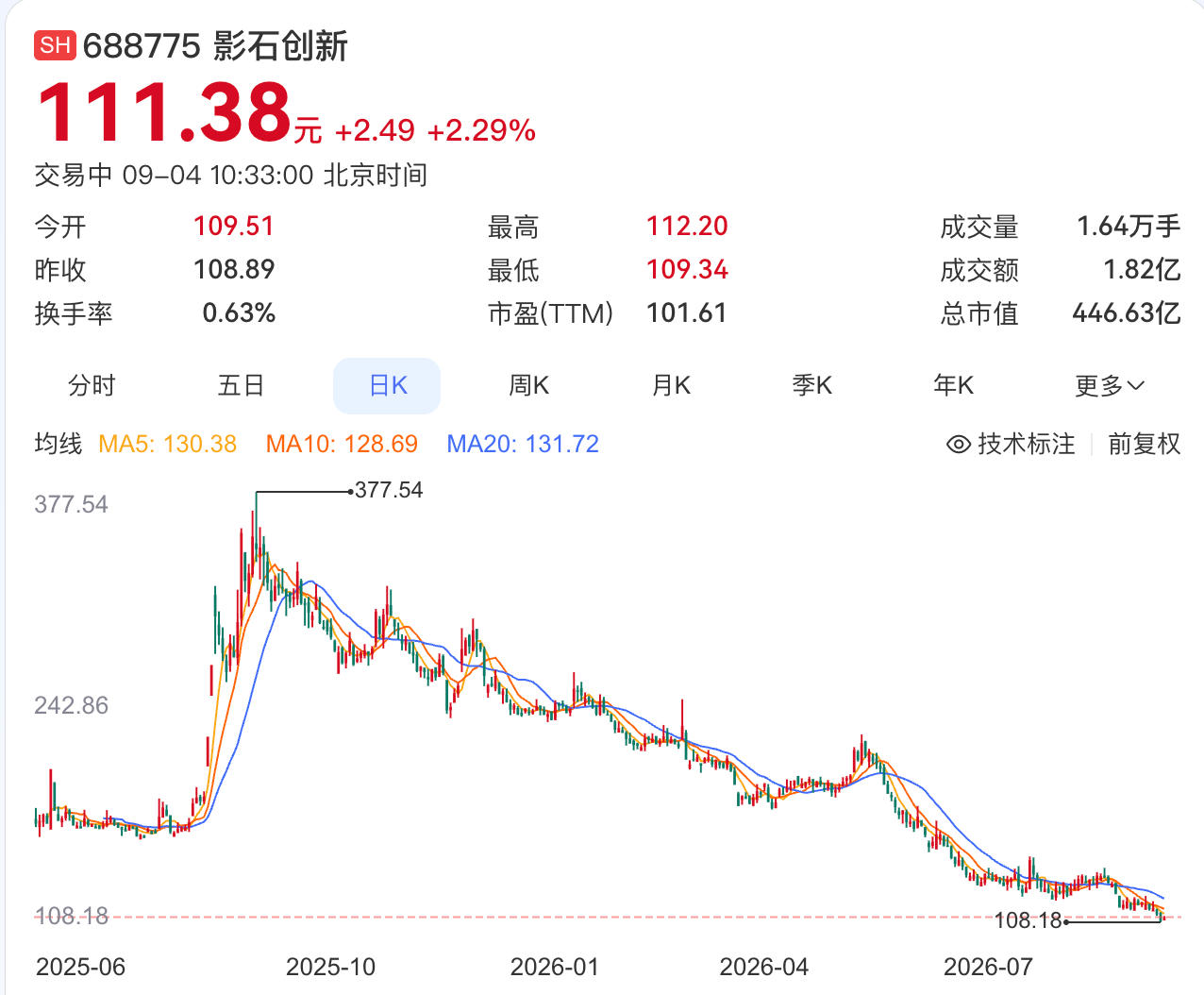
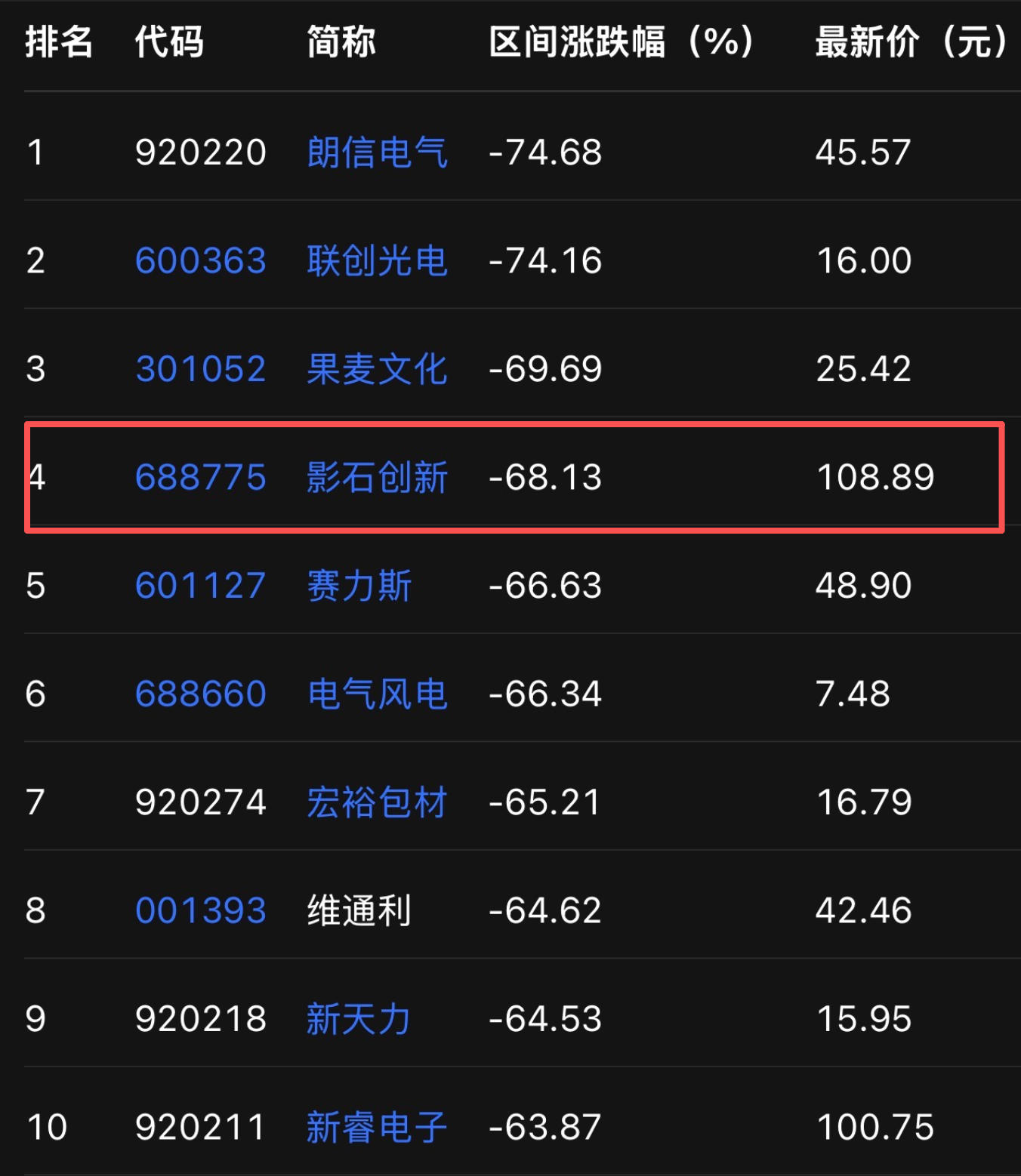
Just one trading day earlier, Insta360 had hit an all-time low of 108.18 yuan. The stock has now lost about 71% from its September 2025 peak of 377 yuan, with its market value shrinking from over 150 billion yuan at the height to roughly 44 billion yuan — more than 100 billion yuan wiped out in a single year. On the A-share market’s one-year decline ranking (September 4, 2025 to September 3, 2026), it sits in fourth place with a 68% drop, making it one of the worst-performing stocks in the entire market. From a sevenfold surge on its debut to a stock that has been cut in half twice over and a profit collapse of 90%, Insta360 has gone through a rollercoaster reversal in just over a year.
Looking back at the capital frenzy around its IPO, Insta360 certainly started on a high note. The company listed on the STAR Market on June 11, 2025, with an issue price of 47.27 yuan. It opened at 182 yuan — a 285% jump — pushing its market value past 70 billion yuan in one go. Three months after listing, the stock climbed to a record 377.77 yuan, with a market value approaching 150 billion yuan. Back then, the market tagged it with a triple narrative: “global niche leader + AI hardware + going-global benchmark,” and its valuation premium far outstripped consumer electronics peers.
But since that peak, the stock has been on a one-way slide. By June 11 this year, Insta360 marked its first anniversary as a listed company, and 227 million restricted shares officially became tradable — worth over 37 billion yuan based on the closing price that day, which became another major drag on the stock. According to the half-year report, Xiamen Fukai Venture Capital Partnership, one of the top ten shareholders, had already trimmed about 666,600 shares, as some early investors began cashing in their gains.
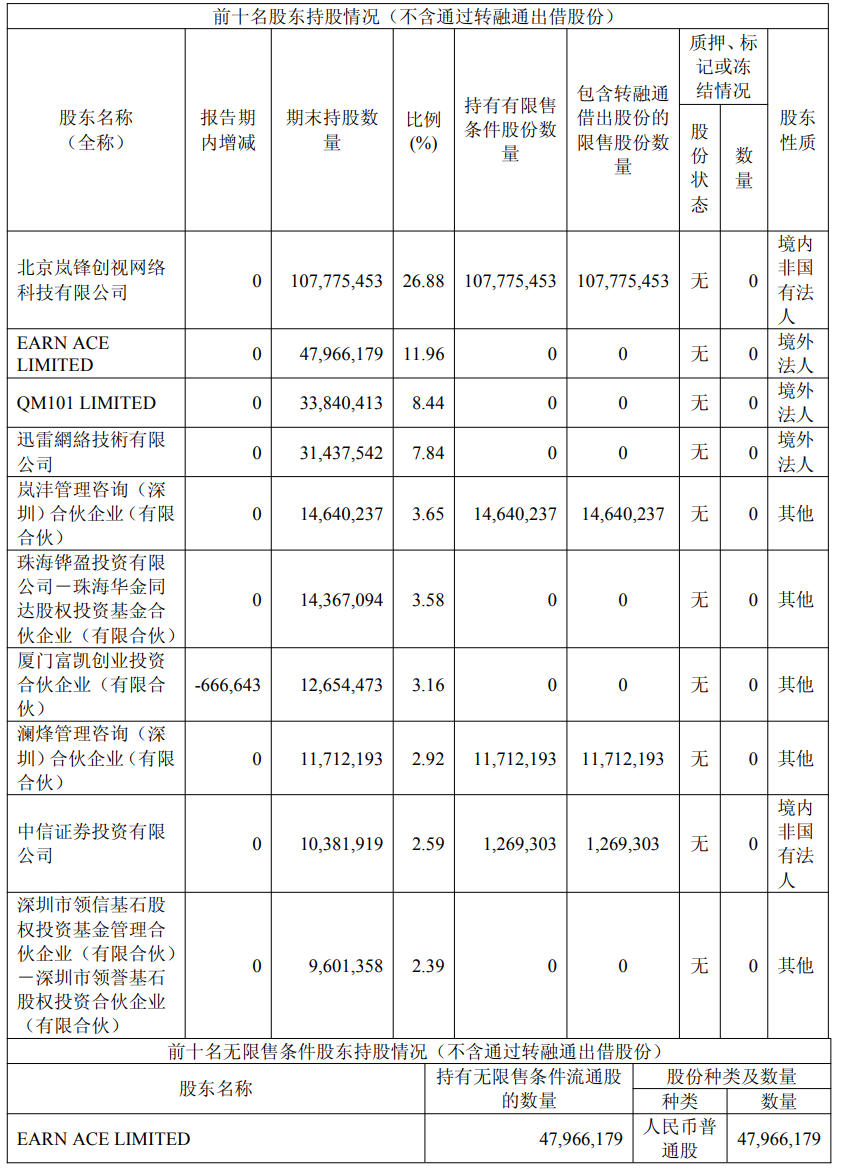
The full float of restricted shares has led to a flurry of block trades — 66 transactions worth a total of 1.465 billion yuan over the past three months. On August 28, the day after the half-year report was released, the stock closed at 119.30 yuan, about 68% below its all-time high. By September 3, it had fallen to 108.18 yuan intraday, setting a new low since listing.
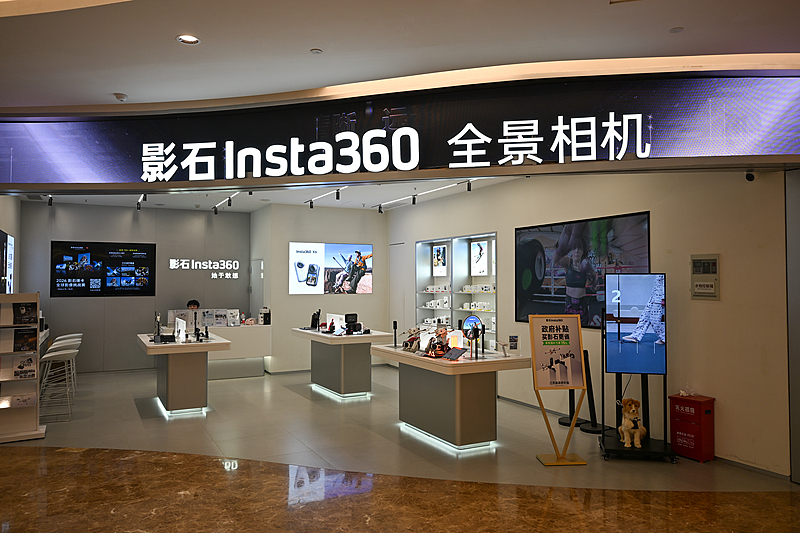
A year ago, the market saw Insta360 as “the next DJI,” believing panoramic cameras were just the starting point and that the company could keep expanding into the broader smart imaging space. But a year later, expectations have shifted. Insta360 is now being squeezed step by step by DJI, and the old high-growth story has turned into a reality of rising revenue but shrinking profit. That said, to be fair, Insta360’s core business hasn’t collapsed — revenue is still growing at a rapid clip.
According to Insta360’s recently disclosed 2026 half-year report, the company brought in 5.517 billion yuan in revenue in the first half, up a hefty 50.29% year on year, as its top line kept expanding. But net profit attributable to shareholders was just 30.4073 million yuan, a stunning 94.15% plunge. After excluding non-recurring gains and losses, the company actually posted a loss of 15.3392 million yuan — its first loss since going public.
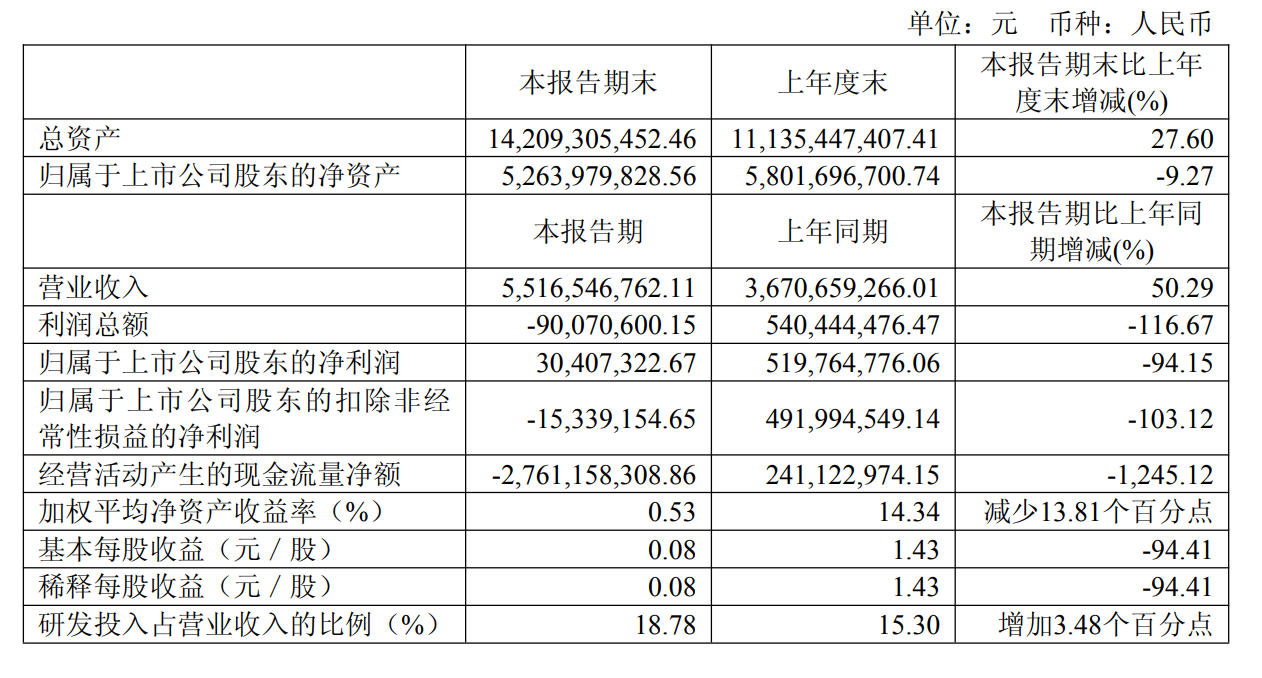
On a quarterly basis, the second quarter brought in about 3.035 billion yuan in revenue, up roughly 31.08% year on year — a sharp slowdown from the 83.11% growth in the first quarter. Net profit attributable to shareholders was about negative 54.21 million yuan, swinging from a 340 million yuan profit in the same period last year. The deterioration in profitability is speeding up.
The cliff-edge drop in profitability shows up directly in gross margin. The company’s blended gross margin for the first half was 41.42%, down nearly 10 percentage points from 51.22% a year earlier. In the second quarter alone, gross margin fell about 11.9 percentage points year on year. Insta360 offered two explanations for the profit slump in its earnings report. First, raw material costs rose: thanks to swings in global memory chip supply and demand, prices for DDR and other memory chips stayed elevated. The company spent nearly 2 billion yuan on strategic memory chip purchases in the first half, and that heavy stockpiling pushed up costs for the period.
Second, there’s the phased investment in new product categories. The panoramic drone business is still in the expansion and market-education stage, with heavy spending on R&D, production line construction, and channel development, and it has yet to achieve economies of scale. On top of that, the company kept ramping up R&D, with R&D spending as a share of revenue rising to 18.78% in the first half — another factor eating into profit margins.
Facing competitive pressure, Insta360 picked up the pace of new product launches in 2026, trying to shore up its market position through product iteration. On March 5, it rolled out the Snap phone selfie screen, pitching magnetic direct connection and real-time preview as its core selling points to enter the phone imaging accessories market, starting at 499 yuan. On May 19, it launched the flagship wireless microphone MicPro, moving into the audio creation ecosystem. On June 10, it introduced the Luna Ultra 8K dual-camera gimbal camera, co-developed with Leica, featuring dual Leica Summicron optical lenses and an AI triple-chip setup.
On August 12, Insta360 released the X6 ultra-flagship panoramic camera, a benchmark product drawing on ten years of work in panoramic imaging. It supports up to 8K 50fps panoramic video and 120-megapixel panoramic photos, packs dual 1/1.1-inch sensors co-customized with Sony, and starts at 3,999 yuan. On August 17, the company followed up with the slightly lower-positioned Luna Pro gimbal camera, focused on 4K vertical video straight out of the camera for short-video creators.
In just half a year, the company rolled out five new products in quick succession, spanning panoramic cameras, gimbal cameras, audio accessories, phone accessories, and more.
Yet the barrage of new products hasn’t reversed the stock’s downtrend — in fact, the slide accelerated after the half-year report came out. And the market’s worries aren’t unfounded. First comes the ceiling problem for the category. IDC data shows the global panoramic camera market was worth about $1.212 billion in 2025, with annual shipments of roughly 2.5 million units — just 12% to 15% of the handheld smart camera market and less than 2% global penetration. In other words, panoramic cameras are essentially a niche category with limited market capacity. As the leader, Insta360 is already close to its growth ceiling and has to open up new growth curves.
Second, the competitive landscape has deteriorated. DJI’s entry has shattered the old monopoly, and price wars plus rising R&D spending are likely to become the norm, putting long-term pressure on industry margins. At IPO, the market handed Insta360 extremely high growth expectations, with its price-to-earnings ratio once topping 100x. But as growth slows and profit falls, that high valuation lacks fundamental support — a correction was inevitable.