News Reporter |
News Editor | NUPIAO
When Li Junyu first started college, he had no idea what the WorldSkills Competition even was.
In July 2024, he competed in the Shanghai Vocational Skills Competition for the first time, signing up for the mobile app development event. After a few months of training, he placed 15th in the competition at the end of that year and won an excellence award.
It wasn’t a great result.
At the time, in the training room at Shanghai Industry and Commerce Polytechnic College, many classmates had two competition events under their belt, while Li had only one. “There was definitely some comparison going on—everyone kept wondering why they only had one event.” He recalled to NUPIAO. So he went to see the college’s dean, Yu Dieqiong, and asked if there were any other competition opportunities.
“Maybe you should give software testing a try.” Encouraged by the dean, Li entered the software testing event at the 48th WorldSkills Shanghai qualifier.
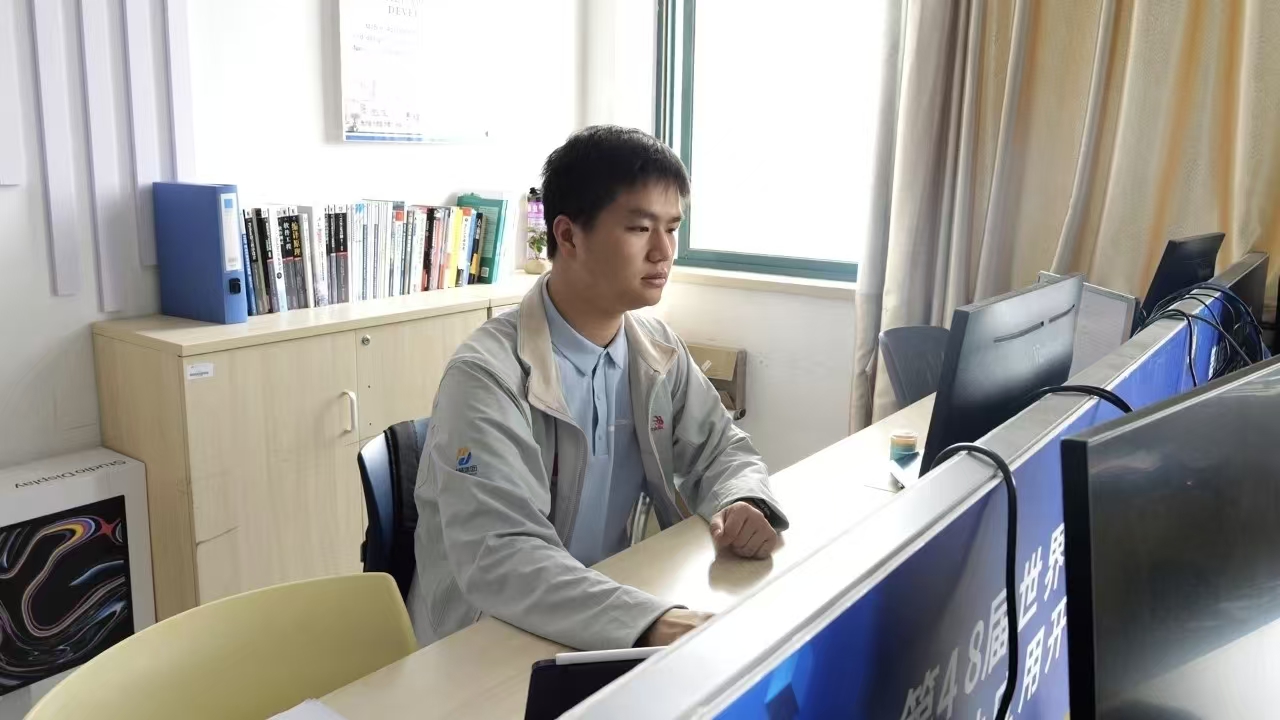
This is one of the new events at this year’s WorldSkills. Unlike the old “write the code” approach, testing is more like picking apart a finished product: where might users run into trouble, will the system fail under extreme conditions, and will a feature that seems to work fine suddenly develop a bug when used a different way?
His earlier experience studying computer application technology and competing in mobile app development meant Li wasn’t starting from zero. But switching from “development” to “testing” still required him to build a whole new mindset and technical framework.
“With development, you basically just need one app specifically for building applications, but testing is different.” Li said. Testing a system means using multiple tools at once: Python for UI automation scripts, Postman for backend APIs, JMeter for concurrency testing, and reading source code for white-box testing.
In three months, Li went from development to testing, relearning a whole methodology, going from winning the Shanghai qualifier to placing fifth nationally, making the national training squad, and finishing second in the WorldSkills test event.
In July this year, Li returned to Shanghai Industry and Commerce Polytechnic College—but this time as a coach rather than a competitor.
From placing 15th in his first competition to competing at a higher level and now training the next batch of students, this journey has forced him to confront a new question: when AI can already write code, generate test scripts, and even participate in software testing, what should vocational college students actually be learning?
“Software Testing Is More Than Just ‘Finding Fault’”
Li’s interest in computers started back in high school, when he came across programming content on short-video platforms and gradually got hooked. After the college entrance exam, he taught himself C and Java, got into data structures and computer organization, and did some simple hands-on projects.
“At first it was pure interest—no clear competition or career plan. I never imagined I’d end up on the WorldSkills stage.” Li told NUPIAO.
It wasn’t until he enrolled at Shanghai Industry and Commerce Polytechnic College that he first learned about the WorldSkills Competition. The dean mentioned in the freshman group chat that the school was organizing relevant competitions, so he signed up for the mobile app development event.
Both mobile app development and software testing fall under IT-related events, but the training logic is different. Li sums up the difference this way: one emphasizes “implementation,” the other emphasizes “application.”
For example, the prototype implementation module in mobile app development gives contestants a mockup, and they need to replicate the design requirements as closely as possible. Software testing, on the other hand, hands you a finished app and asks you to find the problems users might encounter in real use.
“Like when you’re using WeChat—does the input box open but you can’t type what you want to send, or you tap voice send and nothing happens?” He explained the difference to NUPIAO.
Switching from development to testing, the first thing Li had to get used to was this shift in mindset. His accumulated development skills were still the foundation, but testing required him to re-examine a finished product from a different angle.
In his view, software testing isn’t just “finding fault” in the simple sense. “When I first started, I learned development—how to build things. Now that I’ve shifted, it’s more about making sure that implementation is high-quality and highly stable.”
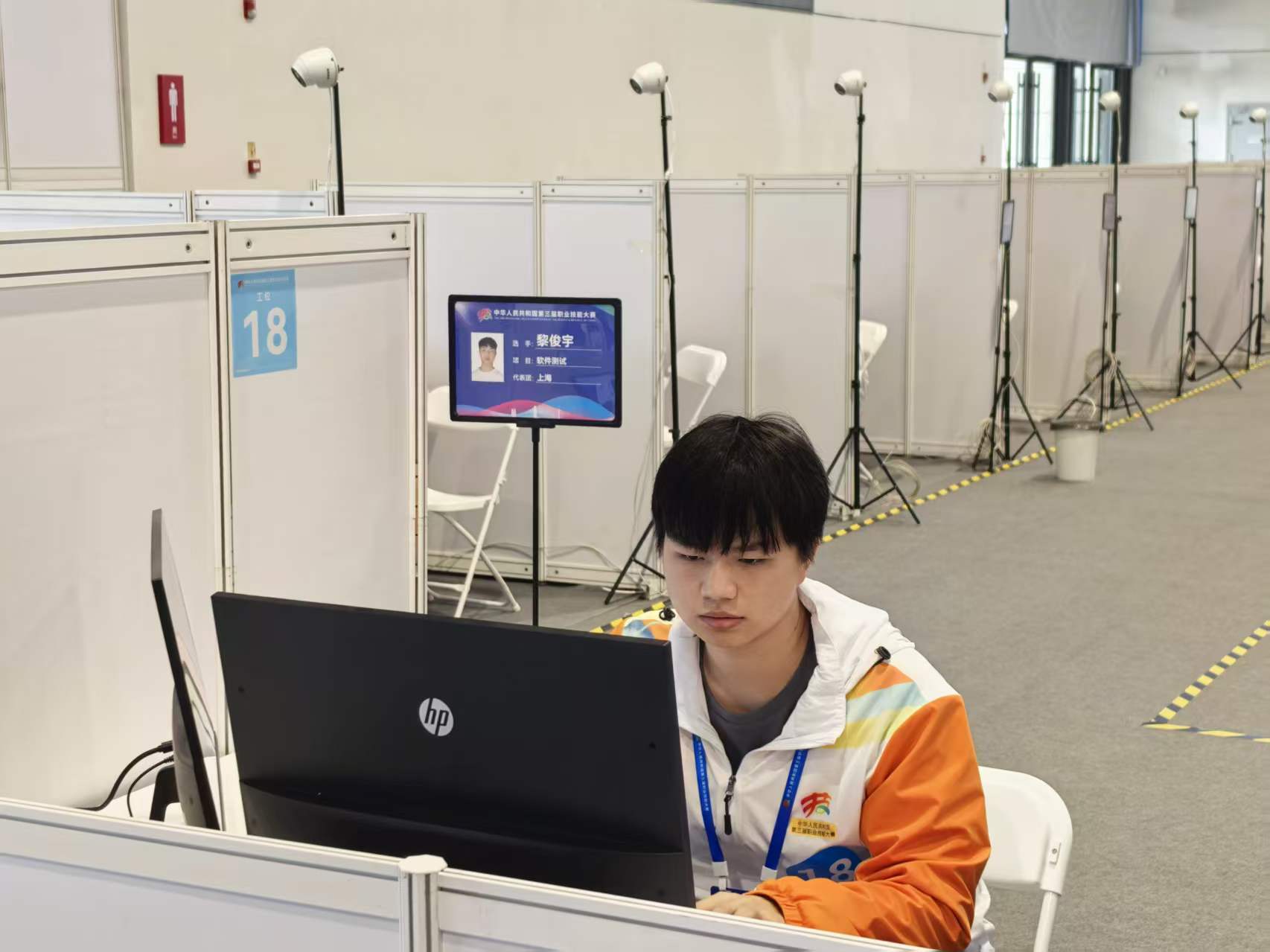
Li Xiangming, vice president of Shanghai Industry and Commerce Polytechnic College, told NUPIAO that software testing becoming a new WorldSkills event is no accident. “The information industry has already penetrated every sector, and software quality affects millions of households—from mobile apps to industrial control systems, from smart healthcare to intelligent vehicles, all of them need ‘gatekeepers.’”
In his view, WorldSkills including software testing is also a signal of shifting skill demands in the digital economy: skilled workers can’t just know how to “build”; they also need the ability to spot problems, test products, and ensure quality.
The 48th WorldSkills Competition listing software testing as a new event makes this change even more visible. As software and hardware products keep iterating, the industry no longer only demands that “features get built”—quality, security, performance, and stability have become equally important parts of product development.
But software testing training has become more complex as a result. When Li first started training, he had to learn Python, Postman, JMeter, and other tools at the same time, plus get into white-box testing. “Having to learn so many tools at once was pretty frustrating back then.”
Once he actually joined the national training squad, the scope expanded even further. One of the test events included AI testing, something he had never encountered in training before.
The task required testing a multimodal large model used for handling traffic violations for public security. The model needed to recognize license plates and other information in vehicle images, and Li had to test how well it performed under different image conditions.
He had AI automatically generate large batches of vehicle images, then fed them into the model, adjusting parameters based on the results to improve recognition accuracy.
It was also his first time directly treating AI as the object of testing rather than just a simple assistant tool.
AI Lowers the Barrier—and Raises the Bar
In Li’s view, it’s hard to keep AI out of programming education anymore.
“Basically every programmer uses AI to generate some of the more basic code,” he said. For repetitive, standardized work, AI can clearly boost efficiency—and software testing is no exception.
He believes AI can replace some mechanical work, such as writing general test scripts, routine vulnerability scanning, and designing standardized test cases.
So the first thing AI lowers is the entry barrier to software testing.
“Even if you don’t understand something, you can just ask it how to proceed and how to do it.” But that doesn’t mean the skill requirements for testers drop accordingly. On the contrary, at higher levels, testers need to judge whether AI’s answers are correct and be able to modify and optimize the solutions AI provides.
In Li’s view, this is the more important relationship between testers and AI in the future: AI handles the groundwork, humans handle complex business logic and final judgment.
“Just writing code—that alone can’t actually generate profit.” In a real corporate environment, tech people face customer needs first, and customers usually don’t tell developers how to write code—they just describe what they have in mind. “We have to turn their ideas into something concrete, then use technology and code to make it happen.”
Rather than just improving coding skills, he believes young people need to understand the business.
This is also a key criterion he uses to judge whether AI can replace programmers or testers. AI can generate code, but it’s hard for it to fully grasp the business logic behind a complex project, let alone independently handle requirement breakdown, risk assessment, and project coordination.
For testers, the truly important skills in the future may include breaking down business scenarios, pinpointing tricky problems, anticipating risks, designing test plans, and reviewing and optimizing test results.
“At a high level, you still need to identify AI’s mistakes and optimize its solutions—the demand for comprehensive ability may actually be higher.” he told NUPIAO.
After returning to school in July this year, Li found that the students were already different from how he used to be.
He thinks today’s students have easier access to technical resources and are better at using AI tools, but at the same time, some of them don’t have a solid grasp of underlying principles.
He doesn’t ask students to stay away from AI. On the contrary, he actively encourages them to use it. “As a coach, I can’t solve their competition-related problems 24/7, but AI can.”
For students with weaker technical foundations, AI can help them tackle some basic problems first. But in training, AI can’t become the ultimate crutch.
The school organizes a mock competition every week or two, cutting off the internet entirely and having students complete a set of tasks within two and a half hours according to competition rules. In the process, students ultimately have to rely on their own skills and judgment to get the job done.
What Li hopes students master isn’t just “knowing how to use AI,” but being able to judge when AI is useful and when it might go wrong.
“Using AI is mechanically applying a tool; professional ability means having the underlying thinking to independently analyze, design, troubleshoot, and review.”
Beyond Skills, What Else Should Be Taught?
After his role changed, Li’s understanding of “skills” itself has also shifted.
When he was competing, he needed to hit his own training goals; now he faces six students preparing for the 49th WorldSkills Shanghai qualifier, and he arranges training based on each person’s foundation. “Judging by training status, intensity, and content, three of them are making solid progress at this stage,” Li said.
But in his view, competition training is not the same as vocational education.
Skills competitions provide a highly standardized environment where contestants must complete tasks within a time limit and handle unexpected problems; real corporate projects, however, also require considering business needs, cost, efficiency, and teamwork.
“Competitions are standardized, idealized scenarios focused on maximizing a single technical skill; corporate roles emphasize business coordination, cost efficiency, teamwork, and closing the loop on problems.”
That’s also why he now places special emphasis on adaptability and problem-solving skills when coaching students.
When Li himself competed in the national competition and national training squad, school teachers were with him throughout training. After joining the national training squad, the training format changed: coaches from various places taught during the day, and in the evening he continued solving problems with his own coach—his day was basically packed.
After returning to school as a teacher, he started bringing his competition experience back into training. Things not covered in textbooks—like troubleshooting in real scenarios, staying stable under competition pressure, on-the-spot performance, and project reviews—have all been woven into training.
Shanghai Industry and Commerce Polytechnic College also hopes to bring the standards and training methods developed through competitions further into everyday teaching.
Li Xiangming said that cultivating a WorldSkills competitor is “not the finish line, but the starting point.” The school needs to translate WorldSkills standards, models, and philosophies into everyday teaching resources through curriculum reform, teaching resource development, and faculty training, so they “benefit every student.”
In his view, software testing entering WorldSkills for the first time is a challenge for competitors and an opportunity for vocational colleges to re-examine how they cultivate talent. “It forces us to think: in the digital economy era, what should our classrooms teach, and how should they teach it?”
At the same time, the school has partnered with companies on sponsored classes, with corporate engineers participating in courses and practical training, turning completed business projects into teaching projects so students experience the full process from understanding client needs to project delivery.
In Li’s view, the value of this kind of school-enterprise cooperation is exposing students to real workplace problems ahead of time. In the past, companies hiring software testers might have emphasized tool proficiency. Now AI has further lowered the cost of learning tools, and what companies value more and more is business understanding and problem-solving ability.
“Tool use is quick to pick up—a month of training is enough. Now with AI, that process will only speed up.” Li told NUPIAO.
This has also changed the direction of talent cultivation in vocational colleges.
Li believes vocational education isn’t about producing people who master just one tool or one narrow job—it needs to cultivate talent that can solve problems across multiple business areas and scenarios. For computer science students, beyond programming, they need to understand business, master different tools, and have the ability to independently troubleshoot and solve problems.
Software testing is becoming an example of this shift.
Currently, Shanghai Industry and Commerce Polytechnic College is exploring testing training that combines software and hardware, targeting fields like intelligent vehicles, robotics, and semiconductors. As software and hardware become more integrated, testing is no longer limited to apps and web pages—it’s moving into smart devices and industrial systems.
This is another change Li has seen since going from competitor to teacher: what students learn keeps expanding, but what truly needs to be retained isn’t any specific tool.
“The job market doesn’t lack people who are good at exams—it lacks people who can actually get hands-on work done.”
For students just entering the computer industry today, AI has already become part of their learning process. Li’s own journey shows that from switching from development to testing, from competitor to teacher, what really kept him moving forward wasn’t mastering one fixed skill, but constantly adapting to new demands.
And perhaps this is the question worth discussing even more in the AI era, now that software testing has become a new WorldSkills event: when AI makes basic skills easier and easier to acquire, what should vocational education actually be teaching students?