NUPIAO Reporter |
NUPIAO Editor | NUPIAO
For a humanoid robot, moving an auto part from a material bin onto the production line is no small feat. A worker can do it in ten-odd seconds; the robot needs about 35 seconds—and it still has to avoid throwing off the production takt.
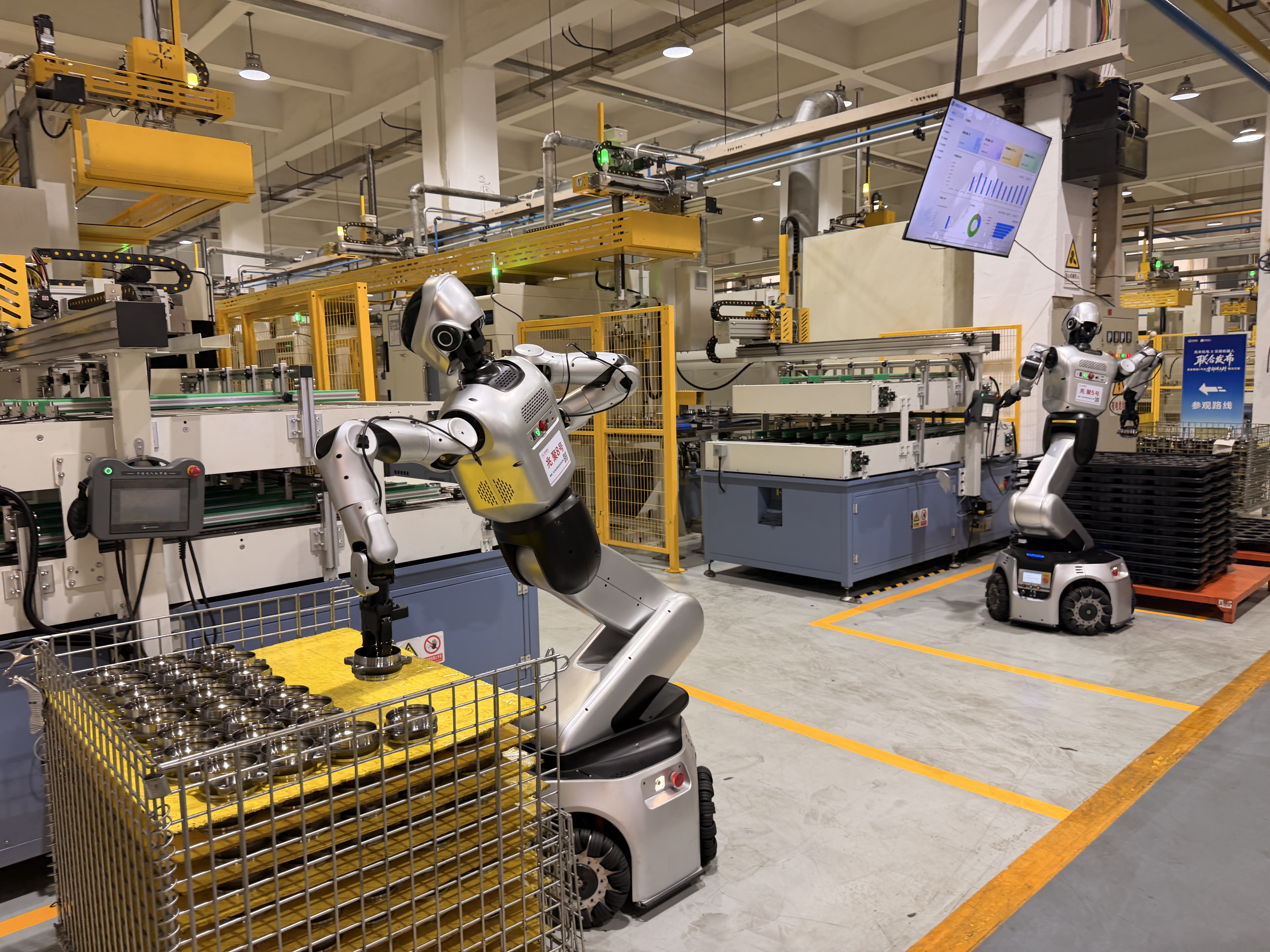
On October 15, NUPIAO visited Zhaofeng Electromechanical’s plant in Hangzhou. Several Leju humanoid robots were spread across different workstations on an auto-parts line, handling recognition, gripping, transfer and loading.
That same day, Leju and Zhaofeng jointly launched an embodied-AI auto-parts loading solution and said 15 robots had already been put into routine operation.
In an interview with NUPIAO and other media, Leju Robotics CEO Chang Lin compared humanoid robots to “the next new-energy vehicle.” In his view, humanoid robots could pull along upstream and downstream chains—joints, reducers, motors and more. But to reach that kind of scale, the first step is to get robots genuinely into production and daily-life scenarios.
For now, the robots mainly handle loading at the machining line. They face parts of different shapes, bins that shift position and workstations scattered in staggered layouts. The robot has to continuously pick, transfer and place—not repeat the same motion at a fixed spot.
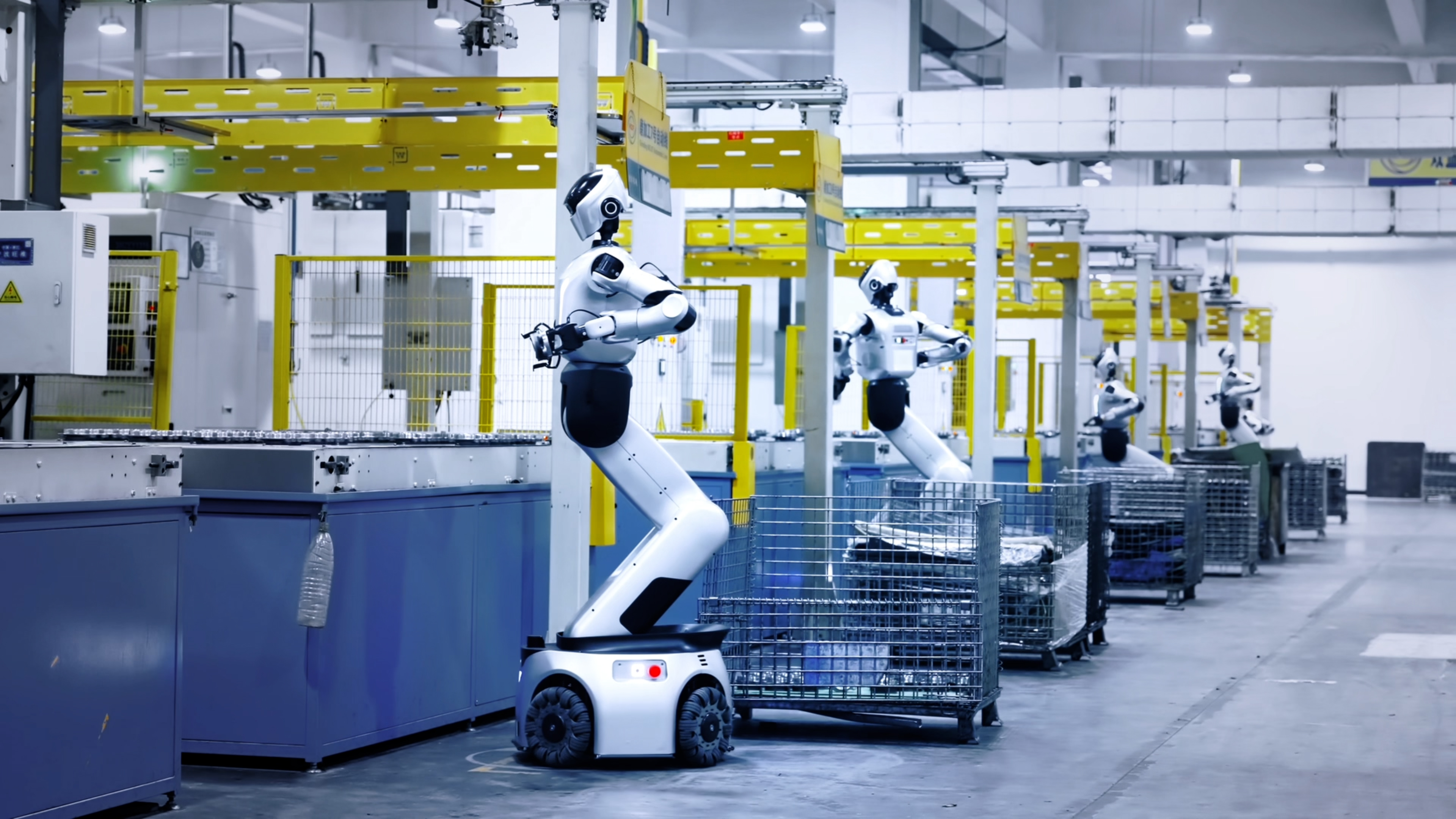
According to Leju, the 15 robots cover 15 workstations and more than 10 part types. A single loading cycle takes under 40 seconds, with a success rate of about 98%. The project has run for more than two months, logged roughly 1,000 operating hours and helped produce over 60,000 parts.
Humanoid robot shipments are rising, but real demand in industrial settings still needs proof. An IDC report released on September 29 shows that in the first half of 2026, global humanoid robot shipments reached nearly 25,000 units, up 432.1% year on year, with China accounting for more than 19,000 units. Over the same period, research and education, performance and display, and government data-collection centers still made up 69% of global shipments.
Compared with those use cases, industrial production demands that robots follow production takt over the long run and keep working steadily and continuously.
Chang Lin says the 15 robots running routinely inside the plant are “not a demo.” More than a single-point tech showcase, he cares about whether a solution proven in this factory can be rolled out to more production lines.
In actual production, the robots still need to get faster. Compared with experienced workers, the roughly 35-second loading cycle leaves plenty of room for improvement.
Kong Aixiang, chairman of Zhaofeng Electromechanical, told NUPIAO and other media that the factory began introducing fixed robotic arms in 2013. After two or three years of adjustment, some processes had reached cycle times of 10 to 15 seconds. He believes humanoid robots will be more ready for industry-wide adoption if they can get to around 15 seconds—and that will probably take another six months to a year.
Chang Lin also said the loading success rate is already high; the next priority is speed. Besides feeding real production-line data back to refine models, Leju wants to make better use of two-arm coordination so a robot can pick up more parts at once and improve loading efficiency.
Why would a factory that already has fixed robotic arms still need humanoid robots? One reason is that some production steps are hard for fixed automation to cover completely.
Kong Chenhuan, general manager of Zhaofeng Electromechanical, gave an example: some overseas after-sales orders are only 250 to 300 sets, with many product types and frequent line changes. Existing automation is good at large-batch, relatively fixed processing tasks, but people still move, load and adjust parts between processes. Humanoid robots are there to fill those gaps, not to replace the whole automated line.
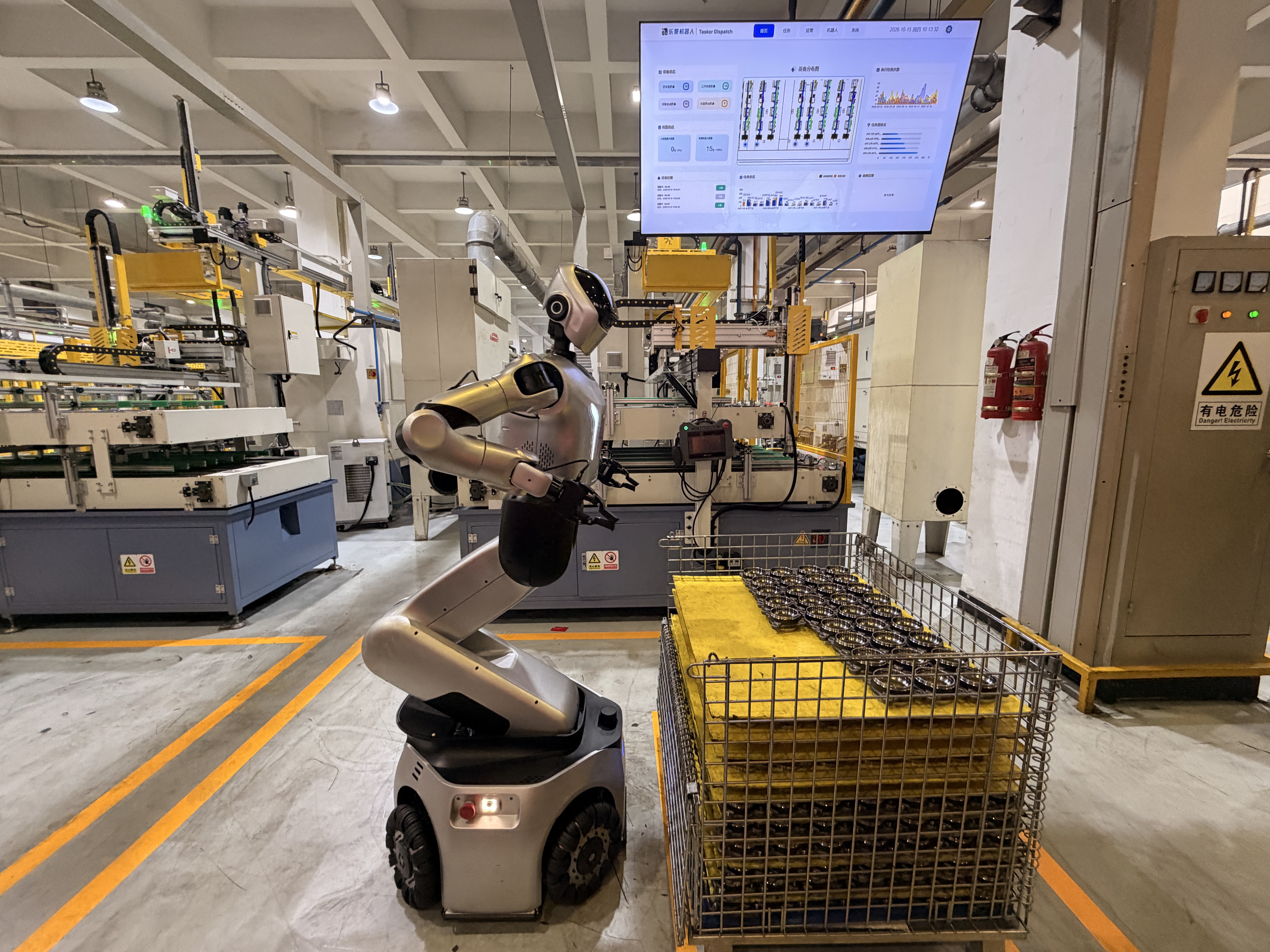
Even loading alone is more complex in a factory than in a lab. Ren Guangjie, assistant vice president of Leju, explained on site that lighting varies widely between workshops, and part shapes and positions keep changing. At first, the robots could only grip regularly placed parts; a slight shift of the bin could cause recognition failure. When placing a part, the robot also has to check whether a workstation already has one, so it doesn’t disrupt the line.
He noted that real deployment is not just about improving vision recognition and gripping algorithms. It also involves oil mist, foot traffic, equipment interfaces and coordination with upstream and downstream processes. The robot must connect with the factory’s production system before a single motion can become a continuously executable production task.
To further improve efficiency, Leju also built data feedback into the solution. The robots collect data while loading, and records of failed grips or dropped parts are used for later model training. The two sides also donated a real-machine dataset for auto-parts loading to the OpenAtom Open Source Foundation’s OpenLET community.
Chang Lin explained that foundation-model training needs data from many sources, but once deployment reaches a specific factory, real robot data matters more. Only after on-site training, operating-data feedback and algorithm tuning can a robot gradually adapt to a particular process.
He also stressed that whether data can be reused across different robots determines whether future deployments have to start data collection and training from scratch.
To reduce repeated development, Leju has split the loading skill into more than 30 basic modules and provides a development toolchain and multi-robot scheduling platform. The company hopes the same skills can be deployed to multiple machines faster. Still, when the same solution moves to another factory, it must be adapted to different parts, equipment interfaces and safety requirements. Whether it can truly scale still needs more projects to prove.
Beyond loading, the two sides are also looking at other production steps. Zhaofeng says the next step is to have robots take on inspection, quality checks and equipment calibration. For example, after some lines switch product models, engineers need two or three hours to confirm and adjust equipment. If robots can finish part of that work before production starts, the equipment’s effective production time could increase.
On future commercialization, Chang Lin also underscored the importance of division of labor across the supply chain. He believes humanoid robot companies should play the role of “chain leader,” bringing upstream component suppliers and downstream application developers into the effort—rather than one company trying to do everything itself.