NUPIAO |
NUPIAO | NUPIAO
In mid-October, Jinri Yixiu is about to launch its first batch of products. It is a sleep-health tech company Wang Teng founded after leaving Xiaomi.
On the eve of the launch, NUPIAO spoke with founder Wang Teng and several core team members about why the new company chose sleep health, and how they built a cross-disciplinary team.
So far, the team has grown past 100 people, covering sleep science, clinical sleep medicine, AI health algorithms, software and hardware R and D, human-factors interaction, and industrial design. Their challenge: how to build a hit product in a category where demand is hard to quantify and every user is different—something that hits a real pain point and makes people willing to pay.
This is also a key checkpoint for Wang Teng’s first year as a founder.
After leaving Xiaomi last September, Wang Teng started seriously exploring a new career direction. He considered offers from big tech companies and advice from industry veterans about switching to the B2B track.
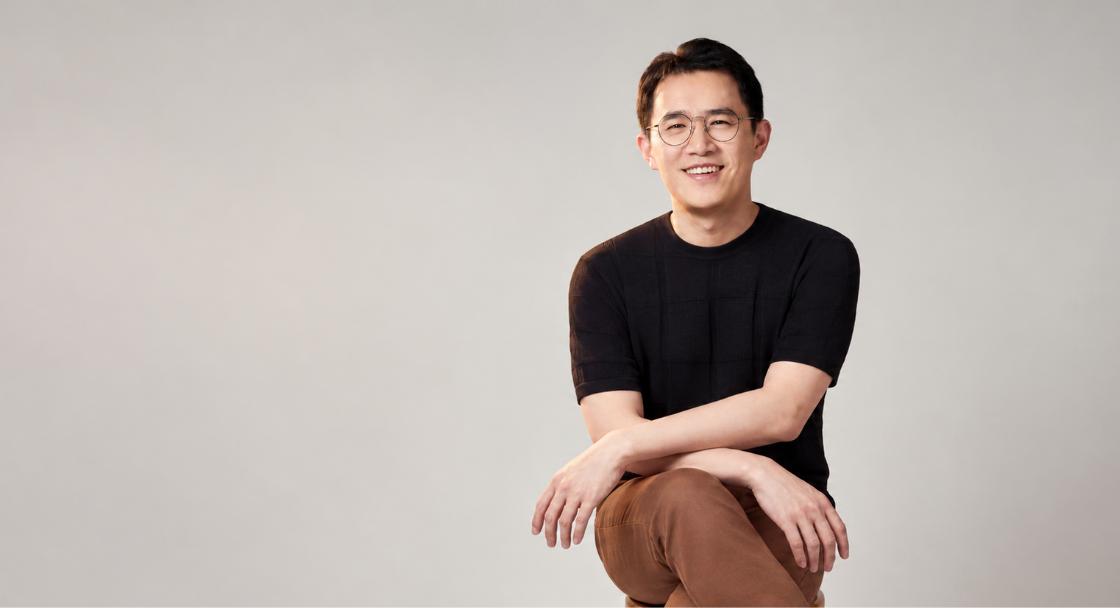
In the end, his experience at OPPO and Xiaomi—and the instincts he had built up in consumer electronics—led him back to a consumer-facing, hardware-driven category.
As he explored, Wang Teng narrowed in on sleep health. When judging a track, he asks three questions: Is the demand big enough? Can AI create new product value there? And if top hardware players like Xiaomi or Huawei enter, can a startup defend its position with team strength and first-mover advantage?
Sleep health checked all three boxes. What remains is whether he can build a product good enough to satisfy users in a category that has not yet really taken off.
Once the direction was set, the first job was finding people. From November to December last year, CMO Wang Lai and other early partners gradually confirmed they would join, and the initial team quickly came together at six or seven people.
Recruiting from hardware companies like Xiaomi and Huawei was a familiar path for Wang Teng,and more than half of the company’s current members come from there.Design director Du Jiaxuan has years of experience in the phone industry, but inside a mature big-company system, there was little room left for innovation. “At that point I felt like the light in my eyes was fading. I wanted to grab this chance and build something genuinely new,” he said.
The harder gaps to fill were in medicine, health science, and AI algorithms. Su Rui, who has 14 years of clinical research experience in medical devices and previously served as clinical medical director at Huami Technology, joined, along with Gao Ruiyang, who has long worked at the intersection of pervasive computing, AI, and health. The latter won the 2026 International Congress of Basic Science Frontier Science Award in August this year; the previous winner was Deng Yu, this year’s Fields Medal winner.
Algorithm lead Su Tengrong has a PhD background from Tsinghua University and has also founded a company himself. That experience made him realize that having technology and a product doesn’t mean the company can survive. “If you can’t sell, don’t start a company.”
Once the team was assembled, the hard part shifted to how different disciplines would work together. Li Shuling, head of health science, previously did human-factors engineering research at an automaker and is responsible for keeping the basic research on track. Turning those metrics into products users can understand is the job of software product expert Huang Xianhong.
Public information shows that Jinri Yixiu has completed a seed round worth tens of millions of yuan, led by Hillhouse Ventures, with participation from Zhiyuan Robotics, Sleemon, and Sky9 Capital.
In Wang Teng’s vision, Jinri Yixiu cannot enter this market with just one product. It needs an ecosystem made up of a series of products that connect users’ body data with the bedroom environment, creating a closed loop from “sensing and analysis to decision-making and action.”
He has imagined a three-layer business model for the company: first, sell smart sleep devices; second, use data from millions or even tens of millions of users to provide health analysis and risk warnings; and finally, expand the scope from night to daytime rhythm, diet, rest, and exercise.
It is an attractive idea, but compared with phones, there is far less of a standard answer to follow.
The hit-product logic Wang Teng once knew was about solving problems on top of an existing hardware system. This time, he has to build the system itself—AI, hardware, and health science—from scratch.
By the time the product launches, Wang Teng will have been away from Xiaomi for exactly one year. Around this time last year, his name stayed on trending topics for nearly a week.
It was the first time Wang Teng had experienced something like that. Over the previous nine years, he had grown used to controversy, but that controversy usually dissolved into products, sales, user experience, and the never-ending public-opinion battles of the phone industry. This time, the heated discussion was aimed directly at him—and it also marked the abrupt end of his nine-year career at Xiaomi amid a public storm.
When NUPIAO interviewed him and brought up that period again, Wang Teng sounded relatively calm and restrained.
He admits it was a low point, the third setback in his life. In the two or three weeks after it happened, he reflected, met friends, looked for a new direction, and gradually made peace with himself. Then he threw himself into the new path.
“Life should be a bit more interesting,” Wang Teng said. “There are highs and lows, and all of them are valuable experiences.”

Below is the full interview with Wang Teng, lightly edited by NUPIAO:
One year after leaving Xiaomi
NUPIAO: You left Xiaomi almost a year ago.
Wang Teng: It will be exactly one year next week.
NUPIAO: How have you been this past year? Any ups and downs or changes?
Wang Teng: The period after leaving last year was definitely a low point. It was the first time in my life I had been on trending topics for a week straight, and the sense of setback was huge. But I adjusted fairly quickly—after about two or three weeks, I slowly made peace with myself and started looking for a new direction.
NUPIAO: You still define it as a setback?
Wang Teng: Yes. I think life should be a bit more interesting. There are peaks and valleys, and these are all valuable experiences. That’s how I convinced myself to accept it at the time.
NUPIAO: What exactly did you do during those two or three weeks when you were pulling yourself out of it?
Wang Teng: There were roughly three things. The first was self-reflection. I understood the reasoning, but when it happens to you, it still takes time to adjust your mindset.
The second was going out to meet friends and communicate with people.Mainly to understand what everyone was doing. I had been heads-down with my own business, and I started listening to their suggestions and opening up new perspectives.
The third was having something new to do. Having something new pulls you out of negative emotions, keeps you busy, and your state slowly improves.
NUPIAO: Looking back at your nine years at Xiaomi, what capabilities and resources did it actually give you?
Wang Teng: I am still very grateful to Xiaomi, especially to Mr. Lei. I truly learned a lot.
I did product, sales operations, frontline sales, and marketing. The first big takeaway was getting a full view of an entire product line from an operator’s perspective—and doing it at a top tech company, running a business close to 100 billion yuan in scale. That kind of opportunity is rare even globally.
The second takeaway was turning the methodology that Xiaomi, and especially Mr. Lei, talked about from learning into practice. I experienced how to make hit products, how to build user participation, how to make friends with users and do communications, and also how Xiaomi built new retail and online and offline channels. In startup teams, very few people have had that kind of complete perspective.
NUPIAO: When you speak now, people will inevitably still connect you with Xiaomi. Is that more good or bad for you?
Wang Teng: That’s the reality, so I wouldn’t call it a burden. It has two sides.
The good side is that people recognize my past experience. To be realistic, Xiaomi itself has huge traffic and many things people approve of. If some of those quality assets can carry over—for example, people believe we will seriously make products and use real materials, and believe this is a pragmatic team—that’s all good.
On the other hand, fixed perceptions and impressions of my background will make it somewhat harder to build a completely new independent brand. So we have been thinking about how to balance the two.
NUPIAO: Have you figured out the answer to that yet?
Wang Teng: Internally, we have very clear thinking on the company’s positioning, what we want to do, which strengths to inherit from Xiaomi, which strengths to learn from Huawei and other companies, and how to avoid being affected in brand building. The core management team is aligned. But for now it’s not convenient to discuss it publicly.
No more big company—starting a business: “The challenge wasn’t big enough, I wanted to do it myself”
NUPIAO: When did you decide to start a company?
Wang Teng: I had similar thoughts very early on, just never looked into them deeply. Especially whenever I was extremely busy and then slightly relaxed, I would think about what I had gained, how I had grown, and what I regretted. Life is only a few decades; if you never start a company once, it would be a fairly big regret.
NUPIAO: You had the desire to start a company but never acted. Was it because you hadn’t found the right direction, or something else?
Wang Teng: Mainly because I had no time to think seriously. It felt like there was always endless work to do (laughs).
NUPIAO: When did you really figure out that you were going to start a company?
Wang Teng: Around last October. Actually, quite a few top companies had approached me, and I talked with them. After those conversations, I still felt the challenge wasn’t big enough. I wanted to do it myself.
NUPIAO: What were the core questions you considered when choosing a startup track?
Wang Teng: We are a team with a hardware background. Doing a consumer startup in today’s era, I mainly look at three questions.
First, how big is the market demand? Second, how much value can this industry create in the AI era, and what new opportunities can it produce? Third, if Xiaomi or Huawei enters, how do we withstand the competition? After repeated thinking and testing, I think sleep tech is a relatively ideal choice.
NUPIAO: What other fields did those three criteria screen out?
Wang Teng: For example, robots, glasses, and some smaller directions. I didn’t look into them deeply.
In terms of industry size, the biggest consumer market is real estate—we can’t do that. Next is cars—Lei Jun and Yu Chengdong are both in it. Then phones—Huawei, Xiaomi, OPPO, and vivo are already there, and those industries require investment at the tens of billions of yuan level. Further down are major home appliances like air conditioners, refrigerators, and washing machines, with Gree, Midea, and Haier.
Looking further down, a few big hit categories have emerged in recent years, such as robot vacuums, smart locks, air purifiers, and imaging products represented by DJI and Insta360. Actually, there are still quite a few consumer opportunities. Kitchens, studies, and bedrooms may all have huge room for smart upgrades. At least from a hardware perspective, the bedroom is a big track.
The second dimension is how deeply it connects with AI. For example, a chair may sell well today, but it doesn’t generate much data, so its integration with AI is shallow. Imaging devices can collect a lot of image data, but when that data is used for training and future user services, its value may not be that great.
Health is different. Sleep is a very core health scenario. We can get a large amount of user data, and that data is valuable to every user. In the future, combining model capabilities to do analysis and suggestions can create high value. So compared with many AI hardware products, “health + AI hardware” makes more sense on the value dimension.
The third dimension is competition. Robots and glasses are cool and are future tech products; robots especially are a huge track. But when I decided to start a company, there were already two or three hundred robot companies in the industry. We might be able to enter and raise money, but it’s too crowded. Glasses are the same, so at this stage it wasn’t our best choice.
Although Xiaomi and Huawei are both in health, they mainly focus on wrist-worn devices. Upgrading traditional smart home products with AI is not the main business of Xiaomi and Huawei.
NUPIAO: Was there an emotional reason?
Wang Teng: I think we are doing something very meaningful. Companies like Apple, Huawei, Xiaomi, and Tesla all want you to work hard, be efficient, and create more value during the sixteen hours of the day. But no one cares about you at night. If we can make this work—help people take better care of their bodies and improve their sense of happiness—that is very valuable to society as well.
NUPIAO: But if this track heats up, it could also become a core business for big companies.
Wang Teng: More companies paying attention shows that this demand deserves to be taken seriously. For a startup team, the time window matters, but in the end it still comes down to whether we can make the product well.
NUPIAO: How big do you judge this market to be?
Wang Teng: You can calculate it this way: China has about 400 million families, each with several bedrooms, plus hotels. The existing stock could be 700 or 800 million, even up to 1 billion rooms. Most of these rooms have an air conditioner now. I think the value of what we want to do is no lower than that of an air conditioner. It’s just that the upgrade cycle won’t be as fast as phones.
NUPIAO: But there is also a market-education problem.
Wang Teng: That is indeed a challenge, and also an opportunity. Users care about whether they can sleep better. As for how the technology is implemented, we need to explain it in an easy-to-understand way, and more importantly, support it with product experience. The team’s past experience in consumer electronics can help us understand users and explain technology, but sleep is a field we need to relearn. We also have to combine scientific research and real feedback to do this well.
From manager to entrepreneur: “Fire the gun first, then move forward”
NUPIAO: After finding this direction, who was the first investor you approached?
Wang Teng: Actually, we were fairly passive—investors came to us.
I had already decided to start a company by last October. In November, I posted on Weibo to update everyone on what I was doing and said I was preparing to start a business. Once the news was out, quite a few investors reached out to talk and asked what I wanted to do.
NUPIAO: But your idea wasn’t fully formed at that point?
Wang Teng: Right, but it was a process of communication. Many times, you don’t wait until everything is clear before you start. You have a rough direction first, fire the gun first, and then move forward once there is attention.
NUPIAO: Was the smart sleep direction already set at that time?
Wang Teng: Yes. The three judgments I mentioned earlier had basically taken shape by then. The feedback was that everyone bought into the big direction; what was missing was a more specific implementation path. At the same time, we started looking for the earliest batch of teammates, and the thinking gradually narrowed and improved through that process.
NUPIAO: When was the first financing round finalized?
Wang Teng: Last December. By then I had brought in about five or six people, and the earliest founding team had basically taken shape.
NUPIAO: Do you feel investors were investing more in the project or in you?
Wang Teng: Early-stage projects haven’t fully taken shape, so investors naturally pay more attention to the founder and the team’s past experience. That’s normal. But past credentials only help build initial trust; after that, it still depends on us to make things happen.
NUPIAO: When the first financing round was finalized, did you feel ready to become an entrepreneur? After all, you had always been a manager before.
Wang Teng: I still felt pretty uncertain.
NUPIAO: What were you uncertain about?
Wang Teng: For example, how to set up a company, how to talk with people about money. In the past, talking about money was simple: look at how much they made in their last job, then add some. But at the startup stage, you can’t pay that much, and I still want good people, so I can only use equity to attract them and “sell them a vision.” I really had no confidence in that.
NUPIAO: You had to fill that knowledge gap eventually. Who did you learn from?
Wang Teng: I reached out to some friends I already knew who were starting companies and were their own bosses.
NUPIAO: Anyone people would know?
Wang Teng: For example, Xia Yongfeng from Hive—we have a good relationship. I basically visited everyone I could find, learning about fundraising, team incentives, and how to negotiate with investors. In November and December last year, I spent a long time visiting and learning. It was very rewarding and quite interesting.
NUPIAO: After learning from them, was the process of talking with your first batch of team members smooth?
Wang Teng: Smooth.
NUPIAO: What methodology worked so quickly?
Wang Teng: First, people already trusted me—that was the starting point. Second, after thinking it over, they felt the story I told and the things I wanted to do made sense. Third, we borrowed incentive approaches from other companies and, by comparison, were a bit more generous. Finally, I would tell them that the first round of money was already in place.
NUPIAO: Where did the pressure mainly come from?
Wang Teng: The pressure comes from having “sold a vision” and brought so many people in—what if we fail? Even now, my state is both excited and nervous.
Excited because, based on our understanding, the team, product, and progress are relatively fast and solid compared with the industry. Nervous because we haven’t taken the first step in commercialization yet; we are still preparing. I definitely carry more pressure than others.
NUPIAO: After setting the track, how did you judge what kinds of people you needed, and how did you find them?
Wang Teng: We were clear that we wanted to build a sleep-health company combining software and hardware and tightly bound with AI. This is complex, with a high integrated barrier: you need to make the product, ensure the software experience, and also know how to sell.
First, we needed people who could do software and hardware products—that was something we were relatively good at, so hiring was smoother. Second, we needed leads in algorithms and health science. Third, since we are still a consumer company, we also needed relatively strong people in branding, marketing, and sales.
People who are especially senior may not be willing to come, while more junior people with only a few years of experience don’t fit our positioning of becoming top-tier in the industry. In the end, we mostly hired people with more than ten years of work experience, who had reached senior director level and had deep accumulation. We mainly looked for big-company backgrounds like Xiaomi and Huawei, mostly people in their thirties or forties—in their prime, with good experience and ability.
More importantly, these people had accumulated strong professional experience but also hit some ceilings in their careers. I told them that in life, you have to start a company at least once. We quickly gathered six or seven people.
NUPIAO: How long did it take to gather the first six or seven people?
Wang Teng: One or two months.
NUPIAO: Was there anyone you really wanted to hire but couldn’t?
Wang Teng: Yes, but doing things has an order—you do the easy ones first and the hard ones later.
The imagined endgame: an ecosystem tech company for sleep scenarios
NUPIAO: How many people does the company have now?
Wang Teng:More than 100 people, covering sleep science, clinical sleep medicine, AI health algorithms, software and hardware R and D, human-factors interaction, industrial design, and product. We need a complete capability chain from scientific research and algorithm development to product implementation.
NUPIAO: Is that enough people to support the first sales cycle of the first product?
Wang Teng: About 100 people should be enough. When raising money externally, we already mapped out roughly how many people each team needed, so we have a clear idea. After all, we’ve done this before.
NUPIAO: By the time this article comes out, we may not be able to write about the product you’re about to launch, but can you talk about the product roadmap?
Wang Teng: Let’s start with the endgame. We want to build an ecosystem closed loop around sleep scenarios: at least one product that understands you 24 hours a day and knows your condition throughout the day; at night, it also understands you and can intervene. In other words, a closed loop from sensing and analysis to decision-making and action.
Intervention is not single-dimensional, so we need many product forms to execute actions. At the front end, we also need a device that understands you 24 hours a day, so we definitely need a wearable, as well as products related to the bed or bedroom environment.
When we first defined the product, we struggled with whether to start with one product or two. One product has the advantage of focus, ensuring we do that one product well. But when we met investors in March and April this year, they also challenged us: if you’re telling an ecosystem story, will you be too distracted and not focused enough?
Butwehave totell everyone that we are not a company in a single vertical category, but a sleep-tech ecosystem company.
NUPIAO: How can consumers buy into this all at once? When I first learned the first batch of products was two products, I also felt a bit unsure what this company actually wants to do. Do you worry about that?
Wang Teng: Yes, that is indeed a problem we need to solve in the future. But on the flip side, we also hope users at least feel this company is different. We need to explain clearly that we are building a sleep-tech ecosystem brand.
NUPIAO: Why does it have to be at least “different”? What company are you afraid users will think Jinri Yixiu is like?
Wang Teng: I think “different” is very important. Jobs talked about Think Different. Any company needs a reason to exist and a meaning. What our existence value and uniqueness are is a question we must answer, and it was the focus of repeated discussion and positioning in the first week and first month.
Today’s market doesn’t lack a company that only makes wearables, and home products existing on their own can’t solve all the problems.
Begin with the end in mind. We need to answer what value we can ultimately bring users. We hope to become the only company that can go from sensing all the way to intervention and provide a complete solution.
NUPIAO: What categories will you add in the next year or two, or two or three years?
Wang Teng:We will expand around the sleep ecosystem. I can’t reveal the specific categories yet, so stay tuned.
NUPIAO: Have you designed anything new for the business model?
Wang Teng: We have conceived a three-layer business model.
The first layer is to upgrade the intelligence of devices used at home and by individuals around sleep scenarios, such as pillows. If we can make a hit product, it is itself a huge consumer market, potentially reaching tens of billions or even hundreds of billions of yuan.
The second layer: assuming weacquiredata from millions or even tens of millions of users, we can study the connection between sleep data and long-term health and do more algorithm analysis. For example, indicators such as your age, weight, deep and light sleep, sleep fragmentation, resting heart rate, HRV, and body temperature—if they highly match a certain disease population, we can provide warnings and health analysis.
In the future, these data and analyses can also be commercialized, for example serving insurance or directing traffic to hospitals. That is also what Oura is doing today.
The third layer: because we understand your sleep and health very well, we can also judge roughly what state you will be in the next day. If you want to live more healthily, we can also intervene and make suggestions for your daytime rhythm, diet, rest, and exercise.
NUPIAO: If you don’t succeed, or if the product fails, what do you think the most likely reasons would be?
Wang Teng: We have discussed this question repeatedly. If we do poorly, there could be several reasons.
The first is that the basic quality of the product isn’t good enough—for example, unstable connection, battery life problems, or various quality abnormalities. That is unacceptable.
The second is that we want to do health monitoring, analysis, and intervention. Is the monitoring accurate enough? Can it truly understand users? Is the intervention precise enough? The demands on algorithms and user experience are both very high.
These two are the most core issues at the reputation level. If we can do both well, the company may not be especially successful, but at least it won’t fail badly.
NUPIAO: One last question: if the Xiaomi imprint will always follow you, do you hope that one day you can shed it?
Wang Teng: There is a saying: “Thunder, rain, and dew are all the emperor’s grace.” Since they are all past experiences, there is no need to resist them, nor to deliberately do anything about them. Just let nature take its course.
The excellent abilities learned in the past should be retained and carried forward as much as possible; the pits we fell into and the failures we experienced should also be absorbed and learned from. Everyone carries the shadow of the past, but ultimately will definitely become a brand-new self.