NUPIAO Reporter |
NUPIAO Editor | NUPIAO
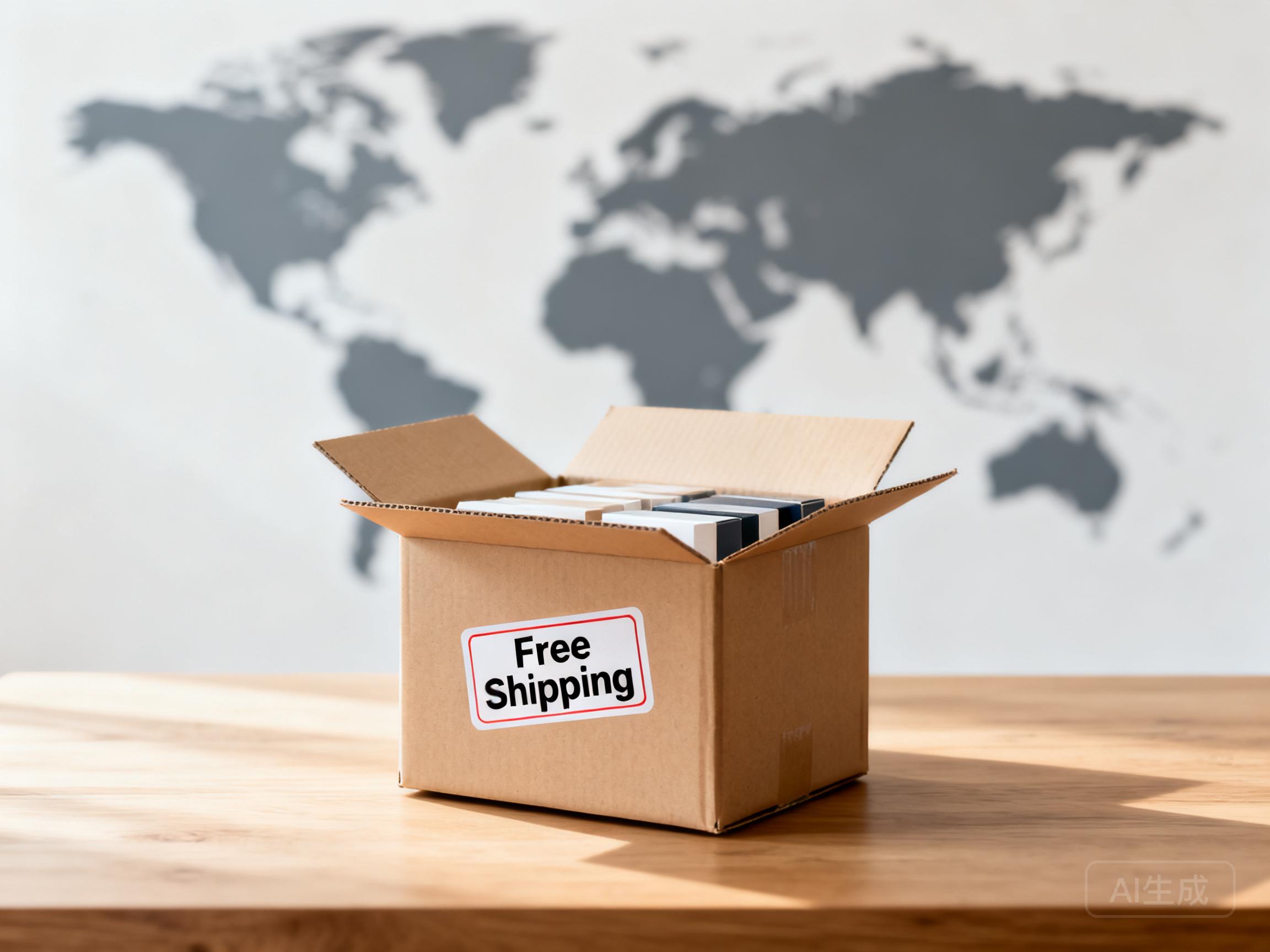
On September 21, Taobao laid out its overseas playbook for this year’s Double 11. More than 1.2 million Taobao and Tmall merchants are in. Free shipping is available in 13 countries and regions, with Hong Kong, Macau, Singapore and Malaysia offering it with no minimum spend. Taobao is also putting RMB 1.2 billion into overseas marketing—more than last year’s Double 11—and over 90% of mid- and large-sized items such as furniture and home-building materials can now be shipped directly.
This year, Taobao is turning up the heat on overseas expansion. It is broadening supply beyond the light, small items it has long been known for—apparel, general merchandise and the like—to industrial goods, furniture, home-building materials and other mid- to large-sized products. Long-tail supply that already sits inside the Taobao ecosystem is heading overseas, too.
Now that cross-border e-commerce has produced a batch of mature platforms and models, can Taobao carve out its own growth path by leaning on its existing merchant ecosystem and product supply? On September 21, Ye Tian, general manager of Taobao Overseas, and Yishan, head of the Taobao Overseas Merchant Operations Center, sat down with media outlets including NUPIAO to explain the current logic behind the business.
Taobao’s overseas business started in 2016, when demand was first sparked by “reverse overseas shopping” among Chinese communities abroad. In 2024, after it was grouped with AliExpress and Lazada under Alibaba International Digital Commerce Group (AIDC), the business really entered an acceleration phase. By 2025, Taobao Overseas had built a direct-mail system covering 20 countries and launched multilingual versions.
NUPIAO has learned that Taobao Overseas has grown GMV at a double-digit rate for six straight years, with participating merchants growing at roughly twice the pace of the overall market. Scale-wise, Taotian has around 10 million merchants; about 1.2 million have signed up for overseas expansion, and overseas users are approaching 100 million. Products can currently be sold to more than 200 countries and regions.
The traits of the supply side and the user side are exactly what make Taobao Overseas different from other cross-border e-commerce platforms.
On the seller side, the platform still relies mainly on the existing Taobao and Tmall merchant base. There is no need to rebuild an independent overseas seller system from scratch.
These domestic-trade merchants may not know the overseas rulebook, but they have already built distinctive supply and mature supply-chain capabilities. That is why Taobao uses a quasi-“semi-managed” model: once merchants sign up, they can sync their existing stores and products overseas. Merchants keep ownership of their goods and pricing power, and are only responsible for listing products and shipping them to a domestic consolidation warehouse. The platform handles international logistics, payment settlement, customs clearance, after-sales service and local returns.
Ye Jun, general manager of Shenzhen Guwanji, said the company did not set up a separate team for Taobao Overseas—it simply changed the receiving address. Founded in 2021, Guwanji now has about 100,000 SKUs. In the past, shipping a 500g parcel from Shenzhen to Vietnam could cost more than RMB 100. But with the platform’s large-scale logistics procurement, merchant costs have dropped significantly.
That convenience is also the main pitch behind Taobao Overseas’ current merchant recruitment. The platform wants merchants to put in one set of costs and reap both domestic and overseas business.
Yishan told NUPIAO and other media that, in every industry, the more mature merchants—those that launch new products quickly and can provide quality supply—have basically already joined the overseas push. This year’s growth mainly comes from category expansion. In the past, free shipping covered only light, small items such as apparel and sports and outdoor goods. This year it has been extended to mid- and large-sized categories including industrial goods, custom products, home-building materials and food.
For this year’s Double 11, the platform plans to put its RMB 1.2 billion overseas budget into three areas. First, free-shipping logistics costs, covering 13 sites worldwide, with Hong Kong and Macau, Singapore and Malaysia offering zero-threshold free shipping. Second, off-site advertising and marketing activities on all sites during Double 11. Third, user acquisition and engagement on each site.

On the user side, Ye Tian told NUPIAO and other media that users mostly come from Hong Kong, Macau, Taiwan and Asia, accounting for about 60%–70%, plus some long-haul markets. “But overall, these are relatively high-spending markets.”
At present, Taobao Overseas offers five language versions: Chinese, English, Thai, Russian and Malay. Since the multilingual versions launched, the share of new users has risen noticeably. Ye Tian noted that this is not just the Chinese diaspora—it also includes local overseas consumers, non-Chinese users, and ethnic Chinese who are second- or third-generation immigrants and are not very comfortable reading and writing Chinese.
Taobao data shows that last year’s Double 11, the average unit price of items bought by overseas consumers rose across the board. In Taobao’s signature categories such as apparel, beauty, outdoor and pets, unit-price increases ranged from 10% to 50%. Overseas consumers are increasingly chasing quality and distinctive products.
To respond to these shifts on the user side, starting with this year’s Double 11, Taobao App’s overseas sites are moving from a search-led, shelf-oriented approach toward recommendations.
Taobao has a huge amount of product supply, but whether users can find the right products depends on multiple links: search, recommendations, language, logistics and service. This is not just a challenge in overseas markets—it is the same in China.
Ye Tian told NUPIAO that recommendation and search are users’ two main behaviors. The difference is that recommendations do not require users to input something first. In the future, Taobao Overseas hopes to achieve “search and recommendation integration,” delivering different content at different points in the user journey—not just trying to close a single sale.
That is why Taobao Overseas is proposing “promoting good stores” this year, so users can actively search and also discover and match suitable products and quality supply while browsing and shopping. “Promoting good stores” will identify good stores across four dimensions—quality, distinctiveness, price competitiveness and service—and further amplify the platform’s distinctive supply advantages in categories such as apparel, beauty, home and pets.
Today, the cross-border e-commerce industry has already formed different platform paths. Taobao Overseas focuses on Taobao merchants and offers them “one more choice.”
As for where the entire overseas business sits in its development, Ye Tian believes it is still in the early stage. The business is affected by policy and geopolitics, whether the global supply-chain system is mature, and how users perceive China. His conclusion is that Chinese companies are still at the starting line in terms of both scale and potential, and that the platforms have not yet settled into stable roles. The implication: Taobao Overseas still has opportunities.