On the afternoon of September 16, the Doubao Phone Gen 2—the Nubia NaviX Ultra—officially launched. It comes in black, pink, white, and blue, with three versions: 12GB+512GB, 16GB+512GB, and 16GB+1TB, priced at RMB 5,999, RMB 6,499, and RMB 7,499 respectively. After the national subsidy, it starts at RMB 5,499, and it’s already on sale across major e-commerce platforms.
Nubia bills the NaviX Ultra as the world’s first AI agent phone, and it also has the industry’s first standalone AI button with fingerprint recognition built in. It runs the consumer version of Doubao Phone Assistant, and it previously secured agent large-model filing—making it one of the first device makers to complete this kind of model registration.
According to Doubao Phone Assistant product experience lead Zhao Ganlin at the launch event, the newly released consumer version of Doubao Phone Assistant packs four core underlying capabilities: deep reasoning that understands complex instructions, generalization for cross-app knowledge transfer, proactive exploration, and self-correction.
On voice interaction, the Nubia NaviX Ultra is powered by the Seed full-duplex voice large model. You can interrupt the assistant anytime, just like chatting with a real person. Turn on continuous conversation mode, and one wake-up lets you issue multiple commands in a row. It also recognizes more than ten dialects, including Cantonese and Hokkien.
When it comes to AI phone control, the model on the Nubia NaviX Ultra can automatically decide the execution mode, with an end-to-end task success rate above 80%. One sentence is enough to trigger automatic operations across multiple apps. The new phone also connects to services such as Cao Cao Mobility, Maps, and Qishui Music, and bridges the system with Feishu interfaces.
On top of that, the Doubao Phone Gen 2 lets you call third-party capabilities right from the chat window. Based on your habits, it can efficiently handle tasks like hailing a ride, checking your calendar, and sending messages. Tasks can also run silently in the background, queue up, and accept new requests at any time—making multi-threaded work easy and giving productivity a real boost.
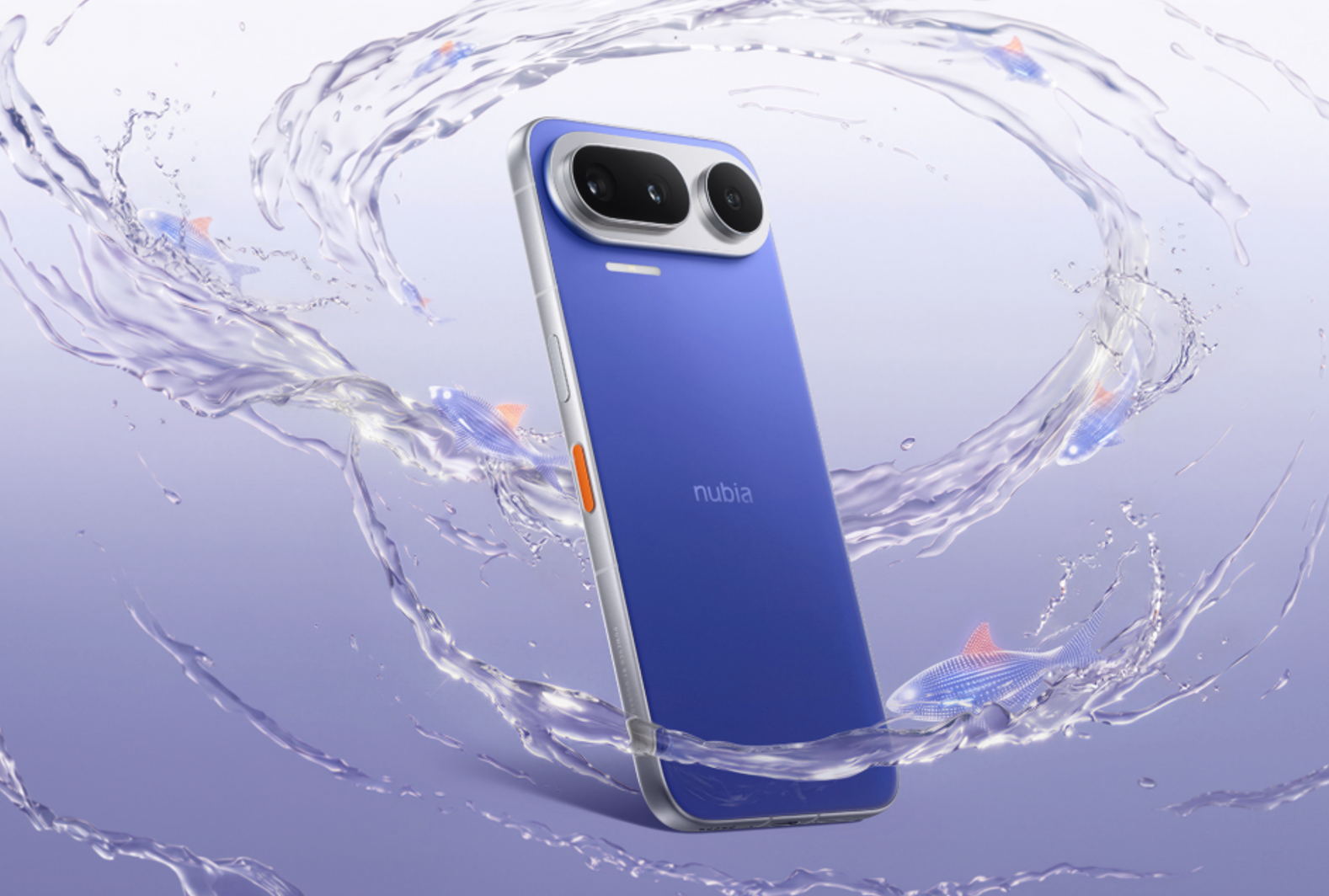
On hardware, the Nubia NaviX Ultra packs the 3nm Snapdragon 8 Elite Gen 5 chip, deeply AI-optimized with Qualcomm. It has a 6.78-inch high-quality display with LIPO process for 1.09mm ultra-narrow bezels, 1–144Hz adaptive refresh rate, 2160Hz high-frequency PWM dimming plus full-brightness DC dimming. A 7,100mAh battery supports 90W wired super-fast charging and 50W wireless charging.
For imaging, the Nubia NaviX Ultra has a flagship triple-camera setup: a 200MP main camera, a 64MP periscope telephoto, and a 50MP ultra-wide. The phone upgrades its AI Imaging Master with new features like one-sentence image refresh, inspiration-assisted shooting, and voice-guided shooting. You can edit photos freely with voice commands and finish image edits and creations right in the gallery with a single sentence.
On December 1 last year, the Doubao team released the technical preview of Doubao Phone Assistant, and a small batch of engineering prototypes—the Nubia M153, aka the first-gen Doubao Phone—also went on sale. Aimed mainly at developers and tech enthusiasts, it was priced at RMB 3,499, and the first 30,000 units sold out on launch day. On second-hand platforms, it was marked up by anywhere from RMB 300 to RMB 3,500.
Beyond the hype, the first-gen Doubao Phone also ran into controversy. Some users worried that automated cross-app operations could leak personal privacy data, especially payment-related data.
In response, the Doubao Phone Assistant team made it clear: every sensitive operation has a “human confirmation” gate, and payment steps must be finished manually by the user to avoid accidental actions. Users can also manage permissions themselves and limit the AI assistant’s access to private data such as contacts and photos. All operation logs can be checked in real time and deleted anytime. Technically, Doubao uses on-device encrypted storage, processes user data locally first rather than uploading it to the cloud, and protects data security from the ground up.
As for the model where “Doubao” plugs into a phone at the system level and helps users carry out operations, Tencent Chairman Ma Huateng has openly opposed it. He said using an external plug-in to record phone and computer screens and upload them to the cloud is “extremely unsafe and irresponsible,” and Tencent “unequivocally opposes” it.
On the controversy over the relationship between hardware makers and model makers sparked by the Doubao Phone, Lenovo Chairman and CEO Yang Yuanqing said in an interview with media including News that hardware makers will not become contract manufacturers for model makers. Doubao represents public intelligence, while Lenovo focuses on personal intelligence and enterprise intelligence—the two are not overlapping or replacing each other, but complementary. In the future, Lenovo will choose different model makers for different applications, just as it works with different chip suppliers. “No single company can do everything; the industry will always need collaboration.”