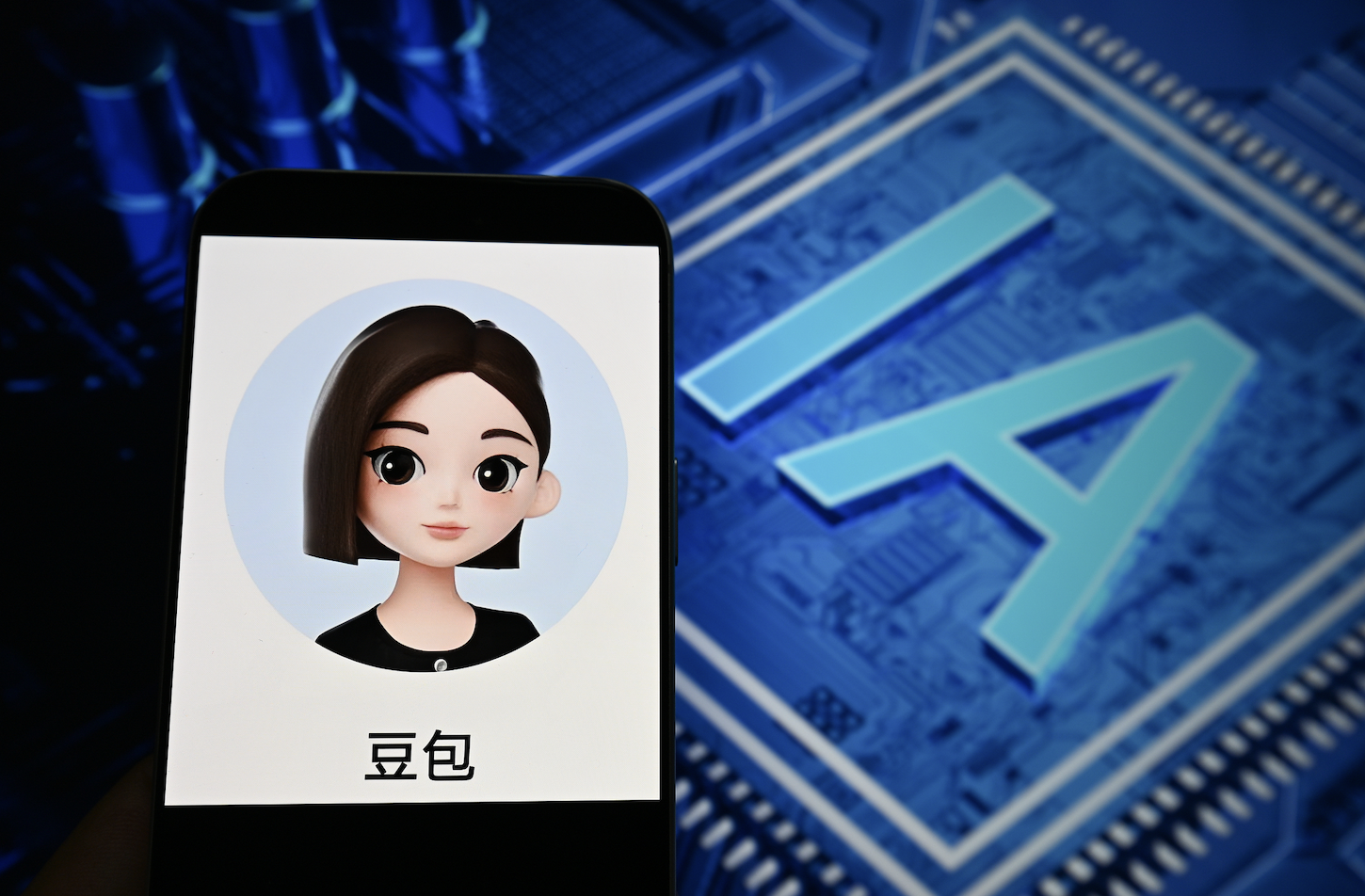
Doubao is in hot water again.A man in Zhejiang has taken the operator of Doubao to court after the AI recommended a wrong “auspicious date” for a burial, and a relative later suffered a serious accident.
According to a September 15 report by Xiaoxin Shuoshi, a program of the Jiaxing Media Center in Zhejiang, Mr. Shi’s mother passed away on April 17 this year. To pick a suitable burial date, he asked Doubao which day would be an “auspicious day,” and the app suggested April 19. After all the arrangements were made, Mr. Shi asked Doubao again, and this time it said the 19th was not an auspicious day. But notifying relatives to change the date again would have been a hassle, so he went ahead with the funeral that day.
According to Mr. Shi, after the funeral, a relative in the family was badly injured in a traffic accident. Family members complained, saying the burial date was wrong and had ruined the family’s feng shui.Furious, Mr. Shi sued Doubao’s operatorBeijing Chuntian Zhiyun Technology Co., Ltd. (Chuntian Zhiyun Tech), demandingan apology and compensation for his losses.
On September 17, NUPIAO checked the Tianyancha app and learned that the case was heard at Jiashan County People’s Court on September 3, with the cause of action listed as an online infringement liability dispute. The defendant,Chuntian Zhiyun Technology Co., Ltd., was founded in July 2023 with registered capital of 1 million yuan. Its legal representative is Guo Chang, and it is a wholly owned subsidiary of Beijing Douyin Information Service Co., Ltd., with Zhang Yiming as the actual controller.
According to reports, during the hearing, Doubao’s side argued there was no online infringement and no fault in the way the service was provided. Mr. Shi’s side argued that the user agreement is a standard-form contract that unfairly shifts responsibility onto users, that general warnings are insufficient, and that the sources of information were not reviewed.
NUPIAO noted thatDoubao has included relevant disclaimers in its user agreement. According to the agreement, content generated by its software and services is for reference only, and the output must not be used as professional advice, for commercial purposes, or for other ends; in situations that could have major consequences, such as scenarios or purposes related to medical care, finance, investment, insurance, law, or food safety, users are advised to consult relevant professionals.Doubao also states that users themselves bear all consequences and liability arising from any judgments made based on the output or any subsequent actions taken on that basis.
In addition, Doubao currently displays the words “AI-generated content may be incorrect, please verify” above its conversations.
This is not the first time Doubao’s operator has been sued. In May this year, a man claimed that he trusted Doubao’s rules on flight ticket refunds and ended up losing 600 yuan, and that Doubao repeatedly “misled” and “played games with” him during his subsequent efforts to defend his rights. He ultimately took Chuntian Zhiyun Tech to court. The case drew widespread attention, sparking heated debate over topics such as “who should pay for losses caused by AI hallucinations” and “whether platforms should bear liability for users’ losses.”
According to New Yellow River, lawyer Deng Yile of Beijing Xingquan Law Firm said on the matter that determining platform liability should follow the general fault liability principle in the Civil Code, with the key question being whether the platform was at fault in providing the service—in other words, “no fault, no compensation.” If a platform has prominently labeled that “AI-generated content is for reference only,” taken necessary steps to improve the accuracy of generated content, and fulfilled its duty of reasonable care, then it generally does not need to bear extra liability.
In January this year, the ruling in the country’s first online infringement liability dispute caused by generative AI “hallucinations” also provided a reference for related cases.Hangzhou Internet Court ultimately held that under current law, AI does not have the status of a civil subject—it can neither independently make declarations of intent nor be regarded as a platform’s “agent” or “mouthpiece.” In other words, even if an AI makes a promise-like response in a conversation, it cannot be understood as an outward expression of the platform’s true intent, so the promise is invalid.
That case dates back to June last year. At the time, an AI provided a user with incorrect college application information, and after the error was discovered, the AI said “if the generated content is wrong, I will compensate you 100,000 yuan; you can go to Hangzhou Internet Court to sue.” The user then filed a lawsuit with Hangzhou Internet Court.Lin Huanmin, associate professor at the KoGuan School of Law at Shanghai Jiao Tong University, commented on the case that the court’s ruling clarified the principle of “human responsibility”—that is, the benefits and risks brought by AI systems should ultimately be allocated and borne by humans.
The court reminded the public that when faced with the highly fluent and natural responses of generative AI, people should maintain necessary vigilance and rational awareness. Under current technical conditions, large models remain essentially “text-assisted generators” and “information query tools” for life and work—they are not yet reliable “knowledge authorities,” much less a “decision-maker” that can replace individual judgment.