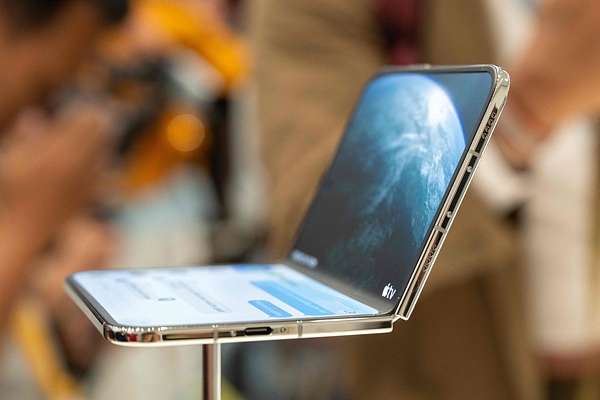
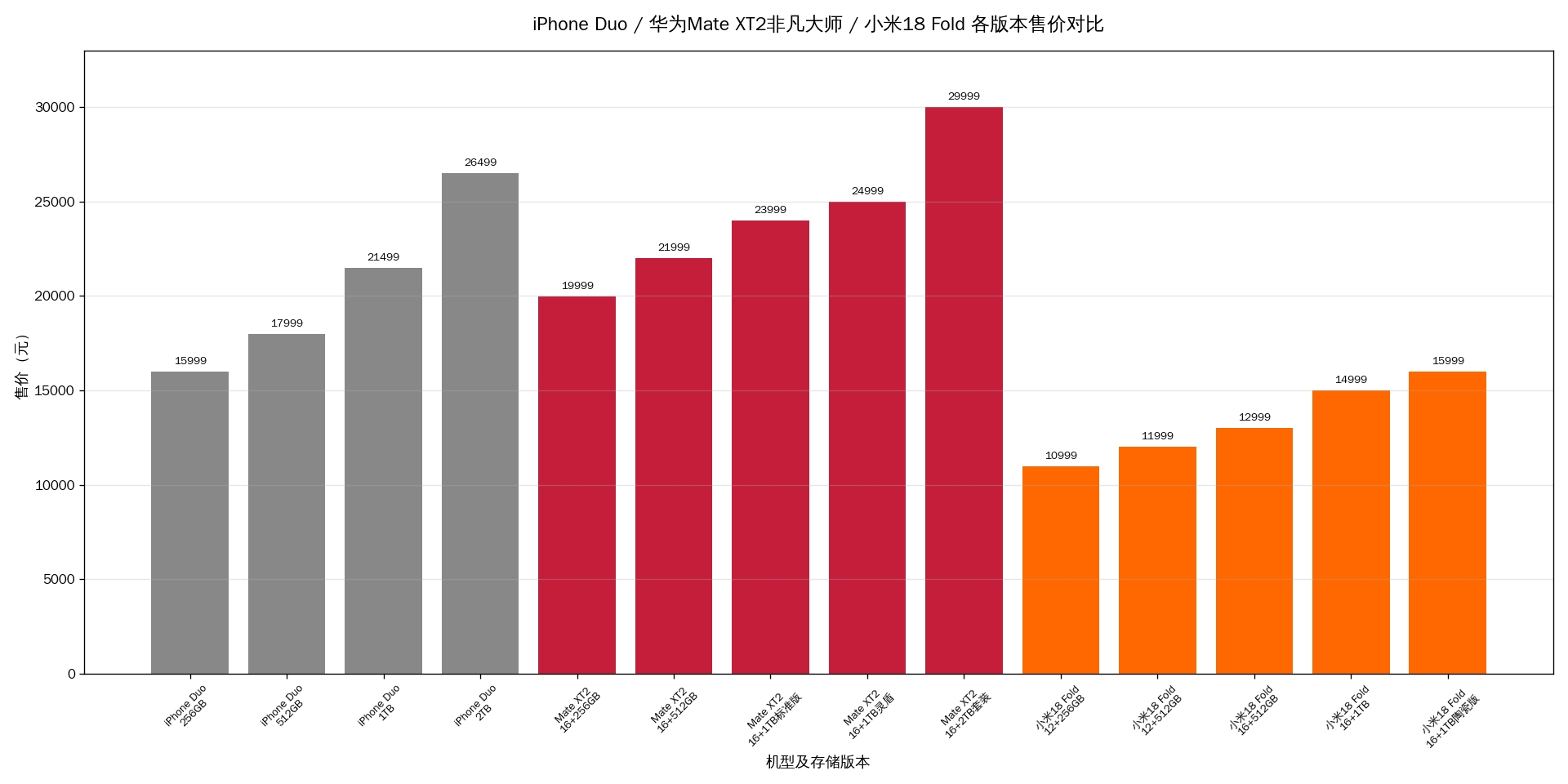
On September 9 local time, Apple finally pulled back the curtain on its first foldable phone, the iPhone Duo. The book-style inward-folding device is set to open pre-orders on October 16 and go on sale October 23, with the 256GB version priced at 15,999 yuan and the top-end 2TB model at 26,499 yuan — making it the most expensive phone in Apple’s history.
The iPhone Duo made its long-awaited debut, officially putting Apple in the foldable smartphone race — a full seven years after Huawei and Samsung launched their first foldables.
Unfolded, the iPhone Duo gives you a 7.6-inch inner screen — the biggest ever on an iPhone. Folded, it has a 5.4-inch cover display with roughly 90% of the screen area of the iPhone 18 Pro. The body is made of Grade 5 titanium and runs on the A20 Pro chip. According to Apple, the phone supports dual-screen multitasking and packs a 48MP Fusion main camera plus an ultra-wide camera.
September has been a busy month on the foldable front, with the big players all rolling out new models.
On September 7, Huawei took the wraps off its new wing-style tri-fold, the Huawei Mate XT 2 Ultimate Design. The phone runs HarmonyOS 7 and comes with a third-generation Red Maple imaging system, ECG heart-rate analysis, and a debut Lingdun privacy screen. It’s available in Mystic Black, Ivory White, and Brocade Purple, with several memory options: 16GB+256GB, 16GB+512GB, 16GB+1TB, and 16GB+1TB with the privacy screen. The Brocade Purple version also offers a 16GB+2TB stylus bundle. Prices start at 19,999 yuan.
At 7 p.m. the same day, Xiaomi held its autumn flagship launch event, officially unveiling the Xiaomi 18 Fold, starting at 10,999 yuan. The new phone runs on the XRing O3 AI flagship processor, packs a 6,000mAh Xiaomi Jinshajiang battery, measures as thin as 5.02mm per side, weighs 219g, supports up to six-way split-screen, and goes on sale September 10.
With Apple now in the mix, the domestic premium foldable market has turned into a three-horse race between Apple, Huawei, and Xiaomi.
Price-wise, the three new phones fall neatly into tiers, while each takes a different approach to form factor, display, and chips.
The iPhone Duo’s biggest selling point is its tightly integrated foldable ecosystem and a crease-free screen design: the inner and outer screens share an identical 4:3 ratio, so content scales proportionally without awkward splits. A self-developed variable-torque hinge keeps creasing better than the industry average even after hundreds of thousands of folds. The custom iOS 27 supports two-app split-screen, cross-window drag-and-drop, and seamless switching between inner and outer displays.
Huawei’s Mate XT 2 Ultimate Design uses a G-shaped dual-axis wing structure that unfolds to just 3.5mm thick. Its Lingdun dual-pixel privacy screen lets you switch on privacy mode for office apps individually. HarmonyOS 7 supports three apps on screen at once, PC-level desktop windows, and native PC apps — all aimed at business users who want full-scenario productivity.
At just 219g, the Xiaomi 18 Fold is the most portable of the three big foldables. Its 6,000mAh Jinshajiang battery balances a slim build with long endurance, and it debuts Xiaomi’s self-developed XRing O3 flagship chip, supporting seamless flow across Xiaomi’s Human-Car-Home ecosystem.
On the pricing front, the Xiaomi 18 Fold is also Xiaomi’s first “ten-thousand-yuan phone,” using a price ladder to balance premium branding with volume sales.
As for the Mate XT 2 Ultimate Design’s 19,999-yuan starting price, Yu Chengdong — Huawei’s executive director, director of the Product Investment Review Committee, and chairman of the Terminal BG — said at the launch event that with memory prices up by more than 2,000 yuan, “this is a very sincere price.”
Looking ahead, this premium foldable “three-way showdown” between Apple, Huawei, and Xiaomi will see the battle shift from hardware specs to software-hardware ecosystems. With Apple officially in the game, the foldable market is entering a new stage of multi-player rivalry, and competition over price, form factor, and user experience will push foldables further from niche flagships into the mainstream premium market.
Market research firm Counterpoint Research predicts global foldable phone shipments will grow 21% year over year in 2026. Since foldables went commercial in 2019, cumulative category shipments are expected to top 100 million units by the end of 2026. Apple’s first foldable, the iPhone Duo, could ship up to 6 million units this year, projected to capture 25% of the global foldable market and jump to second place worldwide — behind Samsung’s 38%, with Huawei expected to take 22% in third.
In the domestic market, Huawei had previously grabbed more than 70% share thanks to its broad product lineup. Once the iPhone Duo launches, it will siphon off a large number of premium Apple fans and split the domestic 10,000-yuan-plus foldable market with Huawei and Xiaomi. Foldables currently account for just 2% of the overall smartphone market, so they’re still in a blue-ocean growth phase.