NUPIAO |
NUPIAO | NUPIAO
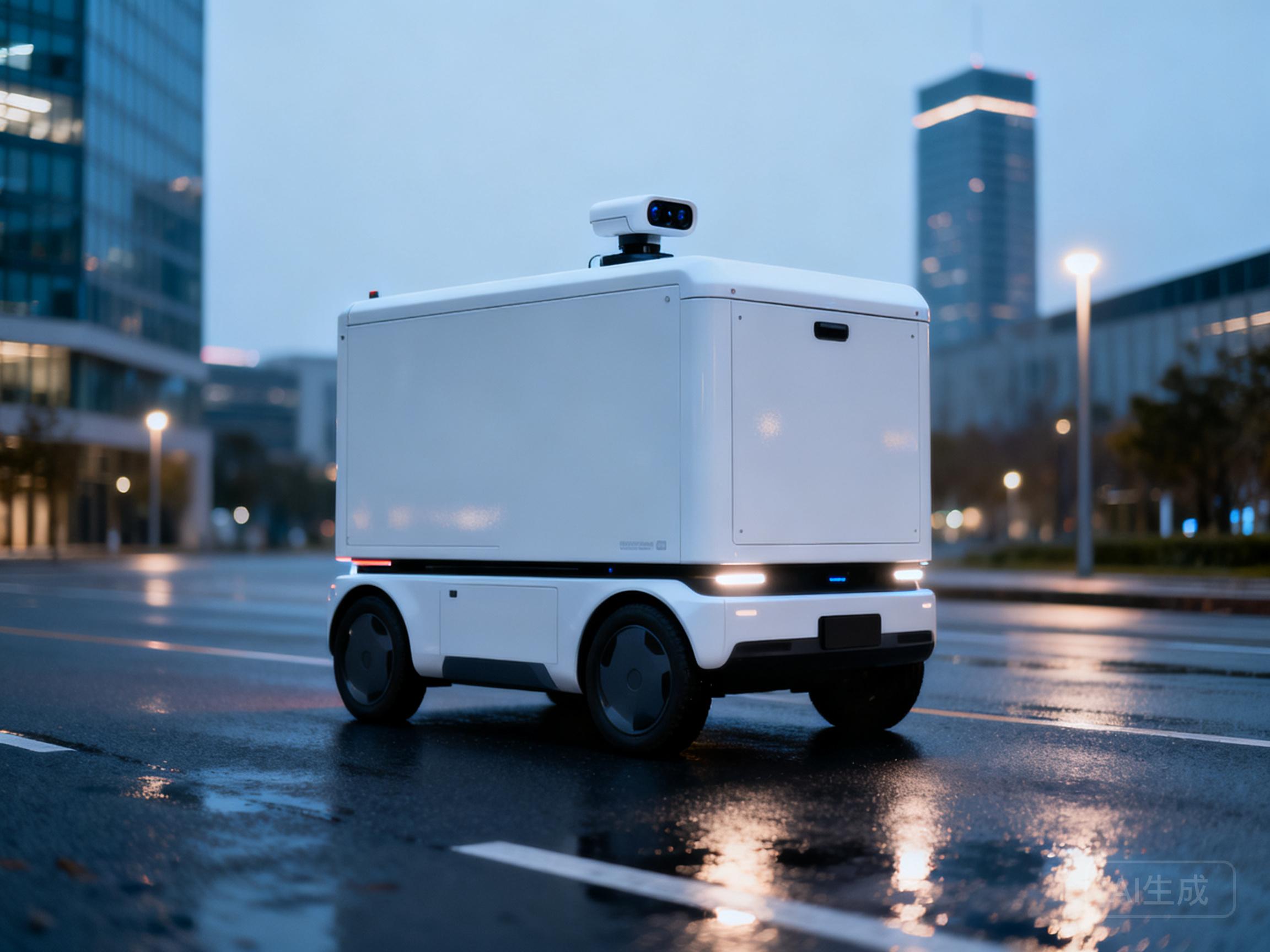
Those self-driving “cargo boxes”are starting to turn heads. Compared with robotaxis that carry lidar on their roofs and look like something out of sci-fi, driverless delivery vans are far plainer: no cockpit, no comfy passenger seats.
These little vehicles have been pulling in some serious money lately. On October 20, driverless delivery company Neolix announced a new round of nearly$400 million. According to NUPIAO, Boyu Capital and the National Artificial Intelligence Industry Investment Fund led the round, with participation from AlibabaAEF NextGen Hong Kong Fund, MonolithLishi Capital, GGV Capital, Temasek’s Vertex Growthand others.
This comes less than a year after Neolix’s previous $600 million Dround. With those two rounds combined, the company—founded in 2018—has now raised more than 10 billion yuan in total.
Money is flowing to its peers, too.Early October, White Rhino—which has received multiple rounds of investment from SF Express—closed a C2 round, bringing its total C round funding to $100 million; in February this year, Zelos Technology closed a new round of more than $300 million.
It’s not just investors showing up. Over the past year, companies that were busy fighting for passenger-car smart-driving orders—Momenta, QCraft, Zhuoyu Technology and others—have rolled out driverless logistics products or solutions one after another. OEMs such as Changan Kaicene, Geely Farizon and Dongfeng have joined in too. Logistics platforms that control cargo and customers—JD Logistics, Cainiao, Didi Delivery and others—are competing through in-house development, investment or partnerships.
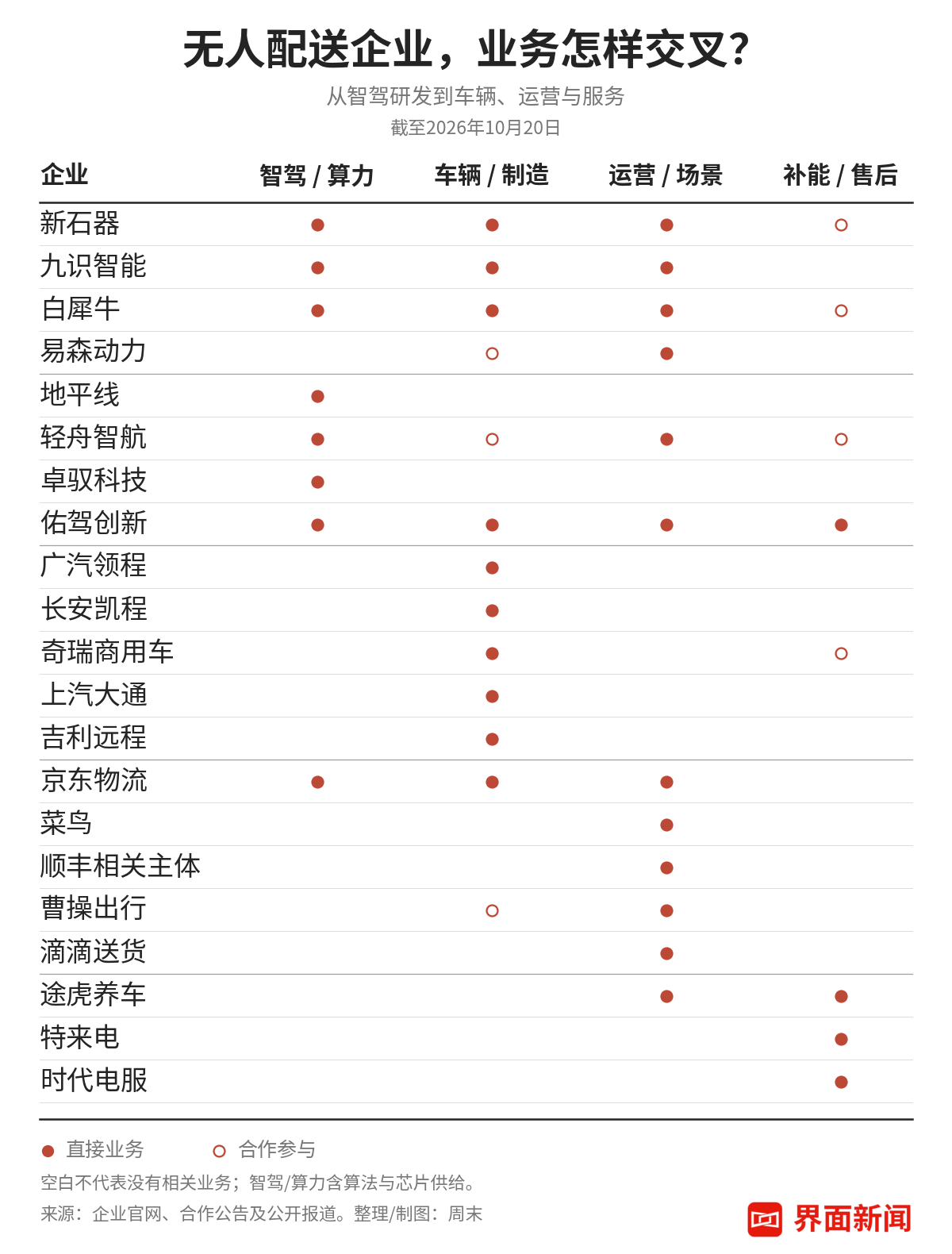
These companies come from very different businesses, yet they’re all finding new opportunities in the same kind of vehicle.
Driverless logistics vehicles are hardly a new invention. Years ago, JD.com, Meituan and a bunch of autonomous-driving startups began trying to get vehicles to deliver packages on their own. But back then the vehicles were expensive, deployment depended on high-definition maps, and most projects stayed in pilot mode.
The first big shift came in cost and delivery scale. A 2021 report from EO Intelligence estimated the hardware cost of an autonomous last-mile delivery vehicle at 300,000 to 500,000 yuan. By 2025, Neolix disclosed that its vehicle cost had dropped to under 100,000 yuan.
A driverless logistics industry insider told NUPIAO that as the auto supply chain matures, sensors, computing platforms and steer-by-wire chassis can be purchased at scale. That means the once-expensive autonomous driving system can now be packed into a relatively cheap commercial vehicle—an important precondition for this business to mature.
On deliveries, in 2025, Neolix and Zelos Technology both crossed the 10,000-unit cumulative delivery mark one after the other. According to Neolix’s latest disclosure, it has deployed more than 30,000 driverless vehicles worldwide, with cumulative autonomous driving mileage topping 260 million kilometers; White Rhino has delivered more than 5,000 vehicles, while Zelos, after integrating with Cainiao, disclosed a fleet of more than 20,000 vehicles.
The market is starting to take shape, and the companies that once enjoyed first-mover advantage now face new competitors—and this time, not every newcomer needs to build driverless tech from scratch.
In July this year, leading smart-driving company Momenta announced that it would launch its Robovan business in Xiangcheng, Suzhou, using its R7 world model and bringing the mapless tech already mass-produced in passenger cars into driverless delivery. The company hopes one model can support passenger cars, Robovan, Robotaxi and Robotruck products, further spreading R&D costs.
QCraft’s approach is similar. It partnered with Chery Commercial Vehicle to develop L4 logistics vehicles; earlier this year it announced that its first-generation driverless logistics vehicle autonomous driving solution cost less than 10,000 yuan, and launched the Robo-X open platform.
More importantly, technology and manufacturing are starting to divide labor. In the past, an autonomous-driving startup often had to develop algorithms, modify vehicles and then find customers for pilots. Now OEMs can work with existing smart-driving suppliers to build driverless vehicles, and operators no longer have to develop autonomous driving systems themselves.
A driverless logistics entrepreneur told NUPIAO that leading smart-driving companies have already poured big money into developing models. Since those capabilities are available to outside customers, latecomers don’t need to sink the same scale of R&D money again.
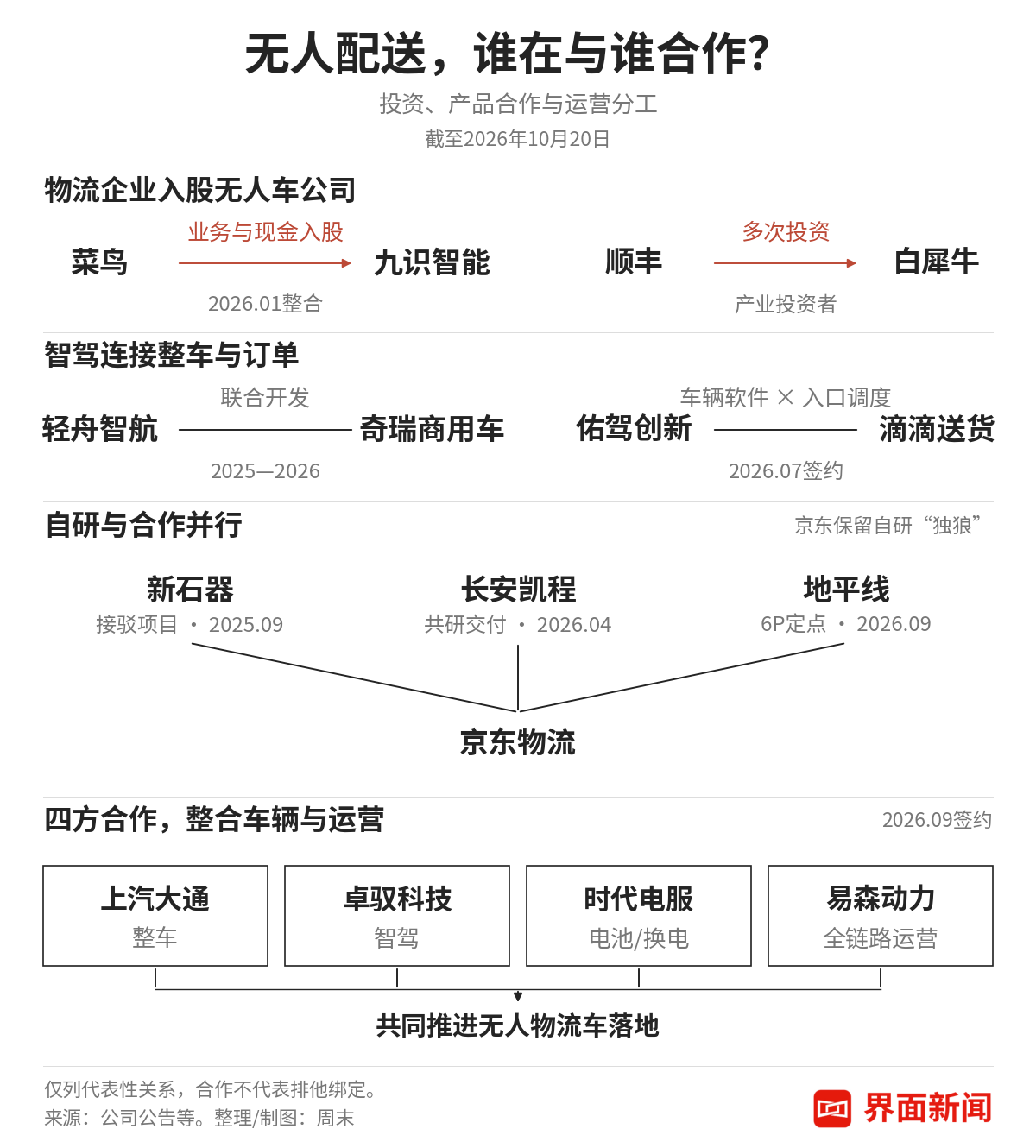
That has led to more pairings among automakers, smart-driving companies and logistics players. Chery with QCraft, GAC Lingcheng with Neolix, SAIC Maxus with Zhuoyu—such partnerships have been popping up. The driverless delivery industry, once centered on technology, is starting to look more like a market made up of vehicle makers, software providers and operators.
But unlike passenger-car smart driving, driverless logistics has a far more fragmented customer base. Express delivery companies, chain supermarkets, urban delivery logistics providers and even local franchise outlets can all become vehicle buyers or users.
Logistics giants occupy a special spot here: they are potential big customers, possible organizers of driverless delivery services and even hands-on participants in vehicle R&D.
In January this year, Cainiao, under Alibaba Group, chose to inject its own driverless vehicle business into Zelos Technology and became a shareholder through a cash investment. Cainiao no longer directly makes or sells driverless vehicles; instead, it is pooling resources with a startup that has already built delivery scale. Meanwhile, AlibabaAEF NextGen Hong Kong Fund showed up again in Neolix’s latest funding list.
JD Logistics has a more diversified playbook. It develops its own “Lone Wolf” series of driverless delivery vehicles and also works with outside companies. In September this year, Horizon disclosed that its Journey 6P chip had won a production program for JD Logistics’ sixth-generation smart delivery vehicle Plus version. Earlier, Changan Kaicene and JD jointly developed driverless delivery products, and Neolix also disclosed a case in which it provided Hairy Crab transport connection services for JD Logistics.
At this year’s September JDD conference, JD also reiterated its plan to purchase 1 million driverless vehicles over the next five years.
Another type of partnership is forming between freight platforms and smart-driving companies. In July this year, MINIEYE Innovation and Didi Delivery formed a strategic partnership: the former provides driverless delivery vehicles and technology, while the latter opens its order entry points and dispatch capabilities. Cao Cao Mobility also partnered with Geely Farizon to extend its ride-hailing platform operations experience into the cargo market.
A few years ago, autonomous-driving companies had to first prove their vehicles could drive themselves, then go find customers who could use them. Today, companies with orders are actively looking for vehicles and technology. That may be the most notable change in this driverless logistics wave.
Still, with more vehicle and tech choices available, exactly how a delivery run gets done still needs rethinking. A driverless logistics industry practitioner pointed out to NUPIAO that logistics drivers often also handle loading, unloading, carrying and handovers, and today’s Robovan has not fully solved those issues. So beyond selling vehicles, driverless vehicle companies are testing rental, pay-per-use and RaaS service models, and partnering with auto-service companies to build operations and maintenance networks.
As for convenience stores, they probably don’t care much about who builds the vehicle or who writes the algorithms—after all, selling goods well is the real business.