NUPIAO |
NUPIAO | Wen Shuqi
A single procurement notice from ByteDance turned one office chair into the tech world’s latest talking point.
According to what NUPIAO has learned, ByteDance plans to replace office chairs in batches across its Beijing, Shanghai and other workspaces from August this year through the second quarter of next year. The chair being swapped out is the Humanscale World, a model with a retail price of about 8,000 yuan that became known as the “ByteDance chair” because it was standard issue there. Now it’s being replaced by a domestic chair, publicly priced at 2,549 yuan for the Qingxian Smart S1.
ByteDance isn’t the first tech company to go on a Qingxian Smart shopping spree. Before this, DJI, Media Storm, Dedao and others also bought Qingxian Smart office chairs. And the chair DJI bought four years ago was the Herman Miller Aeron, which retailed for more than 10,000 yuan.
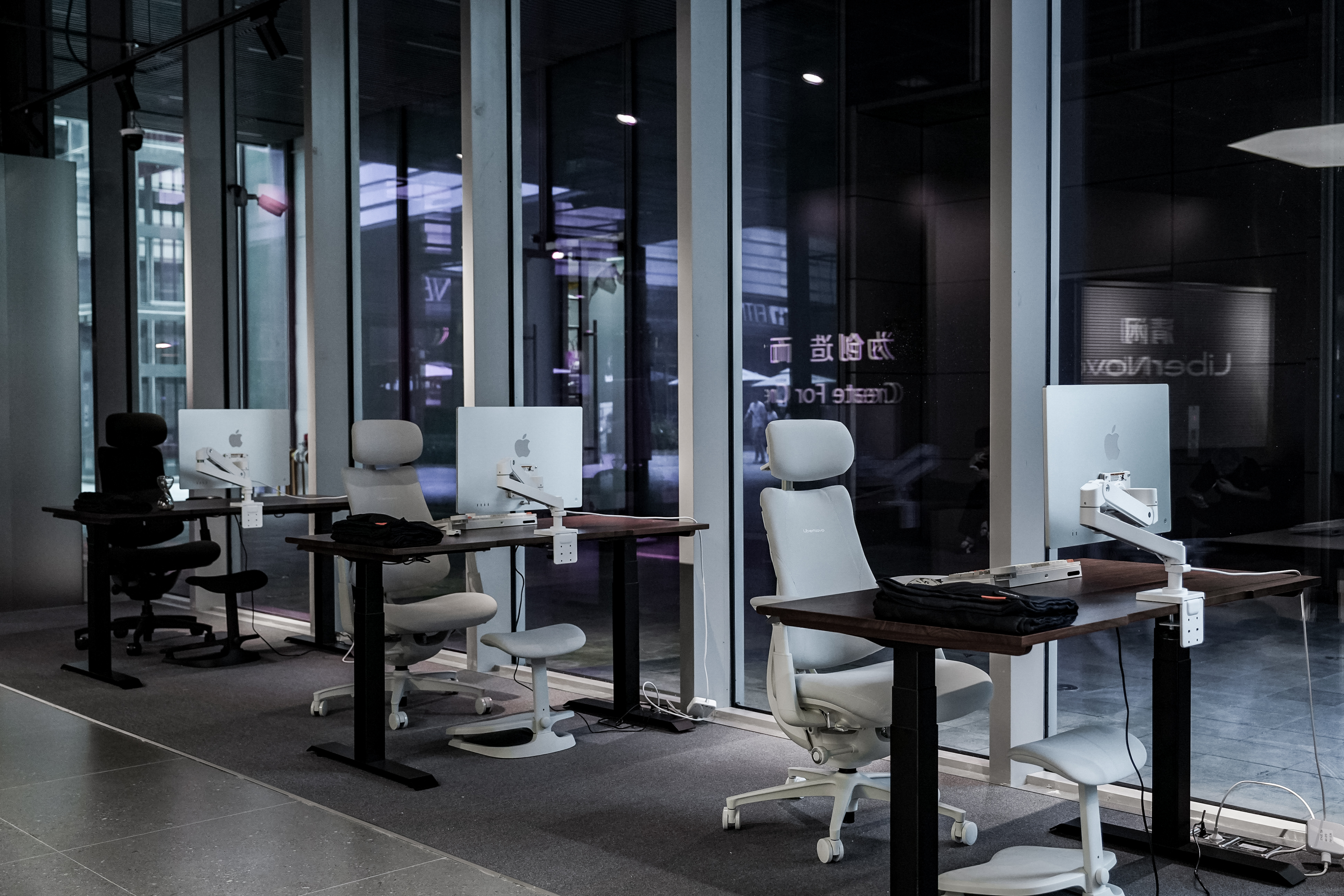
Many consumers probably already know Qingxian Smart. Its ads are hard to miss in subways, residential neighborhoods and major social feeds in China and abroad. Late last year, the brand also appeared at Luo Yonghao’s “Tech Spring Festival Gala,” where he said Qingxian beat international brand Herman Miller on overall experience, priced itself at one-third of the latter, and toppled those “crowns of the old era.”
Qingxian Smart was founded in 2023 and has so far closedfour rounds of funding, with investors including Hillhouse, Vertex, Matrix Partners, Jinqiu and Zhongding. The founding team mostly has robotics experience: founder Yan Le was formerly VP and CMO of Narwal,and core members mostly come from DJI, Narwal and Xiaomi.
In June 2025, Qingxian launched its first dynamic ergonomic chair, the LiberNovo Omni. What sets it apart from traditional ergonomic chairs is that it brings smart-hardware engineering into the office chair, using bionic structures, precision linkages and motor-battery-sensor tech to deliver adaptive lumbar and back support, spine stretching and active ventilation.
On Kickstarter, the Omni raised more than $10 million from 11,620 backers, topping its goal by over 200 times. It then raised 460 million yen on Japan’s Makuake, setting the platform’s all-time crowdfunding record for the chair category.
In an already crowded office-chair market packed with low-priced products, those crowdfunding numbers quickly put Qingxian on consumers’ radar.In hardware investment circles, Qingxian has alsobecomeahottopic.
Yan Le said in an interview that Qingxian began with his own lumbar problems after long hours hunched over a desk. The discomfort of sitting too long is a pain point every office worker knows.
His read: over the past decade or so, internet giants have filled up the main entry points in daily life, but the work scene still has plenty of productivity tools waiting to be redesigned.
Yan believes two core metrics decide whether a consumer product is worth rebuilding: how often it’s used and for how long. Office chairs check both boxes.
One counterexample is kitchen appliances. They used to be used all the time, but as more people opted for food delivery, demand for that category shrank. Work is different: five workdays a week and eight-hour days are already the norm for office workers. “It applies to both software and hardware: high-frequency, long-duration products are worth polishing deeply.”
Traditional office chairs are a highly mature business. In 1994, Herman Miller launched the Aeron, replacing the leather and thick padding of old-school executive chairs with mesh and a sharply engineered look. After internet companies took off, it became a classic Silicon Valley tech symbol alongside open-plan offices, standing desks and coffee machines.
Since then, Herman Miller, Steelcase, Humanscale and others have long dominated the high-end corporate market, while domestic brands have gone the other way: packing richer features into lower price bands.
Qingxian has changed that competitive pattern to some extent. It added a smart concept to office chairs, managed to sell at a premium and became an alternative to high-end overseas brands.
Xia Zhijin, managing partner at Vertex Ventures and one of Qingxian’s earliest investors, said in an interview with NUPIAO that smart office chairs owe their rise to a shift in technology supply: batteries, motors and sensors are getting cheaper and easier to customize, giving robotics and consumer-hardware teams a way in. On the other hand, traditional manufacturers’ core SKUs haven’t changed in more than a decade, leaving room for new players to iterate.
When Xia first met Qingxian, the company didn’t even have a product prototype. One thing that won him over was how clearly Yan Le laid out the product’s path to market. Also, unlike many founders eager to challenge legacy giants, Yan wasn’t in a rush to prove his opportunity by tearing down traditional brands.
“He’s a founder who genuinely likes to see what others do well, even competitors,” Xia said. “A lot of people building a product meant to disrupt others focus more on attacking their weaknesses. He’s the opposite: he pays closer attention to who’s doing well in the market, and he’s very good at learning from their strengths.”
As Qingxian’s products took off, starting in August this year domestic ergonomic-chair brands such as Sihoo, Hbada and AutoFull began rolling out dynamic ergonomic chairs in clusters, following with features like motors, recline-following motion and personalized back support. Sihoo started out in e-commerce and sells more than 1.5 million chairs a year, making it a top player in traditional ergonomic chairs; Hbada covers office chairs, kids’ study desks and chairs, gaming chairs and more, with products also sold globally.
The brands emphasize different features. Sihoo’s flagship T6 adds health monitoring on top of massage and voice interaction, tracking 11 metrics including heart rate and body-fat percentage; Hbada’s X7 series leans harder into pressure sensing and active lumbar tracking, even marketing “AI large-model lumbar care.”
More and more manufacturers are slapping on the “smart” label, and that has promptedsome outside skepticism: if you put AI and sensors on a chair, does that really make it “smart”?
Xia’s view is that smart doesn’t have to arrive all at once. “At first, smart may just mean electrification. Later, it may mean adding more sensors. Further down the road, there may be more advanced AI algorithms.” In his view, consumers won’t buy a chair because of a so-called smart concept; ultimately, it comes down to user experience.
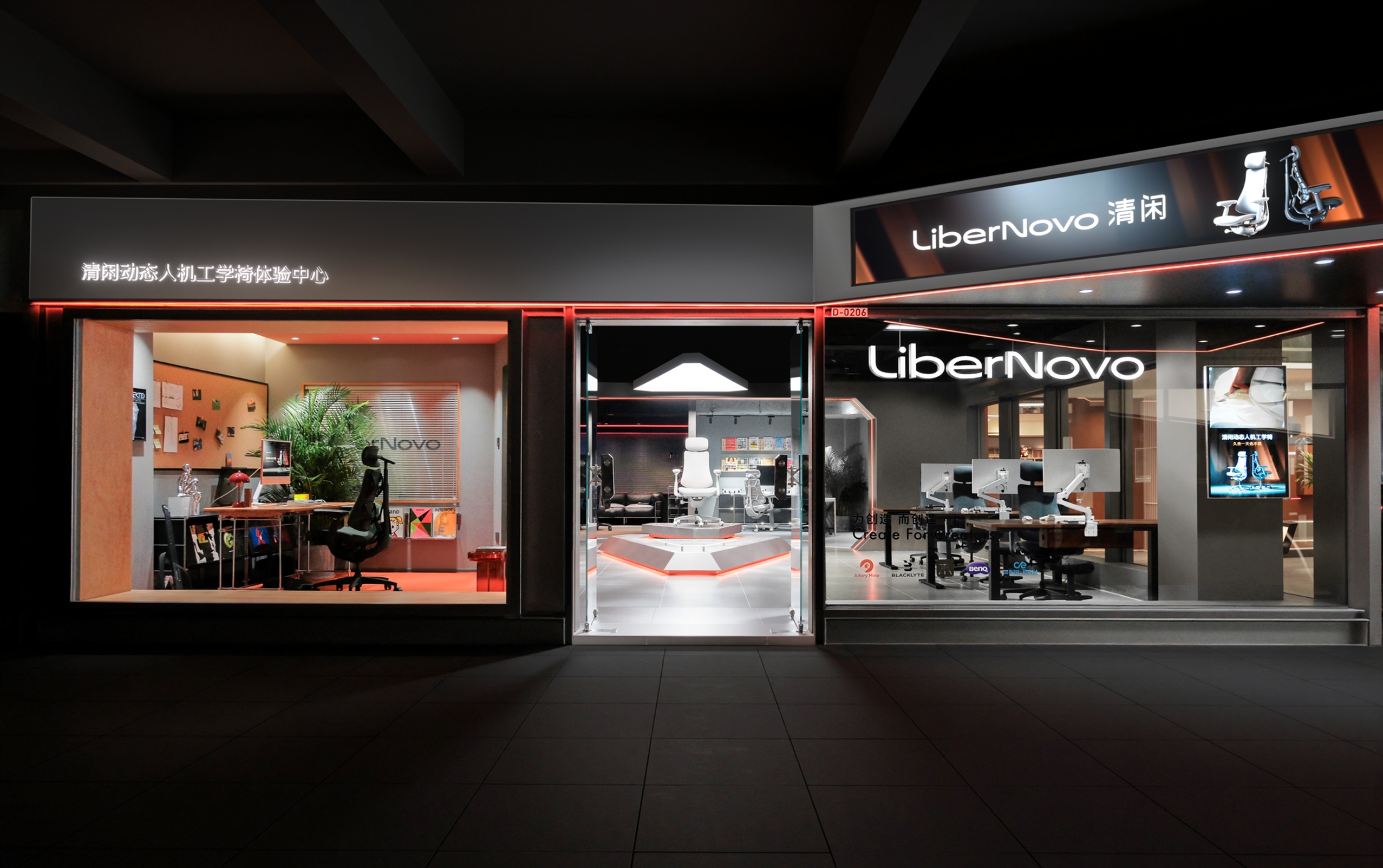
That makes chairs a naturally offline-heavy business. In 2025, Qingxian opened its first experience center in Shenzhen, and this June it opened stores in six cities including Beijing and Shanghai. Mature brands like Hbada and Sihoo already have more direct-run outlets and dealers, while JD MALL, home-furnishing stores and other channels have become battlegrounds for consumers.
Xia believes every manufacturer, Qingxian included, should be wary of how fast the industry iterates. “You may have a first-mover advantage and start a little earlier than others, but the moment you slow down, with how brutally competitive China is now, that advantage may vanish.”
For an industry that has re-entered a period of technical iteration, the competition is just getting started.