Reporting by
In the AI chip and memory capacity boom, testers — long overshadowed by front-end tools like lithography and etching — are stepping into the semiconductor industry’s spotlight.
2026 Bay Chip Expo: Shenzhen equipment maker Jingzhida was one of the most closely watched exhibitors. Beyond memory chip test gear, its headline product this year is an SoC tester built to win over GPU and CPU and other compute-chip customers — a pool far larger than the memory chip market.
Over the past year, Jingzhida has been A-share semiconductor equipment names with the wildest stock swings. Its shares ran from RMB 145 and kept climbing. This year, in July, it briefly touched 736.36 yuan; as of publication it trades at 353.41 yuan per share, still up about 129% from a year ago.
Jingzhida was founded in 2011, when domestic panel makers were moving into AMOLED and the high-end gear used to spot display defects on the line was still all imported. That was the opening the company grabbed, growing alongside customers like BOE and TCL CSOT. Then in 2017, as China’s chip industry expanded, it moved into semiconductor testing and picked DRAM memory testing as its entry point. Today, memory chip testing is its single biggest business.
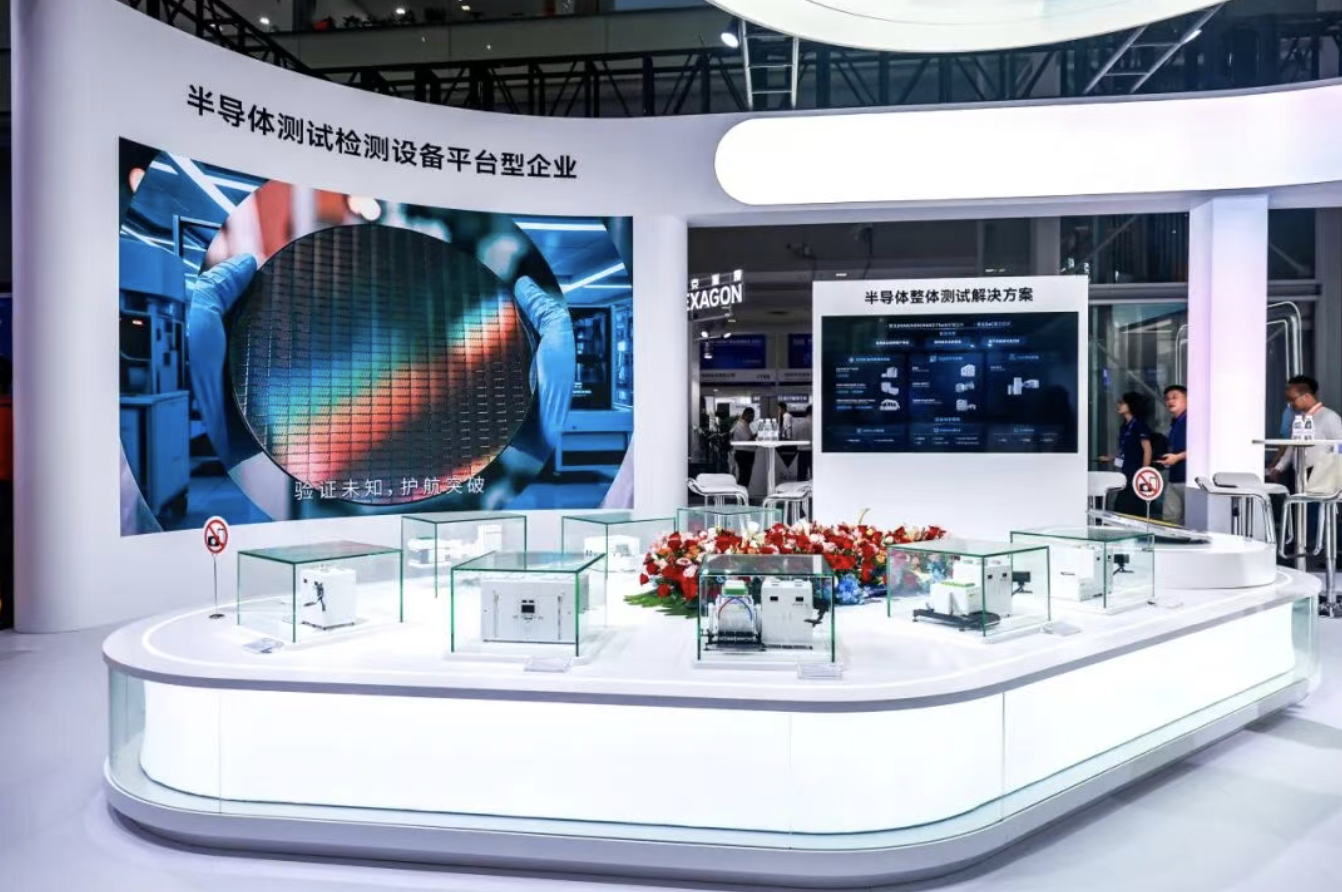
A leading domestic DRAM maker was one of Jingzhida’s earliest customers in memory testing. As that customer hit its capacity and earnings breakout, Jingzhida’s memory test business scaled right along with it. In 2025, revenue from its semiconductor memory device test equipment reached RMB 625 million, up 150.39% year on year.
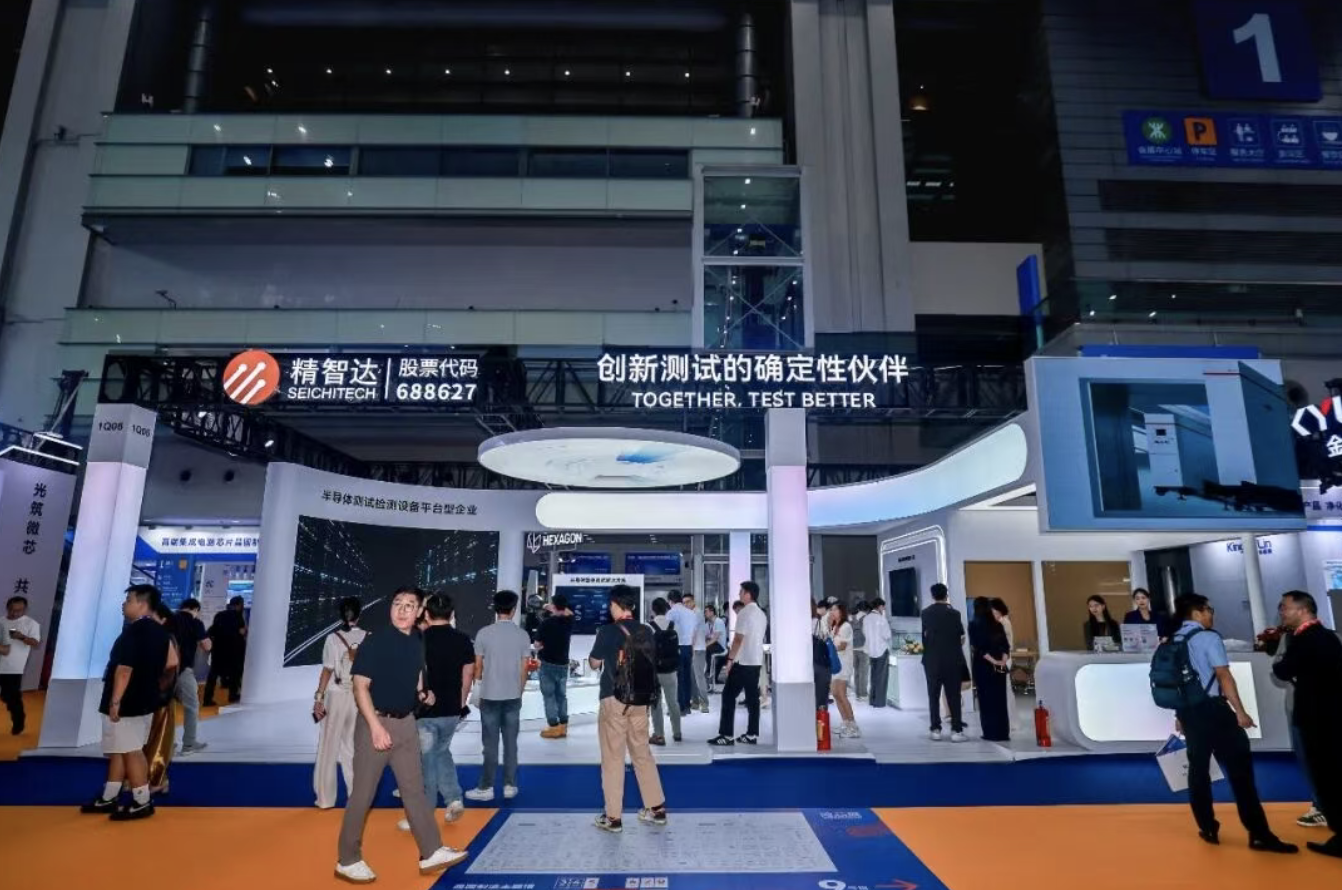
AI-driven memory demand is now rippling down the supply chain into the test equipment layer. In 2025, Jingzhida booked RMB 1.128 billion in revenue. Then in January and September of this year it disclosed semiconductor test equipment and fixture contracts worth RMB 1.311 billion and roughly RMB 1.576 billion — about RMB 2.887 billion combined, tax included.
“We’re going all-in on delivery from here,” Xie Siyao, a director at Jingzhida, said in an interview with NUPIAO.
On October 10, construction formally began on Jingzhida’s new production base in Longhua, Shenzhen. It is the first plant the company has ever built itself, and once finished it will add capacity for burn-in and repair equipment, wafer testers and final testers — the core of its memory test lineup.
For years, critical tools like lithography machines were the classic “choke point”problem, and domestic attention stayed glued to front-end steps like lithography and etching. But the faster chips run and the more capacity they hold, the higher the bar for test gear: catch a defect too late and all those pricey manufacturing steps in front of it are wasted.
Xie told NUPIAO that customers now want test equipment in the room while a new chip is still being designed, and they keep tweaking the process after volume production based on test results. Equipment makers are no longer dealing with just more chips — they’re dealing with new processes that haven’t been fully locked down yet.
That is what pushed test equipment center stage. The industry groupSEMI expects 2026 semiconductor test equipment sales to rise 31% year over year to US$15.3 billion, faster than the overall semiconductor manufacturing equipment market.
Xie said the company in 2025 shipped its first in-house high-speed final test system running at 9Gbps, and in the first half of this year moved on to an 18Gbps model whose core specs have already hit the targets it set.
Gbps is the data rate each channel of a tester can send and receive, and that speed has to keep pace with the interface speed of the chip under test. 9Gbps roughly covers today’s mainstream DDR5 and LPDDR5X parts, while next-gen LPDDR6 starts above 10Gbps per pin — which pushes the bar for final test systems even higher.
Globally, for comparison, Advantest, the world’s biggest semiconductor test equipment supplier, in 2025 launched theT5801 memory test system aimed atGDDR7 andLPDDR6 and other next-generationDRAM, supporting 18Gbps NRZ signal testing and reaching PAM3 three-level signaling speeds of 36Gbps.
The memory tester market is extremely concentrated. Soochow Securities tallies Advantest and Teradyne at 61% and 24% of the global memory test market in 2025 — roughly 85% combined. Domestic localization rate for analog and mixed-signal testers already tops 85%, while memory testers sit at 8% to 10% and SoC testers around 5%, which still leaves a sizable market up for grabs.
A September report from Soochow Securities projects the domestic memory tester market will grow from RMB 4.8 billion in 2026 to RMB 15.5 billion in 2027, driven mainly by continued capacity expansion at CXMT and YMTC and by the rising value of high-end DRAM and HBM test gear. The report also notes that lead times at overseas leaders are stretching out. Once domestic vendors crack the technology, import substitution could move fast.
Facing those towering overseas market shares, domestic players are hurrying to fill out their high-end product lines.
Changchuan Technology, the domestic test equipment leader, booked tester revenue of RMB 1.871 billion in the first half, up 49.74% year on year. Its D9000 series digital testers handle SoC and digital logic chip testing. For power-hungry parts like AI chips and GPUs, Changchuan rolled out a three-temperature handler; Huafeng Test & Control says its SoC-focused STS8600 has entered small-batch installation; Jingce Electronic disclosed an HBM burn-in test system, and says its existing memory burn-in gear has already won repeat orders from multiple customers.
These companies are just as busy expanding capacity.
Changchuan Technology closed a RMB 3.127 billion private placement in March, with about RMB 2.192 billion of it going into R&D for high-end testers and related equipment, and in September it announced plans to issue H shares and list in Hong Kong. Huafeng Test & Control issued RMB 749 million of convertible bonds in June, mostly to fund test systems built around its own ASIC chips so it depends less on outside dedicated chips. Yuexin Technology, which is not yet public, closed a pre-IPO round of more than RMB 1.2 billion in March with a national industry fund taking part; the money goes to R&D and capacity.
Now that testers have stepped into the spotlight, domestic vendors have a rare window. Demand shows no sign of topping out — but the capacity and R&D money these companies are pouring in will ultimately be cashed in on customers’ production lines.