Reporter |
Editor | NUPIAO
Assisted driving is hunting for its next foothold, and the new opportunity might just be motorcycles.
At a two-wheeler smart-driving salon held recently in Chongqing, neueHCT fully showcased its HCT Orbis intelligent riding assistance system for the first time.
Unlike the car industry’s race toward urban NOA and end-to-end systems, this setup tackles something more down-to-earth: seeing risks a few seconds before a rider rear-ends a car, slips into a truck’s blind spot, or gets hit by a suddenly opened door—and warning them in the least intrusive way possible.
Lu You, CPO of neueHCT, cited World Health Organization data showing that of the roughly 1.19 million road traffic deaths worldwide each year, about 30% are two- and three-wheeler users. A minor car collision often just means repairs; a motorcycle losing balance can lead to far more serious consequences.
According to him, the HCT Orbis packs an 8-megapixel front-facing camera and can be expanded with rear cameras and other sensors. The system uses a Transformer-based Sparse 4D perception architecture, aiming to identify vehicles, pedestrians, lane lines, traffic signs, and signals on low-compute chips.
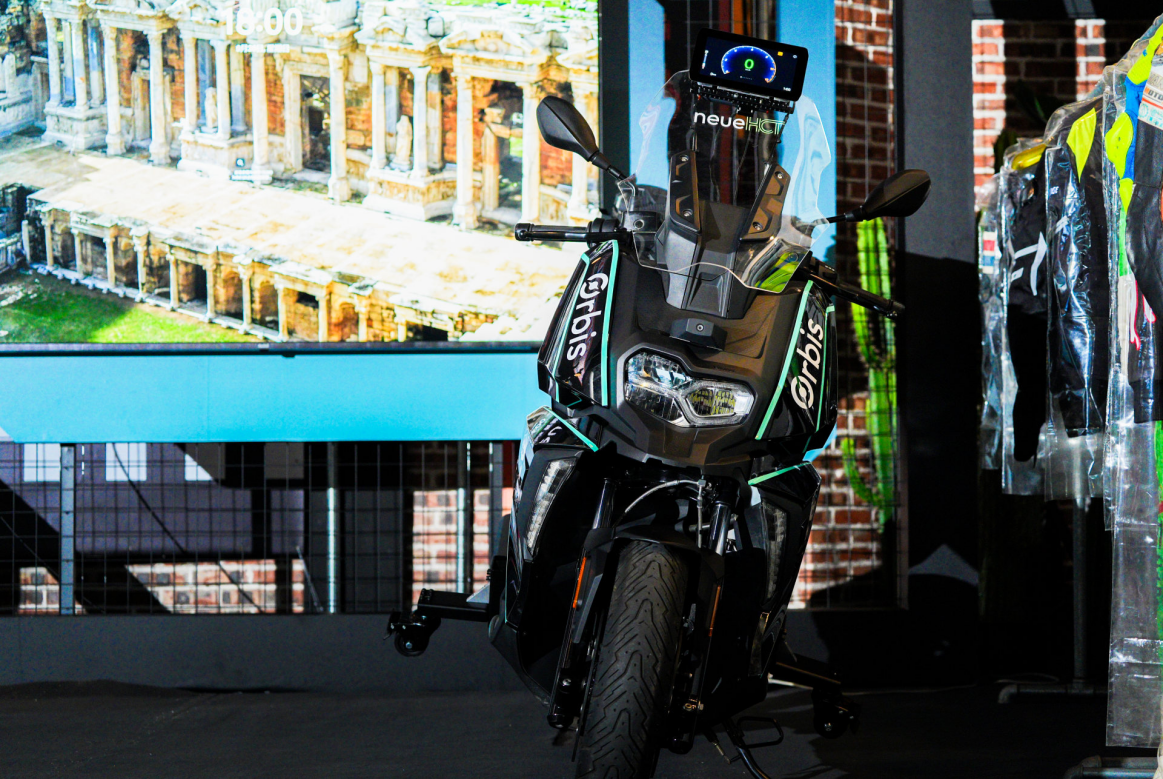
Current features include forward and rear collision warnings, lane departure alerts, door-opening hazards, and blind-spot warnings for large vehicles, plus dashcam and 4K video recording. The company says the system has secured a model project designation but hasn’t disclosed the customer, production model, launch timeline, or cost.
Compared with four-wheeler assistance systems, two-wheeler tech has its own peculiar constraints. A car’s camera stays basically level while driving; a motorcycle leans hard through corners, and the footage shakes far more than a car’s when going over speed bumps or rough roads.
If the same algorithm can’t compensate for lean angles and bumps, it might mistake a normal cornering lean for a lane departure—or miss a target exactly when a warning is needed most. And frequent false alarms can distract riders, creating new dangers.
“A lot of companies doing passenger-car assisted driving think they can just trim things down and port it over. It’s really not that simple,” Lu You told NUPIAO and other media. In different markets, motorcycles may ride in motor vehicle lanes, weave through traffic, use bike lanes, or even shoulder roads. Logic that works in cars will most likely fail on two wheels.
Ren Shaoqing, head of the research institute at CFMOTO Group, sees a more fundamental difference: “The person is actually part of the motorcycle.” The rider’s center of gravity, lean angle, and inputs together determine the vehicle’s posture—meaning it’s hard for a machine to take over a motorcycle the way it can take over a car.
So for quite a while, two-wheeler intelligence won’t be chasing driverless riding. Instead, it aims to be an extra perception system for the rider—sensing risks, flagging them, and assisting with longitudinal control in limited scenarios, while leaving ultimate control with the rider.
That also shapes the evolution path. HCT Orbis plans to start with warning features, then add adaptive cruise control, and move toward cockpit-driving integration. The latter would let navigation, vehicle posture, and environmental perception share information, giving riders useful alerts before they enter a corner.
What ultimately decides whether the tech goes mainstream, though, is cost. Two-wheeler models vary wildly in price, electrical/electronic architecture, and use cases, and only some can absorb the extra cost of higher intelligence.
Ren Shaoqing predicts assisted riding will land first on electric two-wheelers and mid-to-high-end models. Their motors are better suited for control execution, and higher price tags can accommodate sensors and compute platforms. Only as scale grows might basic safety features trickle down to mainstream price points.
Long term, going global is on manufacturers’ plans, but it complicates things further. European motorcycles are more about leisure; India and Southeast Asia use them mainly for commuting; China’s market simultaneously has motorcycle bans and restrictions, big-displacement leisure riding, and massive e-bike demand.
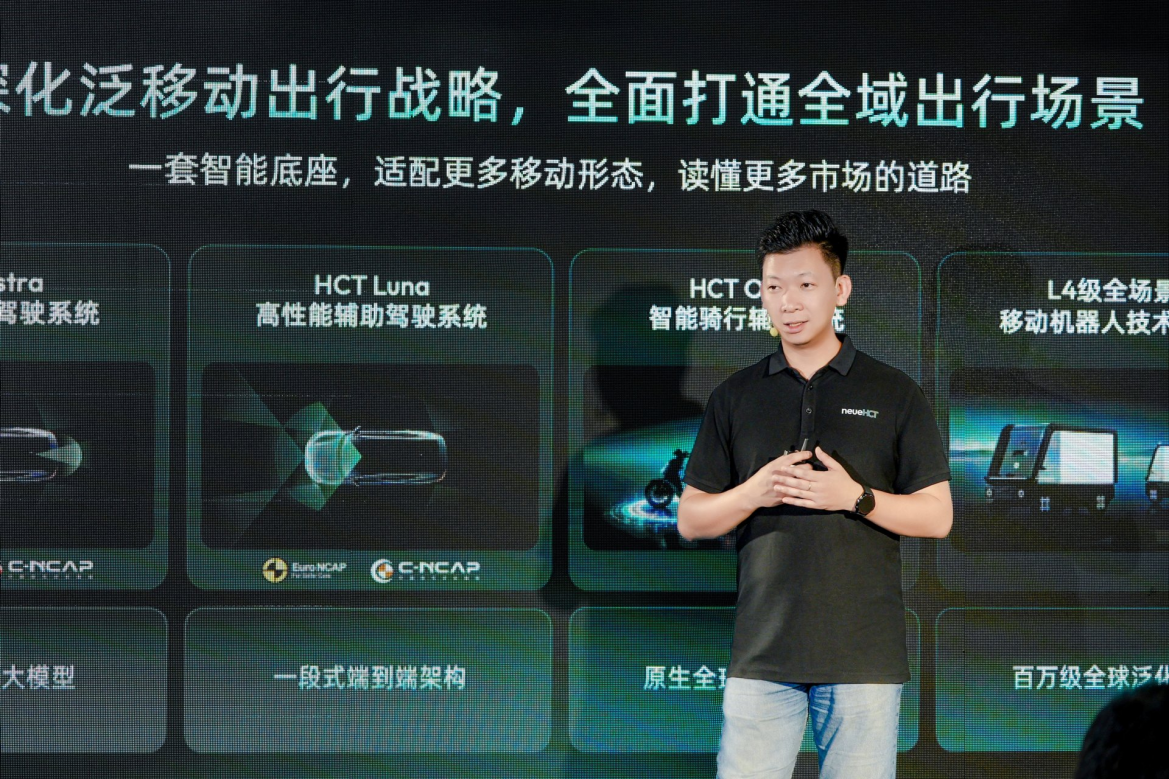
Li Biao, CEO of neueHCT, believes globalization should move toward “in local for local.” That means not just adapting to riding habits, but also addressing data security, local supply chains, and after-sales service.
neueHCT says its passenger-car business has already won designations from more than 16 automakers and over 70 models worldwide, with more than half slated for overseas production. That data loop, validation tools, and supply chain capability give it a solid starting point for entering two-wheelers.
As for large-scale commercial rollout down the road, Lu You says riders can hardly demand a feature they’ve never experienced out of thin air—only once the product lands does demand get sparked in reverse. That judgment is both the opportunity and the risk for two-wheeler assisted driving: before mass-market acceptance, the demand still needs time to prove itself.