NUPIAOrecentlyreportedthatafter the fall event at1 a.m. Beijing time on Sept. 10,with new products such as the iPhone 18 Pro going on sale,Apple may remove 11 devices from its official website, includingfour iPhones, two Apple Watches, two AirPods, an Apple TV and two HomePods.
On the iPhone side, once the iPhone 18 Pro and iPhone 18 Pro Max arrive, Apple’s usual year-over-year playbook means the iPhone 17 Pro and iPhone 17 Pro Max will likely disappear from the official store.
Apple’s former CEOTim Cooksaid on this year’s fiscal third-quarterearnings call that the iPhone 17 lineup was Apple’s most powerful and best-received iPhone family ever. A wave of users on older models upgraded during the quarter, pushing upgrade activity to its highest level for the period in recent years and directly fueling rapid iPhone revenue growth.Financials show that in the fiscal third quarter,iPhone revenue reached $54.25 billion, up 22% year over year and well ahead of market expectations.
NUPIAOnotes that right now,theplan for the iPhone 16 and iPhone 16 Plus is still unclear.Normally, Apple would launch a standard iPhone 18, cut the iPhone 17 price, and stop making the iPhone 16 family. But earlierreportssuggested the standard iPhone 18 and iPhone Air 2 could slip to early 2027. That means Apple may keep selling the iPhone 16 lineup at least until the standard iPhone 18 shows up.
Beyond iPhones, the possible retirement list also includesApple Watch Series 11 and Apple Watch Ultra 3; AirPods 4 and AirPods 4 with Active Noise Cancellation; Apple TV 4K (third generation); HomePod mini (first generation); and HomePod (second generation).
Reports point out this is no ordinary quarterly refresh. When Apple officially pulls a device, it does more than vanish from the shelf—it starts the countdown on its lifecycle. This time, the list of products “sentenced” is unusually long and spans an unusually wide range of categories, with few precedents in Apple’s recent product history.

Applethisfall event is drawing plenty of attention.Well-known tech journalist Mark Gurman wrote that Apple will unveil its first foldable iPhone at the event, a design that would mark the biggest single change to the product’s appearance to date. The phone would be about the size of a standard passport and, when unfolded, offer a screen roughly the size of a small iPad. Apple also plans to launch the iPhone 18 Pro and iPhone 18 Pro Max with faster chips, better battery life, and major camera upgrades—at least the larger model is expected to get a mechanical aperture.
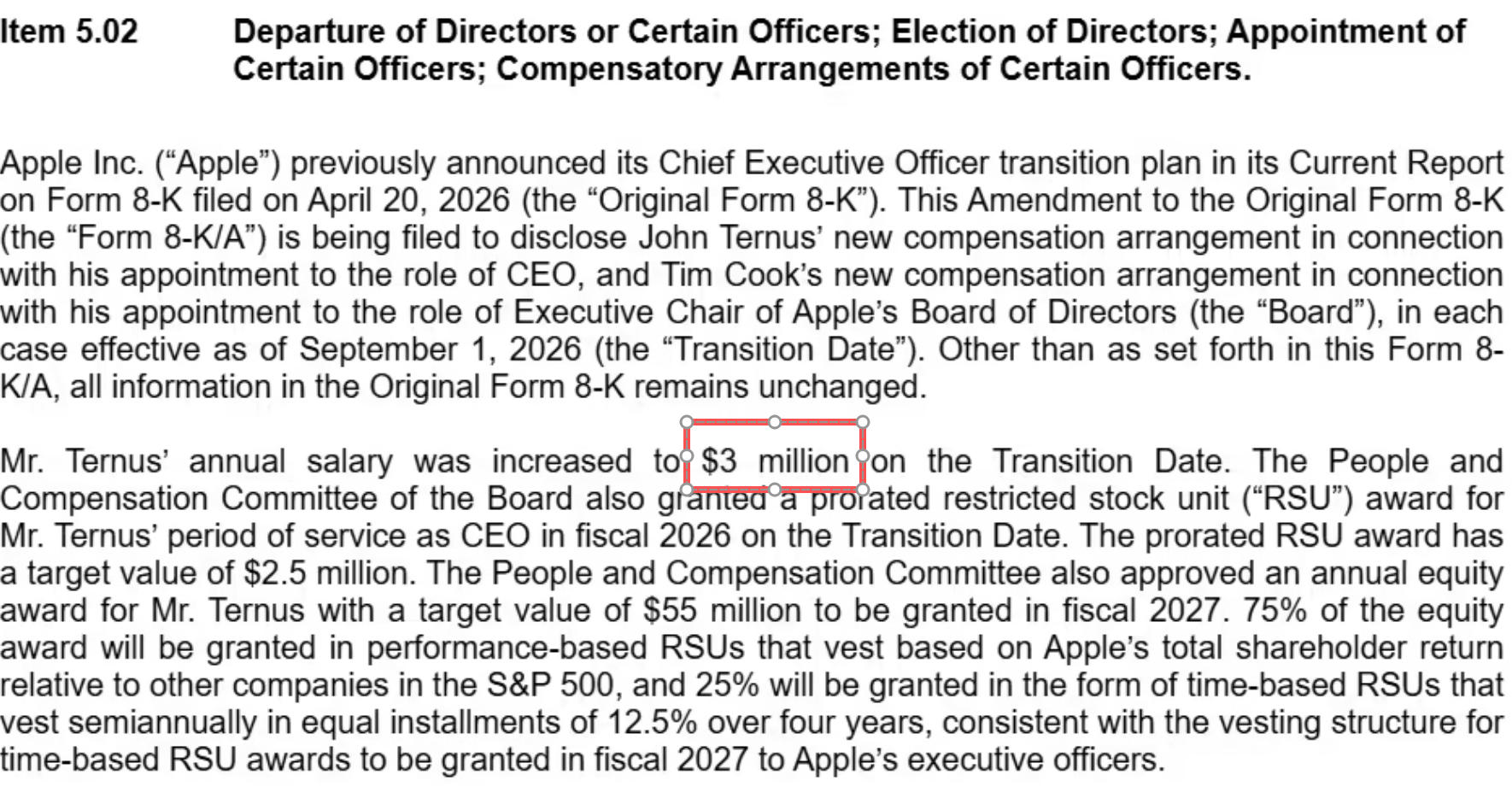
What’s more, the fall event will be the first major product launch under CEO John Ternus.On Sept. 1, Cook officially stepped down as Apple CEO,Ternus taking over. According to Apple’s website, Ternus joined Apple’s product design team in 2001, was promoted to vice president of hardware engineering in 2013, and joined Apple’s executive team as senior vice president of hardware engineering in 2021.
Mark Gurmanalsowrote that Ternusafter taking over as CEO, AI will be his top priority. Apple plans to fully roll out a new Siri AI in September and keep pushing AI-capable products, including smart home devices that can recognize users and serve personalized content, camera-equipped AirPods with environmental awareness, and smart glasses. Ternus is also pushing to use AI to improve product development, hardware testing, and device reliability.
Apple is currently posting multiple record highs. Financials show total revenue of $109.42 billion in the fiscal third quarter of 2026, up 16% year over year and well above the $108.65 billion average analyst estimate compiled by LSEG. That also marked Apple’s highest June-quarter revenue ever. Net profit came in at $29.79 billion, up 27% from $23.43 billion a year earlier, while diluted earnings per share reached $2.02, up 29% year over year.
As a result, Daiwa maintained its “Outperform” rating on Apple and raised its target price from $325 to $335, equivalent to 35 times forecast fiscal 2027 earnings. Still, the firm turned more cautious on Apple’s fiscal 2027 outlook, since 21% iPhone growth in fiscal 2026 would be unprecedented and past super cycles have often been followed by a sharp pullback the next year. At the same time, higher September iPhone prices and rising memory costs could add uncertainty to demand and profitability.