Reporter |
Editor | NUPIAO
On the morning of September 9 local time, Apple officially kicked off this year’sfall product launch at the Steve Jobs Theater at its Apple Park headquarters in California. This year’s event, unlike previous ones, had two big changes.
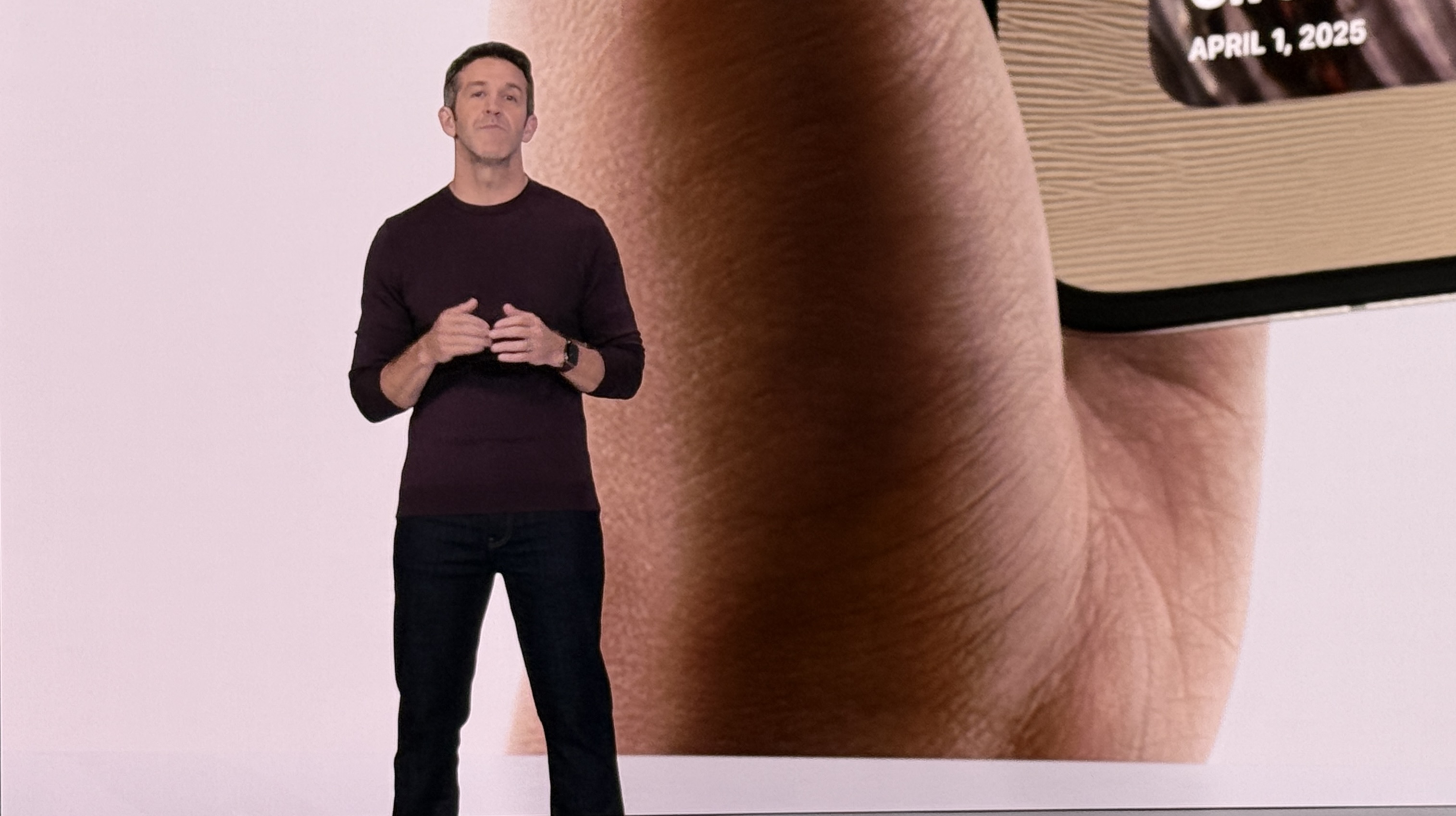
First, John Ternus officially stepped into the role of Apple’s new CEO, succeeding Tim Cook — and this was his first product launch in the top job.
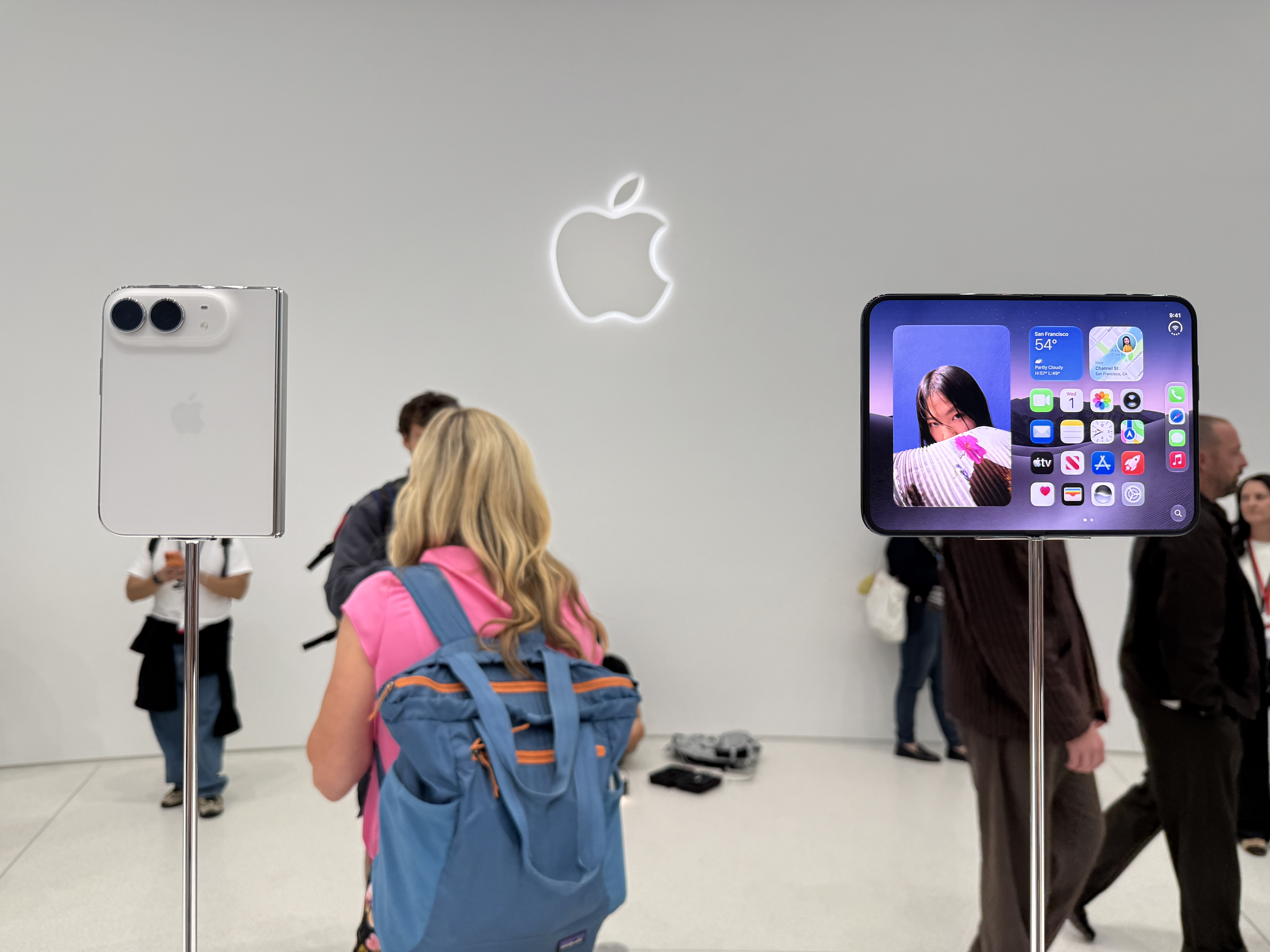
Meanwhile, Apple’s first foldable phone, the iPhone Duo, finally took the stage after years of anticipation — even though it arrives about seven years after Huawei and Samsung released their first foldables.
This year’s lineup also came with some adjustments — for instance, there’s no standard iPhone 18 for now. Word on the street is that it might arrive next spring alongside a new iPhone Air.
Another thread running through the whole event was the idea of a “personal AI hub.” Apple kept hammering on AI at every turn, trying to catch up and build the user mindset it needs in the AI era. The company is handing more and more system apps and user habits over to the new Siri AI, with the iPhone, Apple Watch, and AirPods serving as visual, physical, and auditory entry points respectively.
Bottom line: Apple is making it clear it’s entering a new era. But will consumers still follow closely behind this time around?
The Foldable iPhone Is Finally Here, Starting at ¥15,999
The closing “One more thing” — the iPhone Duo — and yes, it deserves to be the first thing we talk about.
This is the new product Apple users have been waiting for — a foldable iPhone that’s the size of a passport when closed and expands into something like an iPad Mini when opened.
Ternus called it the most significant experiential leap since the iPhone was born — “unlike any iPhone before it.”
The iPhone Duo uses a book-style inward fold. When closed, the outer screen is 5.4 inches; when opened, it reveals a 7.6-inch Super Retina XDR display. Apple says the inner screen area is 50% larger than the iPhone 18 Pro Max and 80% larger than the iPhone 18 Pro.
Unfolded, the body is just 5.2mm thick — the thinnest iPhone yet. Folded up, it’s 11.3mm thick and weighs 254 grams — slightly heavier than the 249-gram iPhone 18 Pro Max.
The hinge uses variable damping, so the phone can open fully or stand half-open on a desk for watching videos, following fitness classes, or going hands-free on FaceTime.
Based on the actual device, the iPhone Duo’s crease is indeed less noticeable than on the vast majority of foldables on the market.
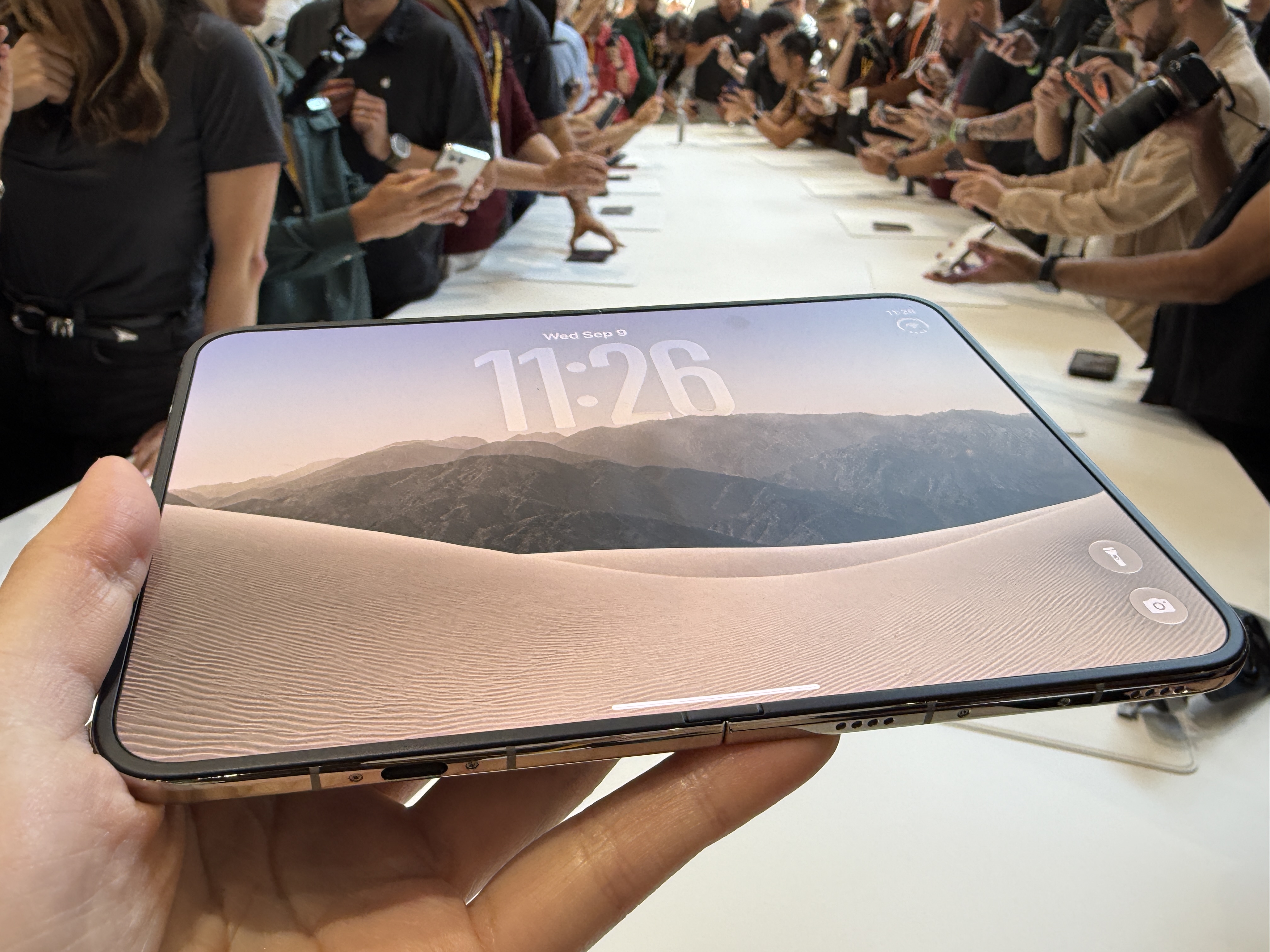
Apple says the Duo’s inner screen is made of ten ultra-thin layers, with a nano-textured surface to cut reflections. The optically clear adhesive between layers allows tiny shifts during folding to reduce stress and creasing.
The frame and hinge housing are made of grade-5 titanium, with Ceramic Shield on both the front and back, and it’s rated IP68 for dust and water resistance. That said, how the crease actually looks in daily use and how well the hinge holds up over time will have to wait for production units to confirm.
Apple also added Apple Pencil (USB-C) support to the iPhone Duo, though that feature won’t be enabled until later this year.
Apple’s core focus with this foldable was to eliminate the sense of discontinuity when switching between the outer screen, the inner screen, and different postures.
Both screens use matching aspect ratios, and iOS 27 automatically adjusts between open/closed and portrait/landscape states. When unfolded, users can run two apps side by side or open two windows on the same website — say, browsing products on one side and comparing prices on the other. The dock has been redesigned with a vertical layout, and common controls try to stay in the same position across screens.
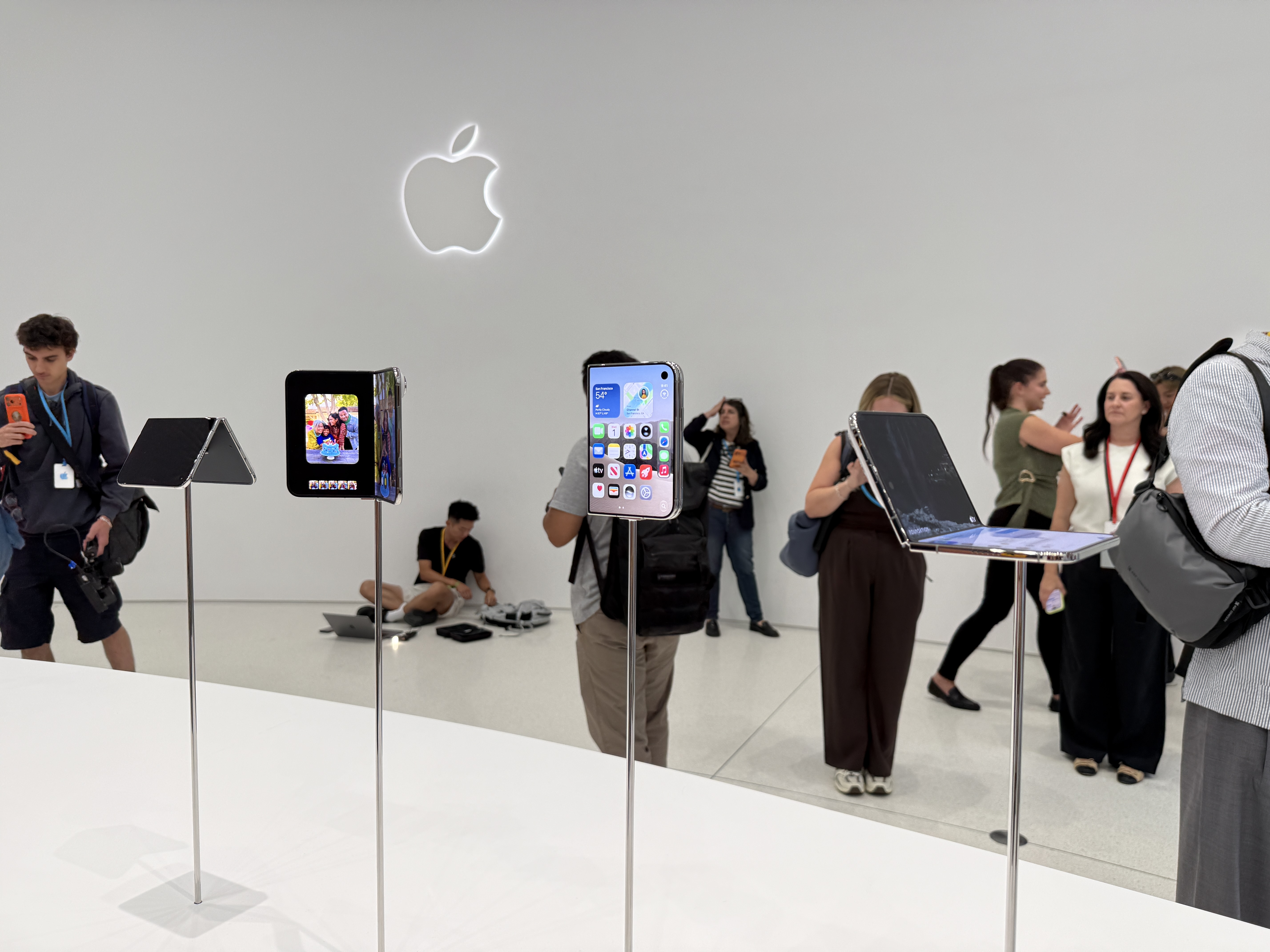
The iPhone Duo’s inner camera is tucked under the screen and only appears when in use. Because of the structural constraints, the Duo doesn’t have Face ID — instead, Touch ID is integrated into the side button. This marks Apple’s return to fingerprint recognition on a flagship iPhone since the iPhone X.
On the camera front, the iPhone Duo packs a 48MP main sensor and a 48MP ultra-wide, with up to 2x optical-quality zoom — but no telephoto or variable aperture like the Pro series.
As a trade-off, the foldable form factor enables some surprisingly practical features: subjects can check the composition in real time via the outer screen, and when shooting kids, you can play animations on the outer display to get them to look at the camera.
The iPhone Duo runs the same A20 Pro as the iPhone 18 Pro — a six-core CPU, a seven-core GPU with neural accelerators, and dual 16-core neural engines. Apple also equipped it with its in-house C2 modem and a dual-battery system.
In official ratings, typical use lasts up to 24 hours. For video playback, the outer screen gets up to 44 hours, while the inner screen gets up to 31 hours. With a 60W or higher adapter, wired charging hits 50% in about 20 minutes.
Worth noting: the iPhone Duo is eSIM-only and doesn’t support physical SIM cards.
Pricing starts at $1,999 for the iPhone Duo, with 256GB, 512GB, 1TB, and 2TB options in Starlight White and Midnight Sky.In China, the different storage tiers are priced at ¥15,999, ¥17,999, ¥21,499, and ¥26,499. Pre-orders open October 16, with official sales starting October 23.
An Apple source told us that the company took its time with the foldable for many reasons — the design had to be impressive enough, and the software-hardware integration needed to be tight. “We now feel the pieces are mostly in place,” the source said, citing display innovations, A20 Pro performance gains, improved vapor chamber cooling, and better battery life.
iPhone 18 Pro Series: Is It Still Worth Your Money?
Even though the foldable iPhone stole most of the spotlight, the iPhone 18 Pro series brought plenty of updates of its own.
The iPhone 18 Pro and Pro Max feature 6.3-inch and 6.9-inch displays respectively, keeping the unibody aluminum design in four colors: Black, Silver, Glacier Blue, and Burgundy.
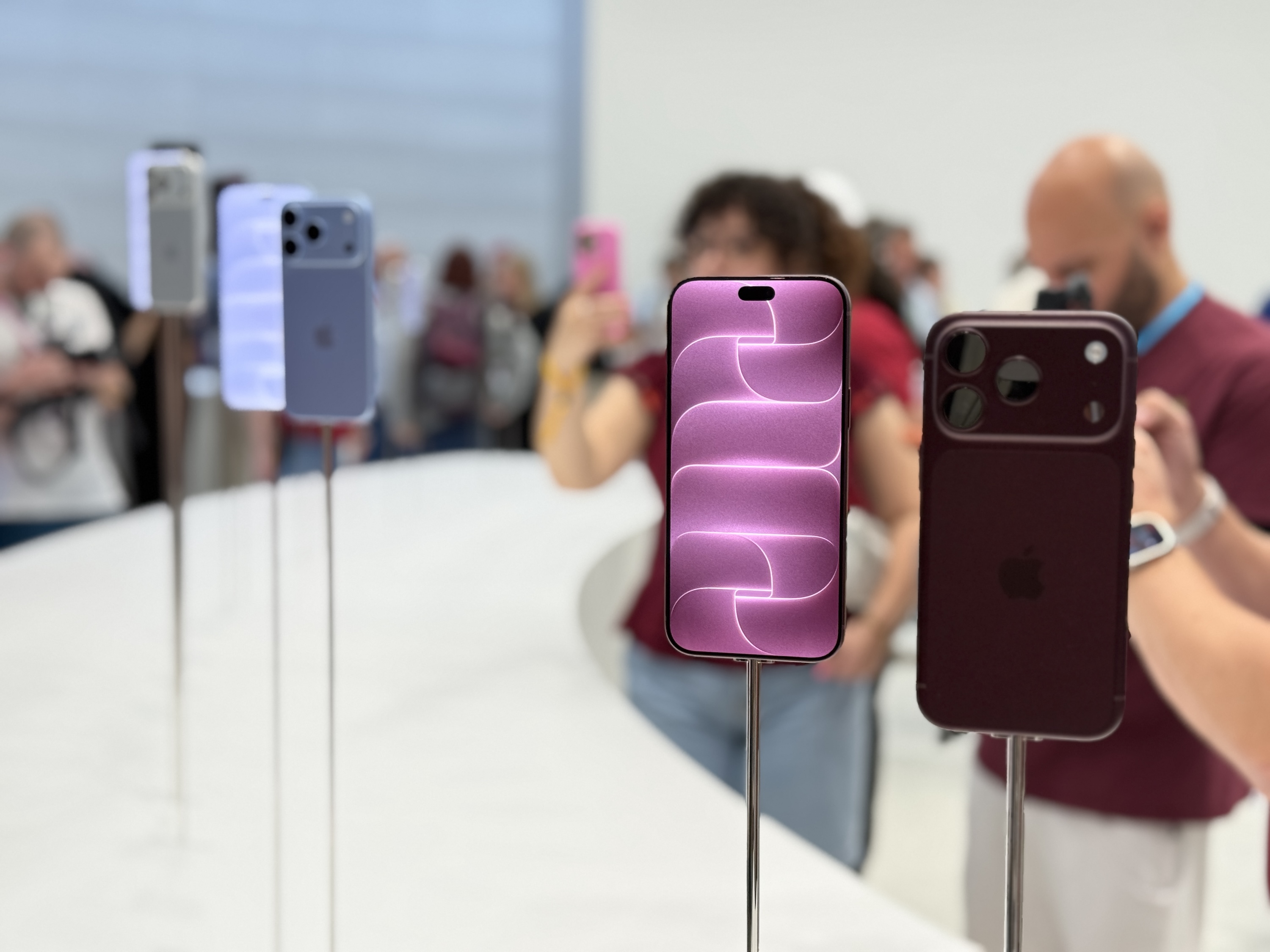
Both phones run the A20 Pro with a six-core CPU, seven-core GPU, and dual 16-core neural engines. Notably, each GPU core also integrates a neural accelerator for AI workloads like image generation, photo editing, and on-device large models.
In terms of performance, Apple rarely discusses the packaging design of its A-series chips. But this time, the company borrowed from its M-series approach — placing the bare silicon die alongside memory to shorten data paths and improve thermal conductivity.
Apple says memory bandwidth is up 50% over the previous generation, and neural engine compute has doubled. The new vapor chamber is three times larger than before, and combined with thermal materials and packaging tweaks, sustained performance is up to 40% better than the iPhone 17 Pro.
The Dynamic Island has shrunk further and can now display three Live Activities side by side — like a game score, navigation, and music playback status.
The new Siri AI can search across Mail, Messages, Photos, and Notes, and it can also call on apps to edit messages, add calendar events, play music, and more.
Apple says the new Siri will work with over 300,000 apps at launch. Simpler tasks run on-device whenever possible, while more complex requests go to a proprietary cloud. Apple claims that data isn’t stored long-term and that its servers can’t read user requests.That said, Siri AI will only launch in English at first.
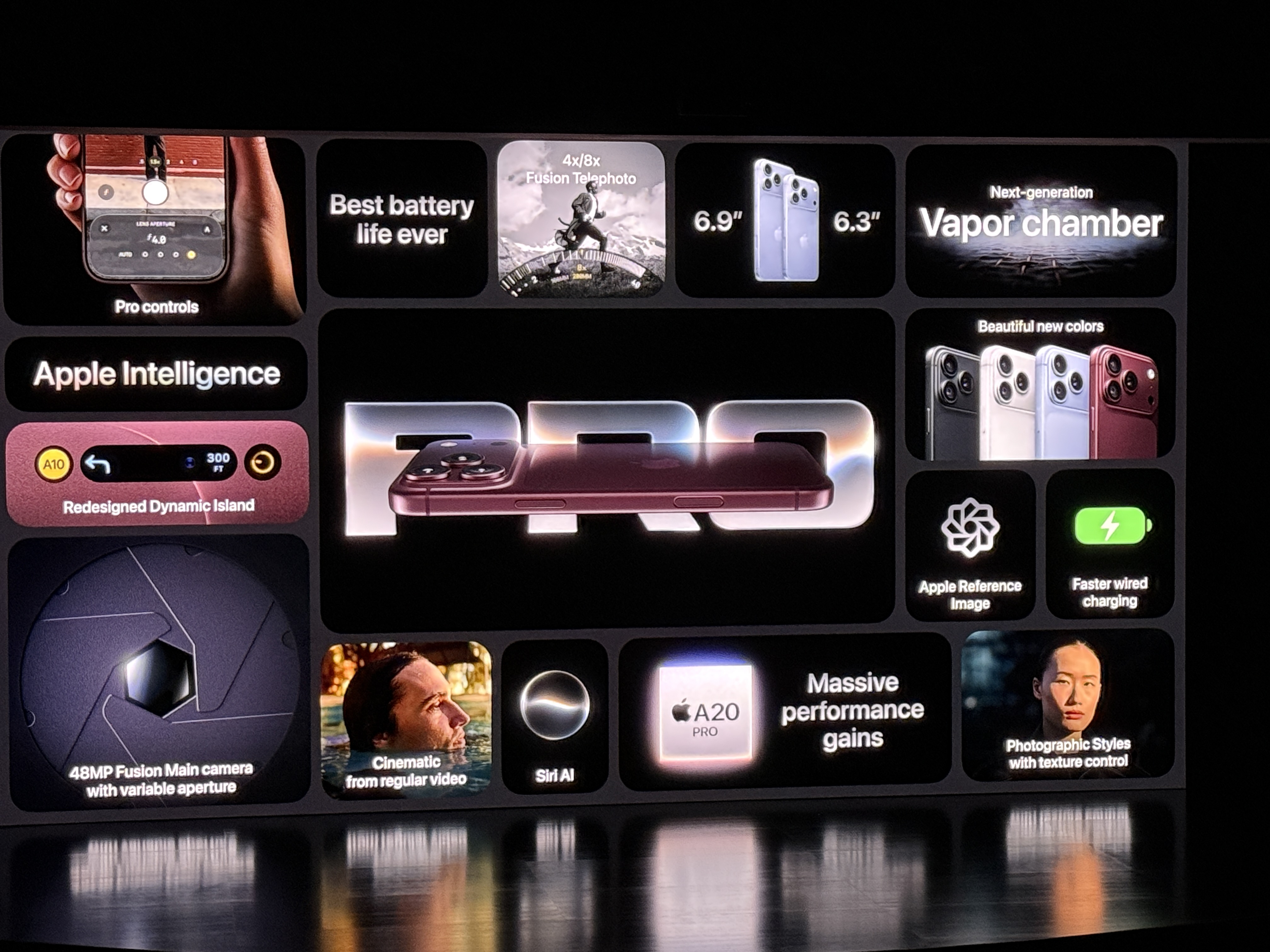
Camera upgrades are the other major highlight of the iPhone 18 Pro series. All three rear cameras now use 48MP sensors, and the main camera gets a physical variable aperture for the first time — offering f/1.48, f/1.8, f/2.8, and f/4.0. Wider apertures let in more light for better low-light shots, while narrower apertures increase depth of field so foreground and background stay sharp together.
The telephoto lens offers 4x optical and 8x optical-quality zoom. New Photographic Styles let you adjust skin texture and film grain — with the option to undo after shooting. Regular videos can now add Cinematic mode depth effects after capture, and Smart Focus Tracking can keep a moving subject locked in — even if they briefly leave the frame and come back.
For battery life, the iPhone 18 Pro and Pro Max hit 24 and 30 hours of typical use, respectively, with up to 36 and 45 hours of video playback. With a compatible 60W adapter, you can charge to 50% in about 15 minutes.
Official pricing starts at $1,199 and $1,299, both starting at 256GB and going up to 2TB. That’s a $100 increase over the previous generation. In China, the starting prices are ¥9,999 and ¥10,999.
The iPhone 18 Pro series goes up for pre-order on September 12 and launches on September 18 — a bit earlier than the iPhone Duo.
Other Products That Might Sell Even Better
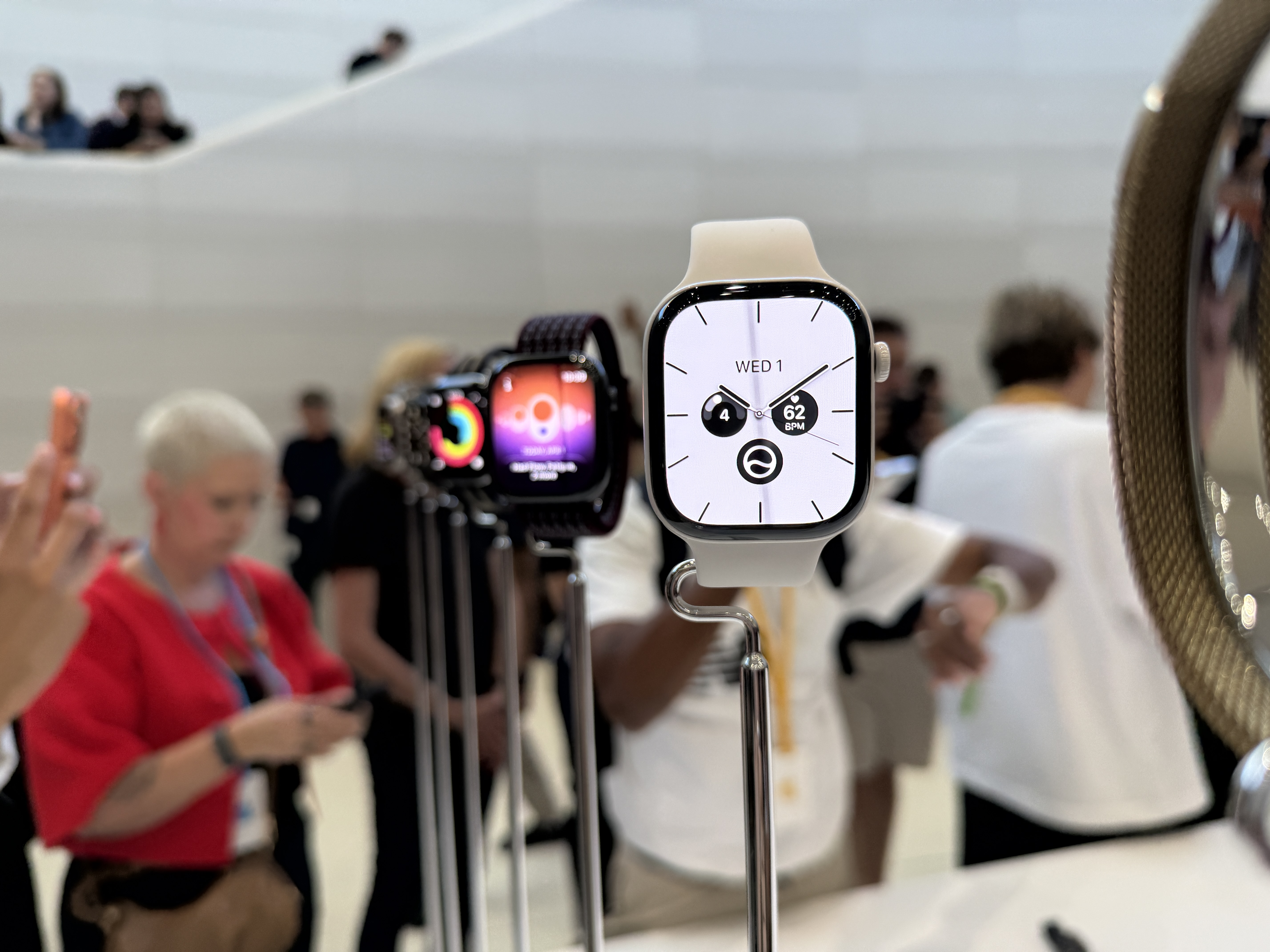
The Apple Watch Series 12 features a redesigned health sensing system, including larger electrodes, a ring of photodiodes, and bigger but more power-efficient green LEDs.
It can read background heart rate every five seconds all day long — 60 times more frequent than the Series 11. HRV (heart rate variability) can be measured as often as every five minutes, a 24x increase.
This denser data is used to assess stress, recovery, and training status, generating a new Readiness Score that tells users whether they should rest, maintain intensity, or push harder that day.
With the S11 chip, the Apple Watch Series 12 gains audio intelligence. Sound Recognition can identify sirens, doorbells, alarms, and baby cries. Double-press the Digital Crown and the Live Rewind feature transcribes the last 15 seconds of conversation. Siri Recap can even generate a title, summary, and key points from a conversation.
Apple stresses that the system doesn’t create or save audio recordings — the raw audio is deleted after processing and Apple can’t access it. Transcripts and summaries synced to the Siri App are end-to-end encrypted.
The Apple Watch Series 12 lasts up to 24 hours, while the Apple Watch Ultra 4 bumps typical use to 50 hours, up to 84 hours in Low Power Mode, and up to 45 hours of continuous recording in Extended Workout mode. It also adds satellite communication, continuing to target trail runners, endurance athletes, and outdoor enthusiasts.
Both watches keep their previous starting prices of $399 and $799, also launching September 18. In China, they’re priced at ¥2,999 and ¥6,499.
AirPods 5 brings Active Noise Cancellation down to the $129 base model. It keeps the open-ear design without silicone tips, using a redesigned porous acoustic architecture and the H2 chip to improve soundstage and bass.
Apple says noise cancellation is 50% better than the AirPods 4 with ANC, and it supports Transparency mode, Adaptive Audio, and Conversation Awareness — the buds switch between ANC and Transparency based on your surroundings and lower the volume automatically when you start talking.
The AirPods 5 can also tap into Siri AI and personal context on a compatible iPhone, and it supports live translation.
The base model gets 4 hours of listening with ANC on. The $149 version adds a wireless charging case and volume control via a slide on the stem, with 5 hours of ANC listening and up to 22 hours total with the case.
Compared to the iPhone price hikes, the Apple Watch and AirPods prices haven’t changed from the previous generation.
Together, the new Apple Watch and AirPods illustrate how Apple plans to frame its AI strategy: the iPhone understands your digital world, the Apple Watch continuously reads your physical state, and AirPods serve as the natural voice input and feedback channel.