On September 23, a bunch of iPhone users started reporting something interesting: Apple quietly slipped a new setting called “Restrict Motion Data” into the latest iOS 27.2 Beta 2 build, and it’s aimed specifically at users in China. You’ll find it under Settings > Privacy & Security > Motion & Fitness. Once you turn it on, you can pick which apps to restrict. Any app on that list loses access to the accelerometer, gyroscope, and other motion sensor data—which effectively cuts shake-to-jump splash ads off at the source, right at the system level.
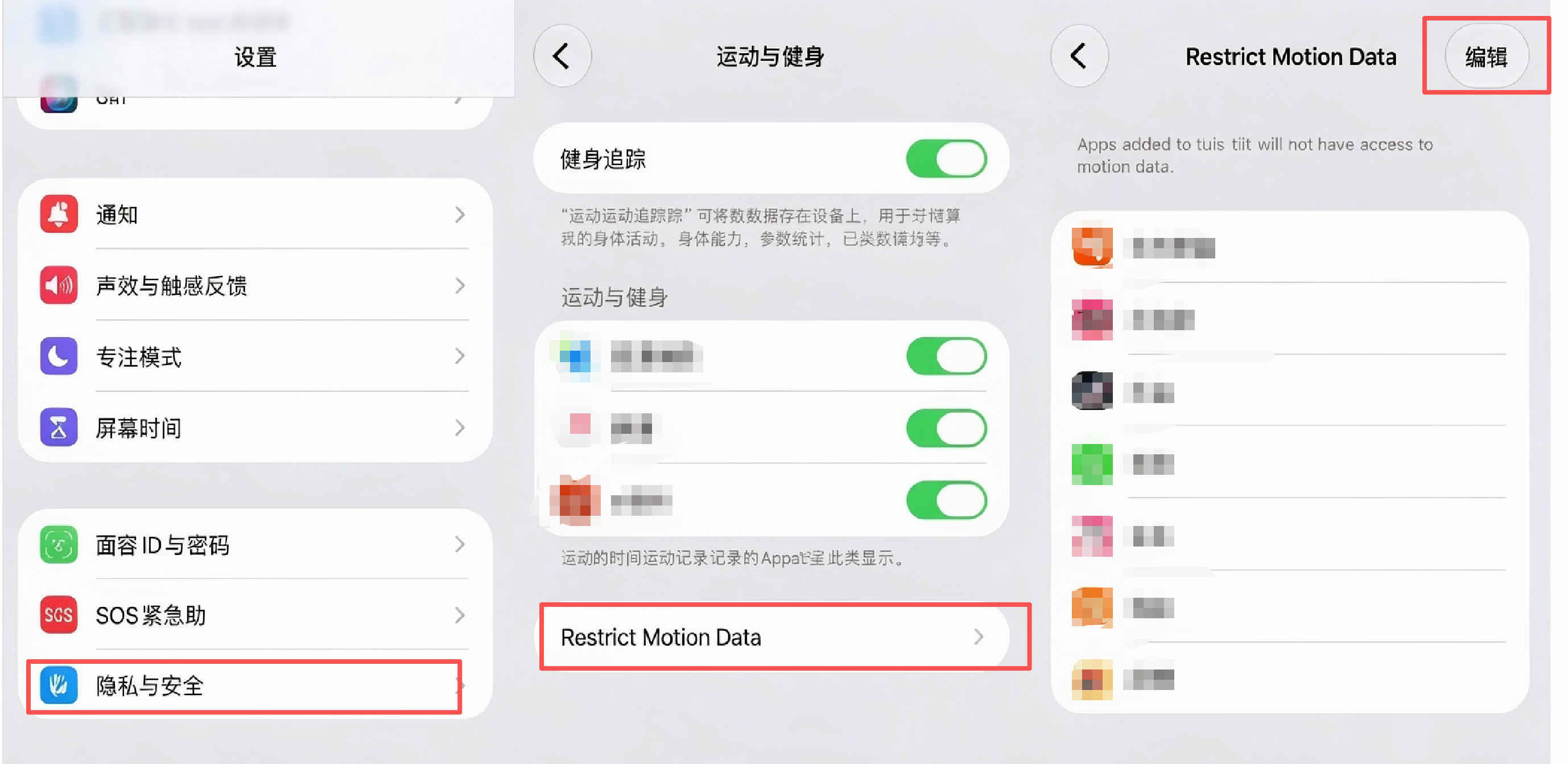
Our hands-on test found that after updating to iOS 27.2 Beta 2, you have to be signed into the App Store with a mainland China Apple ID before the “Restrict Motion Data” option even shows up in Settings. Turn it on, then switch back to a non-China ID, and the feature stops working—your entire restriction list tied to the China account vanishes too. In other words, this is a China-exclusive UX protection measure from Apple. The feature follows your account, not your device.
The tech behind shake-to-jump ads isn’t exactly rocket science. An ad SDK calls the accelerometer and gyroscope when a splash screen loads, sets thresholds for acceleration, rotation angle, and duration—and the moment your phone shakes enough to hit those numbers, boom, you’re redirected to an e-commerce page, a local services app, a game download, or a mini-program. In a well-behaved product, this should be a deliberate interaction built on clear consent and obvious prompts.
But in the real world, some apps work with third-party SDKs to drop those thresholds so low that a bumpy walk, picking up your phone, or even a slight vibration in a car is enough to trigger a jump. The close button? Often tiny, semi-transparent, or the same color as the background—and some apps will redirect you if you tap literally anywhere on the screen. Pan Tianhong (Tim), founder of the video channel Media Storm, once joked on a podcast: “Zhang Heng wouldn’t even need to invent the seismoscope anymore. I could put eight phones on my desk—whichever one opens an ad, that’s where the earthquake is.”
Then in June this year, a near-miss on the highway pushed the whole debate to a boiling point. A blogger with 2.74 million followers, known as “Sales Champion Boss Li,” posted a video describing how he was driving on the highway when a navigation app’s shake-to-jump splash ad got triggered by the car’s vibration. The screen suddenly jumped to an e-commerce promo page, and in the two seconds he looked down to close it, he nearly got rear-ended by a truck. The video struck a nerve across the internet. On June 23, the hashtag “Splash ads are gone” shot up Weibo’s trending list. Tons of users noticed that Baidu Maps, Amap, NetEase Cloud Music, and other apps had quietly pulled their splash ads, and apps were launching with a no-popup “instant open.”
But the cleanup under regulatory pressure didn’t exactly last. Just days later, a wave of users took to social media to report that splash ads on Amap, Baidu, and other navigation apps had “come back from the dead”—the ad placements had quietly returned.


As of publication time, NUPIAO re-tested more than a dozen apps. Only a handful—Amap, JD.com, Taobao—could pull off that “instant open.” Douban, Zhihu, QQ Music, and Baidu Netdisk still had shake-to-jump splash ads. Baidu Maps, NetEase Cloud Music, and others still hit you with swipe-up splash ads.
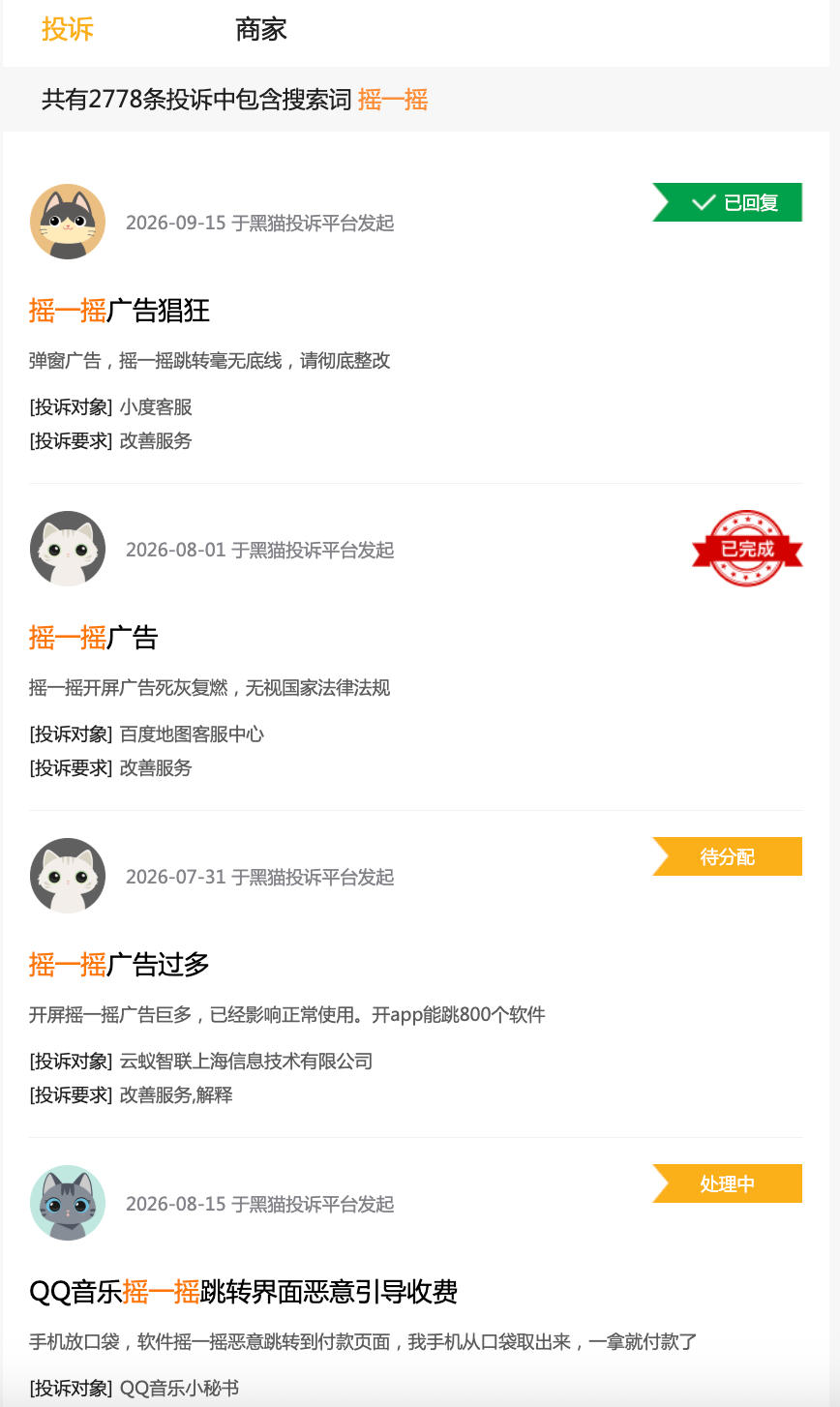
A search on Black Cat Complaints turned up over 2,000 complaints about “shake” ads. Users mostly gripe that shake-to-jump splash ads have returned and are messing with normal use, or that they maliciously redirect to payment pages.
To be fair, regulators have already written some pretty detailed rules to tackle this mess. Back in 2023, the Ministry of Industry and Information Technology (MIIT) issued a notice on improving mobile internet app services, requiring splash screens and pop-ups to have clear, easy-to-use close buttons—and specifically calling out high-sensitivity shake-to-jump tricks. That same year, standards from the China Academy of Information and Communications Technology (CAICT) and the Telecommunications Terminal Industry Association defined “effective shaking” as acceleration of at least 15 m/s², rotation of at least 35 degrees, and a duration of no less than 3 seconds. In July 2025, the National Technical Committee 260 on Cybersecurity released the “Cybersecurity Standard Practice Guide—Security Requirements for Shake-to-Jump Ad Triggering Behavior,” which covers personal rights protection, clear triggering disclosure, parameter thresholds, and the responsibilities of apps and third-party SDKs.
Around this year’s “618” shopping festival, the pressure ramped up again. In May, the MIIT named 31 apps and SDKs for issues like unwanted redirects. On June 9, the Information and Communications Administration held a special meeting demanding that platforms self-inspect, set up routine checks, and summon, notify, or delist violators. More batches followed—26 apps here, 31 there. The problem is that standards can be quantified, but enforcement can be dodged. Industry insiders say splash screens are a major revenue source for free apps, accidental taps convert better than compliant displays, and existing penalties are too weak compared to daily ad income. Plus, since ads come from third-party SDKs, developers and SDK providers can easily point fingers at each other, leaving a blind spot in governance.
One industry estimate puts the revenue share from a single accidental-tap redirect at anywhere from a few mao to a couple of yuan. For top-tier apps, daily revenue from this can hit hundreds of thousands of yuan. Against that, the cost of breaking the rules looks laughably low. Under China’s Advertising Law, failing to clearly mark a close button carries a maximum fine of 30,000 yuan. In practice, penalties for malicious pop-ups that trick users into tapping usually top out in the 100,000-yuan range. One side is a revenue stream rolling in by the day; the other is a capped, per-incident fine. They’re not even in the same league.
Apple’s move plugs the hole at the sensor level, but it only blocks shake-to-jump page redirects—app splash ads themselves are still unconstrained. Whether companies will pivot to other trick interactions, turning “shake” into “tap” or “swipe,” remains to be seen. Still, Apple’s move could set an example for the Android camp. Down the road, domestic phone makers like Huawei, Xiaomi, OPPO, and vivo might add similar sensor permission controls to their own systems, putting up a full blockade against shake-to-jump ads.