On September 2, AI company Anthropic officially launched its next-generation flagship models, Claude Fable 5.1 and Claude Mythos 5.1. Anthropic bills the twin models as “the world’s most advanced models for coding and knowledge work.” Fable 5.1 is open to all users and enterprises, while Mythos 5.1 is being offered to vetted US cybersecurity and life sciences organizations. It’s the company’s second flagship update in three months, following the Fable 5 series launched in June.
Fable 5.1 posts generational leaps on several core benchmarks. On Terminal-Bench-Science0.1, which measures an AI’s ability to conduct research autonomously, the score jumped from 24.7% in the previous generation to 52.6%. Anthropic also announced a big cut to cache-read pricing and introduced a new enterprise-grade frontier safety system.
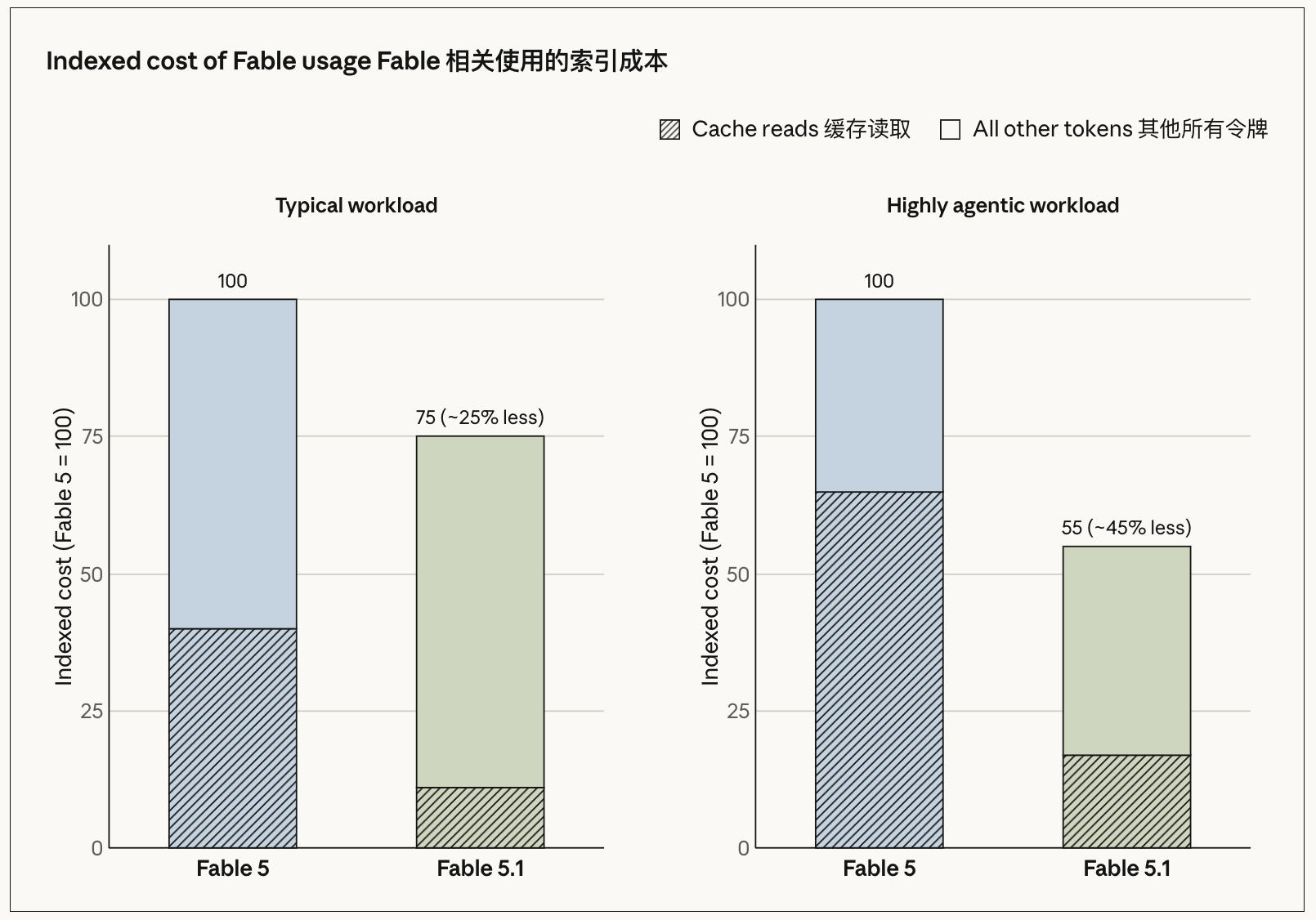
According to Anthropic’s official pricing, base input and output costs for Fable 5.1 are unchanged from Fable 5: $10 per million input tokens and $50 per million output tokens. But cache reads dropped from $1 per million tokens to just $0.25 — a 75% cut.
Cache reads are the billing line for when a model pulls in input content it has already processed and stored. In real-world agent tasks and long conversations, re-reading cached content is the norm, so this price cut hits actual usage costs far harder than the headline number suggests.
Anthropic estimates that on typical workloads, Fable 5.1 costs about 25% less to run than Fable 5. For highly agentic workloads, the savings can reach roughly 45%. Fable 5.1 also keeps a 1-million-token context window and a maximum output length of 128,000 tokens.
According to the technical report on Anthropic’s website, Fable 5.1 and Mythos 5.1 are two configurations of the same underlying model. Fable 5.1, the public version, ships with stricter safety guardrails that block the model from performing certain tasks in high-risk dual-use areas like biology and cybersecurity. Mythos 5.1 uses looser safety policies in those areas, with direct access limited to individuals and organizations cleared through a trusted access program; its capabilities also power Claude Security, available to all Claude enterprise customers.

Anthropic says this “same model, two safety policies” release strategy is meant to push the frontier of model capability while keeping potential misuse in high-risk areas in check.
On performance, Fable 5.1’s 52.6% on the flagship Terminal-Bench-Science0.1 benchmark leaves the previous Fable 5 (24.7%) and OpenAI’s GPT-5.6Sol (22.4%) in the dust — it even beats Anthropic’s own higher-tier Opus 5 (29.0%), more than doubling the score. The benchmark measures how well an AI model can complete scientific research tasks autonomously in a terminal environment, and the industry treats it as a core indicator of a model’s research potential.
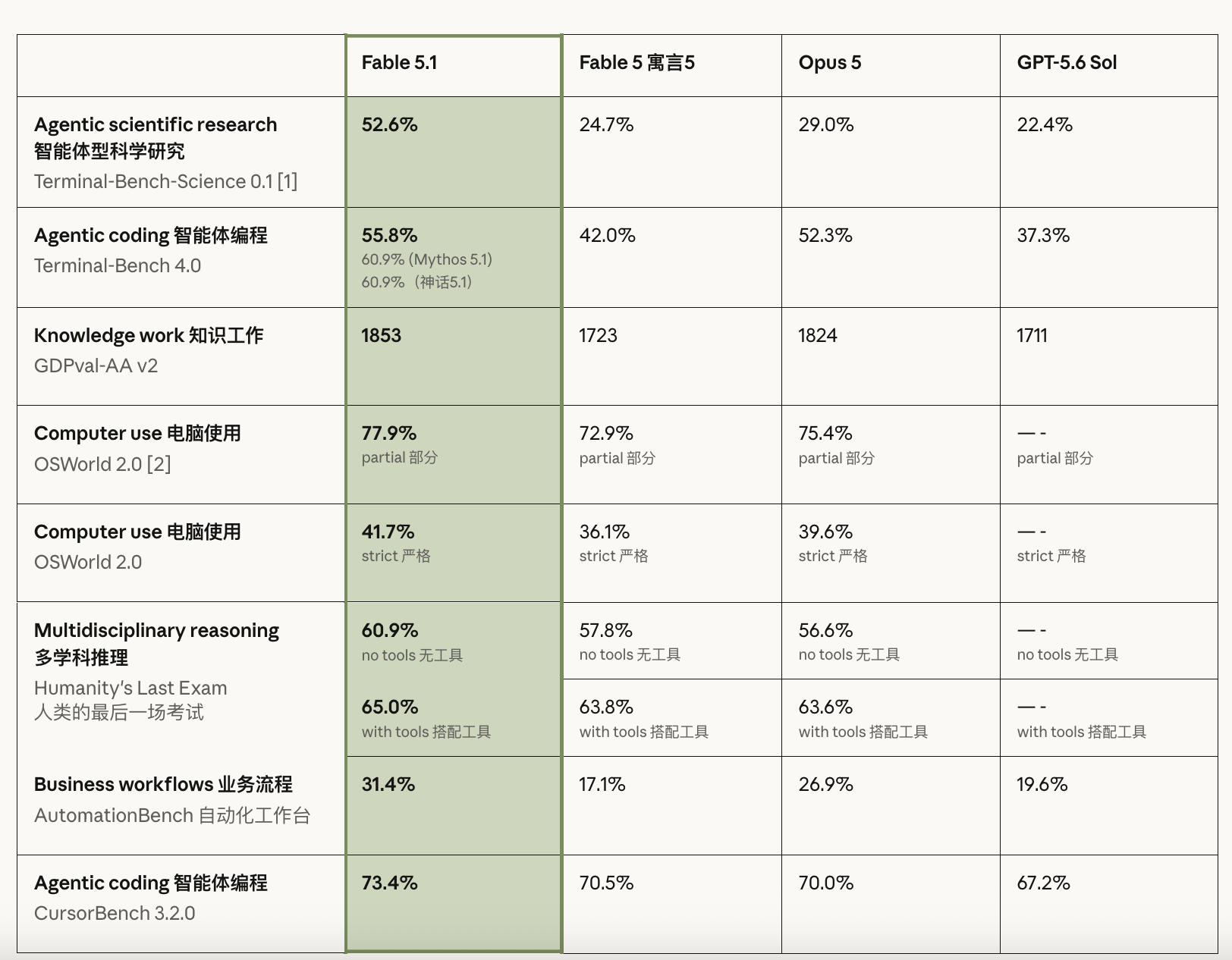
On Terminal-Bench4.0, which measures terminal coding ability, Fable 5.1 scored 55.8%, up sharply from 42% in the previous generation, while the looser-guardrailed Mythos 5.1 hit 60.9%. Fable 5.1 also leads across a string of other benchmarks: 1,853 on the GDPval-AA v2 knowledge-work test, beating Opus 5’s 1,824; 31.4% on Automation Bench for business process automation, nearly double the previous generation’s 17.1%; 73.4% on the Cursor Bench3.2.0 agentic coding test; 65% on Humanity’s Last Exam multidisciplinary reasoning with tool assistance; and 41.7% on OSWorld 2.0 computer-operation tasks under strict scoring — all new records.
Worth noting: at low and medium reasoning-effort settings, Fable 5.1 already matches or beats the previous Fable 5 at its highest reasoning effort. Official data shows that with Fable 5.1 set to Low or Medium, performance on most tasks is on par with or better than Fable 5’s High setting — at a much lower cost per task.
Anthropic devotes plenty of space on its website to showing how Fable 5.1 and Mythos 5.1 perform in real scientific research. In protein design, Mythos 5.1 called on open-source protein design and folding tools to generate binders, which two outside organizations then validated experimentally. On 3 targets, affinity reached 10x the best entry in the Adaptyv Bio competition, and across 12 targets the hit rate for effective binders came in near 50% — versus a typical industry level of 10%–15%.
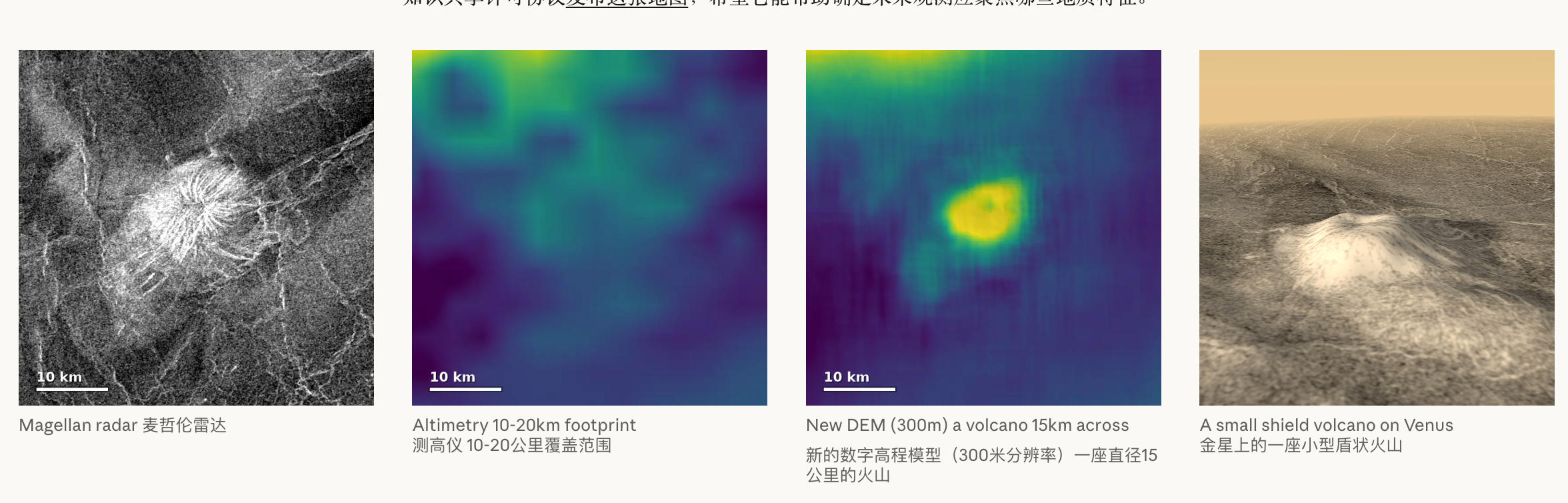
In astronomy, Fable 5.1 trained a neural network on radar data NASA’s Magellan probe captured more than 30 years ago, redrawing high-resolution elevation maps of roughly a third of Venus’s surface. Resolution improved from 10–20 km down to 2–3 km, elevation accuracy improved by up to 25%, and the maps were open-sourced under a Creative Commons license. On GPU kernel optimization, Mythos 5.1 wrote custom GPU kernels for 7 open-source deep learning models and cached intermediate results, boosting inference speed by up to 2.5x; whole-genome analysis GPU costs are projected to drop 30%–60%.
That said, benchmark scores don’t tell the whole story of real-world use. Different models have their strengths and weaknesses across task types and scenarios. Fable 5.1 shines at coding and research tasks, but its performance on creative writing, multimodal understanding, and other dimensions still needs broad validation from actual users.