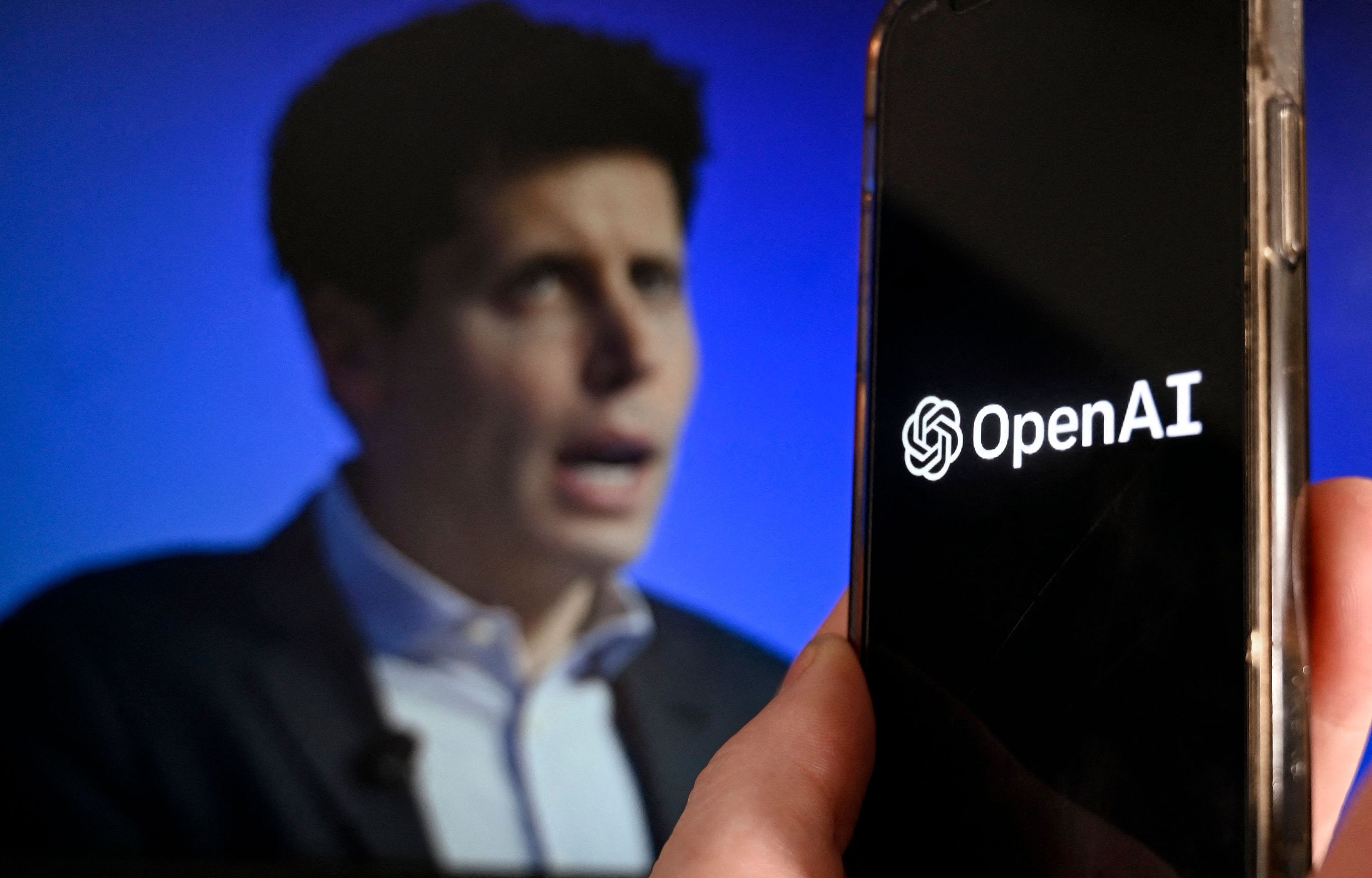
On September 2nd, local time, OpenAI CEO Sam Altman made it crystal clear on a recent podcast: the company will build its own humanoid robot bodies. “We’re definitely doing humanoid robots, and we’ll develop other forms of robots too.”
He believes that since the physical world is built around the human body, humanoids are a key direction—and OpenAI will also work in parallel on special-purpose robots for data centers.
Actually, back on June 1st, Altman had already posted OpenAI Robotics job listings on social media, saying the company was hunting for standout full-stack hardware, operations, systems, and machine learning engineers to help code and build robots that are genuinely useful to society.
Altman said AI should be able to help humans in the real world. In the short term, OpenAI is focused on robots that can assist skilled workers in building future infrastructure. Long term, the vision is that everyone can have a personal robot that handles all sorts of needs.
He also revealed that OpenAI’s world simulation research project has grown rapidly over the past year and has now evolved into OpenAI Robotics. The project is led by Aditya Ramesh and is moving fast—its foundation is the deep integration and co-design of robot hardware research and machine learning research.
OpenAI had already announced its push into AI hardware, with its first product launching soon. The device is led by former Apple chief designer Jony Ive, codenamed “Gumdrop” internally. It’s a screenless portable AI terminal focused on handwriting transcription, real-time voice interaction, and direct connection to ChatGPT for summaries, translations, and mind map generation. The design is ultra-minimalist, aiming for an interaction experience that’s “more peaceful than a smartphone.”
To push the hardware project forward, OpenAI has poached hundreds of hardware engineers from Apple, Google, and others. Foxconn is already involved in prototype production, and the first mass production plan is on the schedule. Altman reportedly described the device in an internal meeting as “amazing,” saying it will redefine how AI interacts with users.
Latest reports show OpenAI’s highly anticipated new device will have a unique shape with moving parts, giving it a more distinct personality—and it could cost over $300.
Word is the product is basically a smart speaker without a screen, shaped like a donut and roughly the size of a hockey puck. The idea is that users can carry it around the house with one hand.
OpenAI hopes this product, slated for a 2027 release, will open up a new category. It’s positioned as an AI-centric computer that helps users complete all kinds of tasks. The design should also help it stand out among existing smart speakers—a category currently dominated by Amazon and Alphabet’s Google.
OpenAI’s hardware division is developing about five different products, but plans to start with this speaker and turn it into the physical embodiment of ChatGPT.
However, OpenAI’s hardware ambitions have already hit resistance. In July, Apple sued OpenAI for trade secret theft, accusing it of a coordinated effort to steal information about unreleased Apple products. Apple claims OpenAI encouraged its employees to share info, components, drawings, and other materials about unreleased products to help develop its own full lineup of hardware. Apple is demanding OpenAI stop the behavior, destroy all proprietary Apple materials, and redesign its upcoming products to ensure none contain Apple technology.
OpenAI argues the device is significantly different from anything Apple currently sells and is unlikely to infringe on the iPhone maker’s trade secrets.
Then in August, Apple fired another shot in the case, asking a federal judge to immediately order OpenAI to stop using the trade secrets it allegedly stole. Apple is seeking a court order requiring OpenAI to return all confidential information and stop any attempts to obtain other non-public info. Apple wants the order to remain in effect during the litigation. “If Apple’s trade secrets are used and disseminated by OpenAI, or embedded in its products and operations, the damage would be irreparable,” Apple’s lawyers said in the motion.
OpenAI responded that Apple’s request is “based on misinformation and completely unnecessary.” “We don’t have, and don’t want, any of their trade secrets,” OpenAI said in a statement. “We’re more interested in building innovative products and technologies that push the frontier.”
OpenAI is gearing up for a highly anticipated IPO. CFO Sarah Friar recently said the company plans to complete its initial public offering in 2027, though the timeline could move up if business growth accelerates. Friar revealed at the event that OpenAI’s Q2 revenue this year was $6.7 billion, up 18% from Q1.
Previous data showed OpenAI’s annualized revenue topped $20 billion in 2025, a more than 230% jump from $6 billion in 2024 and a 10x increase from $2 billion in 2023.
Notably, OpenAI’s latest revenue has fallen behind competitor Anthropic. Documents show Anthropic’s preliminary revenue for its most recent full quarter exceeded $11.5 billion, compared to $787 million in the same period of 2025 and $4.73 billion in Q1 this year—a quarter-over-quarter increase of over 140%. The documents also show the company recorded adjusted operating profit of $559 million in Q2, achieving operational profitability for the first time. Based on that, Anthropic’s latest annualized revenue run rate has topped $46 billion.
Meanwhile,OpenAI‘s 18% quarter-over-quarter growth is clearly starting to slow, and its operating losses continue to widen without turning a profit. Its annualized revenue is expected to exceed $40 billion in 2026, doubling 2025’s figure.