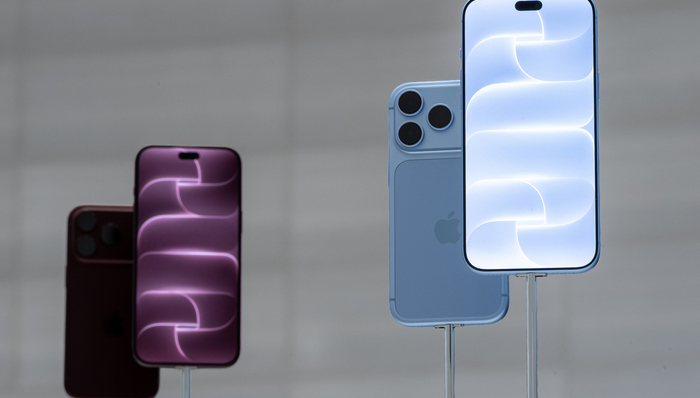
On September 14 local time, Apple officially began rolling outthe new iPhone operating systemiOS 27,allowing users to access the all-new Apple Intelligence features across various apps. The AI version of Siri launched at the same time, and China-market iPhones can now set makeup workday alarms.
For the makeup workday alarm feature on China-market iPhones, users simply set the alarm to “Workdays (including makeup workdays)” mode, and the system will automatically manage the alarm state: on weekends designated as makeup workdays, the alarm will ring on time; on public holidays or normal days off, the alarm will stay silent automatically.
For the AI version of Siri, Apple is starting with an English beta, and will expand it to French, Japanese, Korean, Portuguese and Spanish in October.The feature will not initially launch in the EU or China markets.
Siri AI is built on Apple Intelligence and has been greatly improved in both personalization and functionality. For example, users can ask Siri to search their own messages for addresses, recipes or instructions.Apple says the new Siri AI is still in beta, and users need to opt in through the Settings app. Some users may also need to join a waitlist before getting access.
It has been two years since Apple first proposed its Siri AI plan.In 2024,Apple announced an AI-driven Siri, which was later delayed.Some analysts believe this was mainly due to development difficulty, serious quality issues, messy internal progress, plus regional compliance and third-party ecosystem restrictions. It was not untilJune this year, at the WWDC 26 Worldwide Developers Conference, that Apple finally officially unveiled the next-generation Siri AI, landing it as a public beta.
After Siri AI launched, it drew a lot of discussion. Reports say it breaks away from the limits of a traditional voice assistant: it can not only deeply read local photos, messages, emails and other content on the phone and automatically handle scheduling, information summaries and content search, but also answer complex questions about online news and everyday knowledge in real time. The experience is comparable to mainstream AI chatbots. In other words, Apple wants Siri to gradually evolve from a voice assistant into an AI operating entry point on the iPhone.
In terms of interaction, the new Siri keeps the traditional wake method while adding entry points such as swiping down from the Dynamic Island and integration with Spotlight search. It also gets a standalone app to fit different usage habits, and it covers Apple’s full hardware lineup, including iPhone, Mac, wearables and headsets.
According to Apple’s published compatibility policy, the full Siri AI features will be strictly limited to devices that support Apple Intelligence. In the smartphone lineup, only iPhone 15 Pro, iPhone 15 Pro Max, and iPhone 16 and later models can support it. On tablets and computers, the iPad mini with the A17 Pro chip, as well as iPad and Mac models with M1 or newer chips, are within the supported range. Users can check whether the “Apple Intelligence and Siri” option appears in the device’s Settings to confirm whether their device is eligible for the upgrade.
In this upgrade, Apple also introduced for the first time a “feature tiering” strategy based on hardware performance. Although all the compatible devices above can get the basic Siri AI experience, more advanced features such as higher-level personalized voice expression and high-precision offline dictation require at least 12GB of RAM.That means only the iPhone 17 Pro series, iPhone Air, and iPads with M4 chips and Macs with M3 chips can unlock this top-tier on-device AI model.
In addition, Apple’s newly launched iPhone 18 Pro series can also deliverSiri AI experience because they pack faster chips and the phones already store a large amount of personal data such as users’ calendars and messages.
According to NUPIAO, Wall Street tech commentator Nilay Patel once commented on Apple’s Siri AI, saying that from a customer’s perspective, it is roughly at the level ChatGPT offered for free two years ago. But for Apple, which previously had nothing in this area, that is already a big step.
He also said Apple faces no immediate risk, because AI products like Claude still need to run on iPhones or Macs, and have even triggered a rush to buy Mac hardware. But Apple faces a huge long-term risk. As AI agents and autonomous systems develop, future economic actions—such as hailing a ride—could be completed directly by AI, bypassing the App Store.
In addition, the computing cost behind Siri AI is also drawing attention. Some analysts point out that if these advanced AI features are computed in Apple’s own private cloud, it would mean Apple needs to start a new capex cycle to build its own private models; if Apple charges for features beyond a certain limit, that would also come with massive capital spending, or at least huge compute-service fees paid to third parties such as Google and CoreWeave.