

News reporter |
News editor | NUPIAO
On September 26, day two of Delta Force’s second-anniversary celebration, a crowd of ticketless players was still gathered outside the venue in Chongqing. An 11- or 12-year-old boy camped out by the ticket gate, asking attendees if they could sell him a ticket. More ticketless players waited by the exits, watching everything inside via live streams on their phones.
Wang Lin was one of them. He’d been playing Delta Force since launch. To attend the anniversary event, he bought a train ticket from Heilongjiang to Chongqing before tickets went on sale, but because “too many people were grabbing them,” he missed out and ended up waiting outside the venue.
Delta Force launched in September 2024 and was developed by Team Jade under Tencent’s TiMi Studio Group. Its core gameplay is shooting and combat: in Hazard Operations, players enter a map, search for supplies, fight other squads, and try to extract with their loot; Warfare focuses on large-scale multiplayer battlefield clashes.
But at this year’s anniversary celebration, one clear trend stood out: Delta Force wants to push its content beyond the core gameplay.
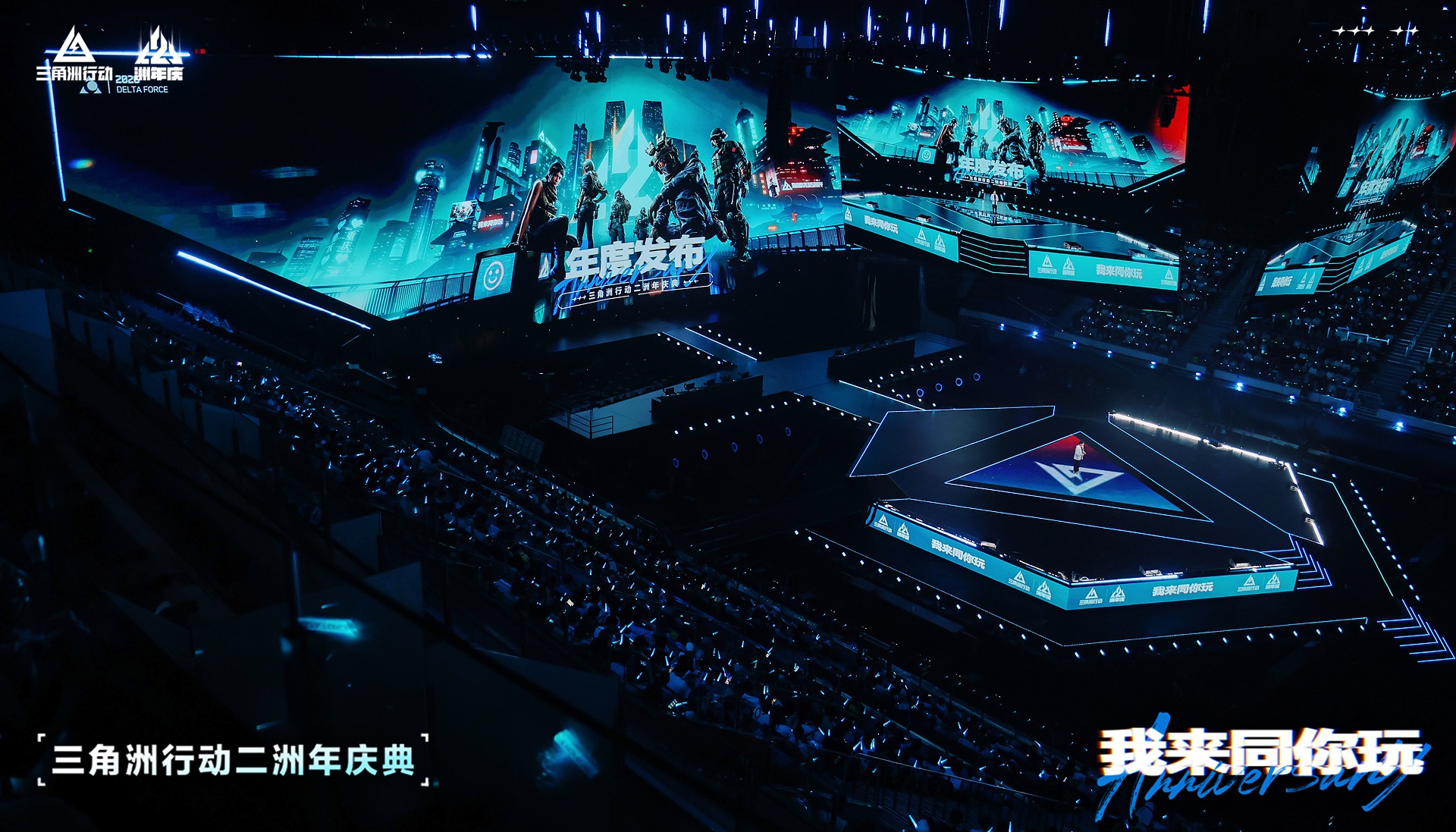
From September 25 to 26, Delta Force held its second-anniversary celebration in Chongqing. Over the two days, one major part of the event was esports: celebrity streamers and pro players took part in Hazard show matches, and the 2026 Hazard Pro League Summer Split finals were also held on site. The annual showcase that followed revealed new maps, new gameplay, and technical updates, and also unveiled the long-term operator narrative plan “Project Constellation” for the first time. The final night featured an offline concert. The official team rearranged the game’s soundtrack from the past two years, and some fan-made songs popular in the player community also made it onto the stage.
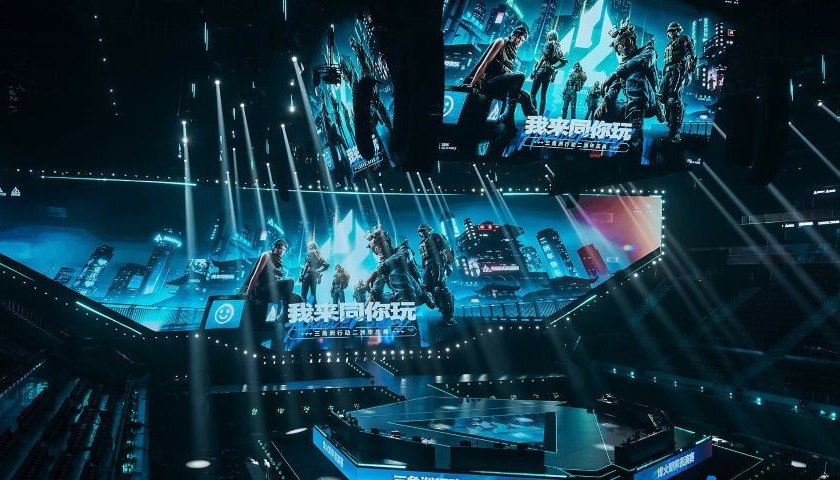
Many players like Wang Lin came precisely for these things beyond the game’s core gameplay. “I started following esports a long time ago… this time I also wanted to see the Delta Force Hazard World Cup finals,” Wang Lin told NUPIAO excitedly.
A game that built its early players and reputation on shooting combat is now exploring content growth beyond that core—and it’s capturing players’ passion and time.
Why Delta Force needs content beyond its core gameplay
When it launched on September 26, 2024, Delta Force first had to prove that extraction shooting and large-scale battlefield combat could find enough players in an already crowded shooter market. Now, at least part of that question has been answered.
On September 21, 2025, nearly a year after launch, Delta Force announced that its daily active users had topped 30 million. Less than half a year later, on March 18, 2026, the project team announced again that daily active users on the China server had surpassed 50 million.
Tencent describes it as “evergreen.” In its 2025 annual report, Tencent said Delta Force’s “breakthrough success” expanded the company’s evergreen game portfolio. In the first quarter of this year, Tencent further said Delta Force had recently joined the ranks of evergreen games. The commercial definition of that concept is: average quarterly daily active accounts of more than 5 million on mobile, or more than 2 million on PC, plus annual revenue of more than RMB 4 billion.
The concept of “evergreen” has existed in the game industry for years, but it is being mentioned more and more often recently. A 2025 China Game Industry Report released by the China Audio-video and Digital Publishing Association shows that China’s domestic game market generated actual sales revenue of RMB 350.789 billion in 2025, up 7.68% year on year; the user base reached 683 million, up only 1.35%. The user base is still hitting new highs, but growth is already limited.
The cost of acquiring new users is also rising. A report from Gamma Data shows that in the first half of 2025, user-acquisition spending by the top 100 mobile games by revenue rose 86.6% year on year to more than RMB 18 billion.
When total user growth slows and customer acquisition gets more expensive, how long an already successful product can keep running becomes more important. Compared with constantly reacquiring a batch of players, keeping the people already in the game, bringing them back, and getting them to pay is a more certain business. A hit product launching only solves the first question; long-term operation requires it to keep updating content, maintaining users and the community, and constantly dealing with new products fighting for players’ time.
And to retain players, today’s games need more content that players can consume.
“The game industry is brutal. The odds of a game succeeding are very low. Even if it does succeed, we’re not just competing with game products anymore—we’re also competing with Douyin,” Bo Wen, event planning lead for the Delta Force Hazard League, told NUPIAO. “What we’re really doing is entertainment content, so we have to try to give users content that fills their entertainment time. The Hazard Cup is a good example.”
League of Legends offers a mature example. Riot Games has said that the 2021 League of Legends World Championship final drew a global peak concurrent audience of nearly 74 million and an average minute audience of nearly 31 million. By the 2025 World Championship, Riot’s official list alone included more than 915 cinema viewing sites in China. Esports can already become entertainment content that stands apart from whether players log in every day.
Delta Force wants to build a similar relationship. Bo Wen told NUPIAO that the team isn’t looking at the next one or two years, but three, five, or even longer: even if players one day stop playing Hazard Operations frequently, can the esports scene still be content they want to watch?
On the other hand, after 50 million DAU, Delta Force is facing a bigger and more complex player base. Some people like high-intensity shooting; some are more used to looting supplies. Some want to watch high-level pro matches; others prefer more entertainment-driven events between streamers. It’s hard to satisfy everyone with one type of content.
Both reasons are pushing Delta Force to try to cover more diverse content formats.
Some players describe all this as “tailoring”—since launch, Delta Force has bundled together extraction shooting, large-scale warfare, and other modes. Because it keeps absorbing mechanics from different FPS subgenres, the player community once called it “stitched together.”
Bo Wen, event planning lead for the Delta Force Hazard League, doesn’t deny it. “It’s a process of genre fusion,” Bo Wen said. “If you’re making an indie game, you can ignore commercialization and focus more on personal expression. But Delta Force is a GaaS (live-service) game. We inevitably have to serve more players and have commercial goals.”
Still, stitching it together in a fun way is a technical job. That difficulty is already visible in esports. Take Warfare events: a 20-versus-20 match not only requires redesigning game mechanics for competition; a single team, including players and other staff, can reach 30 to 40 people. Visas, lodging, travel, management, and translation all have to be reorganized. Extraction-shooter events represented by Hazard Operations also lack a mature template. The team has to study formats, directing, and commentary from scratch. Other companies in the industry have tried similar events, but only when you actually do it do you discover the demands on technology, production and broadcasting, and organizational capability.
In-game, Delta Force is also continuing to expand the content players can choose from.
At the second-anniversary showcase, the new mode “Black Tide Blast” Beta season was officially announced and went live the next day. During Spring Festival 2027, Hazard Operations will also add a new map, “Siege,” in an attempt to break down the barriers between Normal, Confidential, and Top Secret match tiers.
Beyond these updates, the team is also adding experiences less tied to shooting combat. Last season, Delta Force added a fishing mode to Hazard Operations, letting players enjoy casual play amid intense fights. Project Constellation is also starting to use more complete content to explain operators’ past experiences and motivations, filling out the content depth of a gameplay-driven game.
Outside the game, the publishing team is also trying to take game content beyond the client. Wang Yue, Delta Force’s China publishing lead, said in a media interview during the second-anniversary event that over the past two years the team has tried bringing familiar characters, lines, items, and map elements to different cities. During the Chongqing anniversary, the game set up related content and interactions at Liziba, the Yangtze River Cableway, Hongya Cave, and other spots.
From in-game to out-of-game, online to offline, Delta Force is constantly expanding the ways players can consume the game.
After content expansion, supply capabilities still need catching up
Of course, as Delta Force expands fast, it is also catching up on capabilities that match this content.
Esports is the easiest sample to observe right now.
Delta Force’s esports team began pushing related work in May 2025 and gradually built up the team and work system. The extraction gameplay that Hazard League centers on had previously lacked a mature pro-esports template. At first, no one knew how to direct or commentate this kind of match. The team tried borrowing from battle royale, bomb-defusal, and MOBA events, but soon found they couldn’t be copied directly.
Over the past year, esports-related content went through eight versions, while the main game updated about four times over the same period. Designers from level design, combat, and other modules need to help train commentators, and the team has had to figure out step by step when directors should switch to a player’s POV and when to show key loot and map nodes.
In addition, Delta Force pro matches involve route choices, resource allocation, operator combinations, and item mind games, which creates a viewing barrier. Regular viewers may not be able to see why pro teams like TES choose a certain spot, operator, or breach route. “The number of viewers who truly understand is still relatively limited,” Bo Wen told NUPIAO and other media. So the team is still adjusting directing, commentary, and the spectating system, hoping to explain these pro-match decisions more clearly.
At present, the Hazard Pro League has not yet built a secondary league or fully rolled out a pro-esports system. TiMi has previously accumulated experience operating secondary leagues through KPL and other events, but Delta Force’s priority at this stage is still to make the existing league work. “When the current system matures and conditions are right, we’ll consider pushing forward,” Bo Wen said. Rather than rushing to expand event tiers, the team is prioritizing viewability and the competition format itself.
But beneath the buzzing anniversary atmosphere, the 50 million DAU number, and the “evergreen” label, this is still only Delta Force’s second year.
Setting aside the game industry’s commercial definition of “evergreen,” common sense says Delta Force is still a young game. It’s hard to predict what happens next for a game that’s only two years old—whether it will stay as hot as it is now for five years, ten years, or longer.
“When you say ‘evergreen,’ you’re using the ‘long’ from ‘long-lasting,’ right?” Bo Wen told NUPIAO. “But we think about another word: ‘constant’—as in constantly. We hope every season has updates, like new gameplay, new maps, new units. Next season will have more. We want to keep giving players new experiences and content.”
(Wang Lin is a pseudonym in this article.)
